完全入試ガイド

History and Modern Languages at Cambridge — Admissions Guide 2027

Cambridgeへの当塾生徒の合格率

65%

Cambridgeの平均合格率

21%

History and Modern Languages(University of Cambridge)出願に必要なすべて:出願要件・面接・典型オファーとCambridge卒業生によるインサイダーアドバイス。

最終更新: 2026年5月

主要情報

  • A*AA典型オファー
  • 3:1志願者 / 定員
  • #1UK順位
  • 31定員(年)
  • VR19UCAS コード

概要

コース概要

History and Modern Languages at Cambridge is a 4-year BA (Hons) with UCAS code VR18, combining History with a modern language and a compulsory Year 3 abroad. The minimum A-level offer listed for 2027 entry is A*AA, with a College admission assessment, submitted written work and interviews forming part of selection.

なぜCambridgeでHistory and Modern Languagesを?

History and Modern Languages is distinctive because the two halves of the degree are not treated as separate add-ons: the course asks applicants to combine historical argument, language acquisition and cultural interpretation across a 4-year structure that includes a year abroad.

A university lecture hall from the back, students taking notes

Section 01

国際学生の出願

下のマップで自国をクリックすると、出願に必要な情報(受け入れられる資格、要求スコア、英語要件、現地の文脈)が表示されます。

International Applicants

Country-specific admissions requirements

FijiTanzaniaW. SaharaCanadaUnited States of AmericaKazakhstanUzbekistanPapua New GuineaIndonesiaArgentinaChileDem. Rep. CongoSomaliaKenyaSudanChadHaitiDominican Rep.RussiaBahamasFalkland Is.NorwayGreenlandFr. S. Antarctic LandsTimor-LesteSouth AfricaLesothoMexicoUruguayBrazilBoliviaPeruColombiaPanamaCosta RicaNicaraguaHondurasEl SalvadorGuatemalaBelizeVenezuelaGuyanaSurinameFranceEcuadorPuerto RicoJamaicaCubaZimbabweBotswanaNamibiaSenegalMaliMauritaniaBeninNigerNigeriaCameroonTogoGhanaCôte d'IvoireGuineaGuinea-BissauLiberiaSierra LeoneBurkina FasoCentral African Rep.CongoGabonEq. GuineaZambiaMalawiMozambiqueeSwatiniAngolaBurundiIsraelLebanonMadagascarPalestineGambiaTunisiaAlgeriaJordanUnited Arab EmiratesQatarKuwaitIraqOmanVanuatuCambodiaThailandLaosMyanmarVietnamNorth KoreaSouth KoreaMongoliaIndiaBangladeshBhutanNepalPakistanAfghanistanTajikistanKyrgyzstanTurkmenistanIranSyriaArmeniaSwedenBelarusUkrainePolandAustriaHungaryMoldovaRomaniaLithuaniaLatviaEstoniaGermanyBulgariaGreeceTurkeyAlbaniaCroatiaSwitzerlandLuxembourgBelgiumNetherlandsPortugalSpainIrelandNew CaledoniaSolomon Is.New ZealandAustraliaSri LankaChinaTaiwanItalyDenmarkUnited KingdomIcelandAzerbaijanGeorgiaPhilippinesMalaysiaBruneiSloveniaFinlandSlovakiaCzechiaEritreaJapanParaguayYemenSaudi ArabiaAntarcticaN. CyprusCyprusMoroccoEgyptLibyaEthiopiaDjiboutiSomalilandUgandaRwandaBosnia and Herz.MacedoniaSerbiaMontenegroKosovoTrinidad and TobagoS. Sudan

Pick a highlighted country to see the admissions-test, score, and English-language requirements that apply for applicants from that country.

Section 02

出願要件

  • A-LevelA*AA
    A modern language required. History recommended.
  • IB Diploma40–42 with 776 at HL incl. the chosen modern language
  • Advanced Placement (AP)Minimum five AP Tests at score 5 in subjects relevant to the course, plus strong SAT or ACT results and high High School Diploma performance.
Admissions test
No pre-registered admissions test. Most colleges set short at-interview language and history tasks — College admission assessment, no advance registration. The legacy MMLAA is no longer used.
Written work
Submit two pieces of recent marked school work in History or a closely related humanities subject, at least one in English. Standard deadline 10 November 2026.
Interview
Two interviews. Tutors expect strength in both halves: a short historical primary source plus a short text discussion in your A-Level language. The course is a genuine joint degree, not a single subject with a side language.

Section 03

出願プロセスと重要日程

Jun–Jul 2026

Open days & shortlist colleges

Visit Cambridge in person if you can. Open days run in late June and early July. Begin narrowing your college list and reading first-year reading lists.

Sep 2026

Draft your personal statement

Write for the subject, not the institution. Cambridge admissions tutors look for ~80% academic content and genuine super-curricular engagement.

28 Sep 2026

ESAT / TMUA registration deadline

Pre-registration via the Pearson VUE admissions testing portal closes at 18:00 UK time. Late entry is not normally possible.

15 Oct 2026

UCAS deadline

Submit your UCAS application by 18:00 UK time on 15 October 2026.

12–16 Oct 2026

Sit ESAT / TMUA

ESAT and TMUA are sat in this window at Pearson VUE centres. LNAT and UCAT use their own test windows — check each test's site for booking dates.

22 Oct 2026

My Cambridge Application deadline

Complete the My Cambridge Application supplementary questionnaire by 18:00 UK time on 22 October 2026. This replaced the old SAQ.

10 Nov 2026

Submitted written work deadline

Most arts and humanities courses ask for one or two pieces of marked school work. Each college confirms its exact deadline; 10 November is the standard date.

Dec 2026

Interviews

Around three-quarters of applicants are interviewed. Typically 1–2 interviews of 25–45 minutes each at your chosen or allocated college.

27 Jan 2027

Main decisions released

Cambridge releases its main decisions on 27 January 2027. Around a quarter of offers are made through the Winter Pool — strong applicants reconsidered by colleges with remaining places.

Section 04

入試テスト

Student working through problems at a desk with timed papers

History and Modern Languages(University of Cambridge)の2027年度入試では、出願者に書面の入試テストは課されません。出願は推薦書・成績・パーソナルステートメント・提出物・面接で評価されます。

Always verify on the official Oxford admissions tests page.

Section 05

面接:当日の流れと対策

Invitation → Decision: the interview timeline

Interview Invitation

Late Nov

Arrival to Interview

Early Dec

Technical Question

Mid Dec

Decision

Early Jan

Question Types You’ll See

Historical primary-source analysisShort text discussion in your A-Level languageDiscussion of your submitted essays

The main Cambridge interview period for 2027 entry is 7 December to 18 December 2026. Interviews may be online or in person depending on the College assessing the application.

The interview is best understood as a supervision-style academic conversation.

Preparation should therefore focus on argument rather than rehearsal. Take one History essay, one language or cultural topic, and one unfamiliar source, then practise how to explain what you think, what evidence supports it, and what would make you revise your view.

無料のHistory and Modern Languages面接練習問題バンクで本番さながらの問題を練習しましょう。

無料練習問題
Two people in academic discussion across a table

Section 06

合否決定のしくみ

Cambridge Colleges make final decisions holistically rather than by a published scoring formula. The information considered includes academic record, reference, personal statement, submitted written work where required, written admissions assessment, contextual data or extenuating circumstances, and interview performance.

In reality, a strong application normally has coherence across the file. Your written work, personal statement, language route, interview discussion and school reference should all point to the same academic pattern: you can read closely, argue historically and handle language as a serious subject.

Our recommendation · weighting of admission factors

0102030405041%
Interview
27%
Predicted grades
14%
Personal statement
11%
Submitted written work
7%
Contextual factors
% of decisionFactor

Oxbridge Mentors recommendation, drawn from observed offer patterns. University of Cambridge does not publish official weightings — exact balance varies by college, course and year.

Section 07

Personal Statement のコツ

Handwritten notes and a laptop open to a draft document

A strong History and Modern Languages personal statement should not read like 2 separate mini-statements. Use one or 2 connecting questions: how language shapes historical evidence, how cultural texts preserve memory, or how a political event looks different when read through sources in the original language.

Avoid listing books, films and podcasts without interpretation. It helps to write one sentence on what a historian argued, one sentence on what a target-language source complicated, and one sentence on what you still do not fully understand.

Reflection matters more than range. A narrow paragraph on one translated speech, one museum object or one historian’s disagreement can be stronger than a long list of periods and countries.

専門家による一行一行の解説付き完全例文を見る。

History and Modern Languages PS例文

Section 08

プロジェクト

  1. 01正当性
  2. 02プロジェクト概要
  3. 03実施内容
  4. 04困難
  5. 05解決策
  6. 06振り返り

Projects work well for History and Modern Languages because they force you to join evidence, language and interpretation.

A good project does not need to be large. It needs a clear question, a small evidence base, and enough reflection to show how your thinking changed.

Possible project ideas include comparing how one historical event is presented in a historian’s account, a museum or archive source, and a target-language cultural text. You could also translate a short target-language primary or literary source and annotate how translation choices affect historical meaning. A third option is a microhistory built from a small group of primary sources, with reflection on what those sources can and cannot prove.

Open books, a notebook, and a coffee on a wooden desk

Section 08

その他のサプリキュラム

The most useful supercurriculars are regular, analytical and discussable. Keep a short log of claims, evidence and questions, not just a list of what you completed.

These activities support the application; they are not a substitute for careful academic thinking.

  • Target-language reading and listening can include newspapers, essays, short stories or podcasts, with a vocabulary and ideas log.:

  • Primary-source practice should ask who produced the source, for whom, with what assumptions, and what evidence is missing.:

  • Historiography comparison should identify differences in evidence, causation, periodisation and assumptions.:

  • A film, literature and culture log should connect cultural material to historical context without drifting into plot summary.:

  • Conversation, exchange or translation practice should help you discuss ideas, not just grammar.:

Section 08

コンペティション

Competitions are not required. What they do well is stretch independent argument, source use and written clarity.

  1. John Locke Institute Global Essay Prize tests independent thought, knowledge beyond school, reasoning, critical analysis and persuasive style. Prepare by choosing a question that genuinely links to history, language, culture or politics, then build an evidence-led argument.
  2. Oxford Scholastica Essay Competition tests concise academic argument, evidence use, originality and subject-specific thinking for 15–18-year-olds. Prepare with a focused answer, clear line of argument, examples, references and a concise conclusion.
  3. Trinity College Cambridge Robson History Prize tests historical argument, modern politics and world affairs awareness, and university-style historical thinking. Prepare by reading around the question, comparing historians’ views and structuring the essay around a contested judgement.
  4. Trinity College Cambridge Languages and Cultures Essay Prize tests analysis of language, culture, literature, cinema, art or material culture. Prepare by selecting a cultural artefact or language issue, defining the interpretive problem, and using close analysis with context.
  5. Trinity College Cambridge Gould Prize for Essays in English Literature tests close reading, literary interpretation and independent critical argument. Prepare by moving from close textual detail to a broader argument about form, context and interpretation.

None are required; one or two done well beats five half-attempted.

Section 09

コース内容

  1. Year

    01 / 04

    1

    Part IA

    Foundations in language, culture and historical thinking

    Year 1 combines intensive language training with introductory work in the literature, history, film and philosophy of the country where the chosen language is spoken. Students also begin Cambridge history study through an Outline paper and the Introduction to Historical Thinking paper in College.

    Intensive language training begins immediately, including grammar, translation and conversation.

  2. Year

    02 / 04

    2

    Part IB

    Broadening options across Modern Languages and History

    Year 2 continues language development while adding three further papers. Students can choose work connected with their language, a topic paper in History, and either another Modern Languages paper or a History Research Project.

    Students can begin shaping the balance between historical research and language-area study.

  3. Year

    03 / 04

    3

    Part II — Year Abroad

    Study, teach or work abroad

    Year 3 is spent abroad in a country where the chosen language is spoken. Students may study, teach or work as an intern, and they research and write a study-abroad project, normally linked to the history of the country where they are based.

    The mandatory year abroad is the defining practical component of the degree.

  4. Year

    04 / 04

    4

    Part II

    Advanced language work and specialised papers

    Year 4 returns to Cambridge for advanced language work and three specialised papers in Modern Languages and History. Students select from a range of topics, areas and periods, and may replace one examination with a dissertation on a historical or cultural topic.

    The optional dissertation allows a substantial independent historical or cultural research project.

Section 10

提出書類

A bound essay on a tutor desk beside a fountain pen

History and Modern Languages applicants need to submit 2 pieces of written work.

The College explains when and how to submit written work.

Choose work you can talk about critically. Select essays where you can explain the question, the evidence, one weakness in your argument and one thing you would now improve.

Section 11

History and Modern Languagesの知識を深める

What Is History? is useful for thinking about facts, interpretation and the historian’s role.

For culture and language, What is Cultural History? helps connect artefacts, language and historical interpretation. The Language Instinct is included as a readable introduction to language as a human faculty.

For video, use Cambridge University for official admissions and subject guidance, Cambridge History Faculty for history talks and undergraduate perspectives, Gresham College for public lectures, and The National Archives UK for primary-source and archive work. Treat Gresham College and The National Archives as enrichment resources: they are useful for practising source analysis and historical context, not as course-specific admissions guidance.

For audio, HistoryExtra Podcast gives historian interviews across periods and regions, In Our Time gives scholarly discussions across history and ideas, History Workshop Podcast connects scholarship with social forces, and Coffee Break Languages Podcast Library gives regular listening practice across several Cambridge language options.

For structured study, Miracles of Human Language: An Introduction to Linguistics introduces linguistics with examples from many languages, Getting started with Spanish 1 supports ab initio Spanish exploration, and OpenLearn offers free short courses across languages, history, culture and study skills.

A study planner, highlighters and a stack of revision cards

Section 12

カレッジ選択と再振り分け

29 colleges offer this subject. 19% of places come through the pool.

College choice affects where the applicant is assessed, taught in supervisions, housed and supported.

The Winter Pool is designed to reduce the effect of College choice on admissions outcomes.

For History and Modern Languages, check each College’s subject availability, interview arrangements, written-work instructions and qualification policy. Do not try to game admissions by guessing which College is easiest.

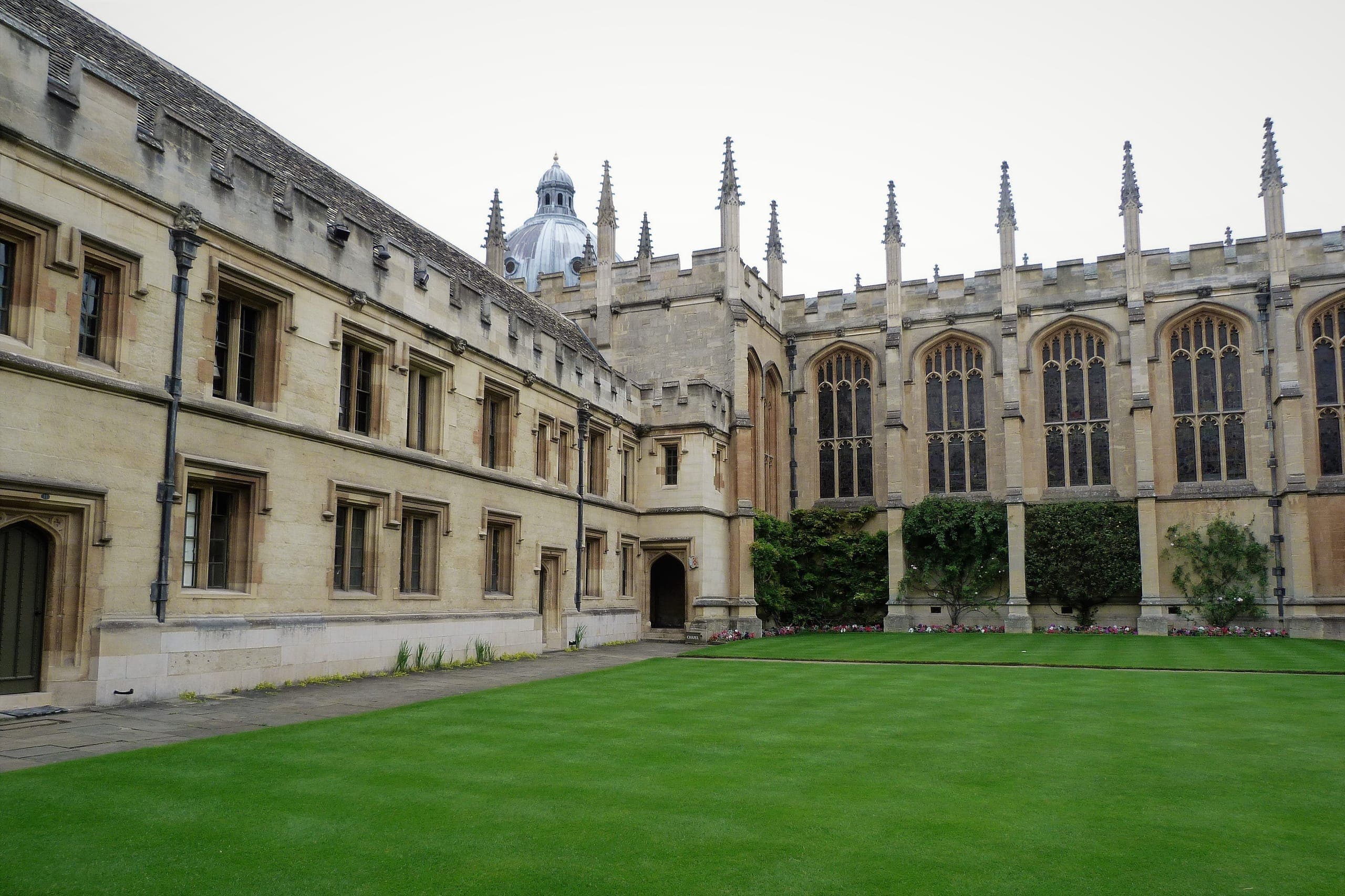
Stone college quadrangle viewed through an archway

Section 13

卒業後のキャリア

Cambridge’s Careers Service describes History and Modern Languages graduates as entering marketing and communications, public-sector research, start-ups and entrepreneurship, with alumni found at organisations including the BBC, Google, banks, law firms and the Civil Service.

Section 14

特別な事情について

Cambridge considers academic record, school or college reference, personal statement, submitted written work where required, interview performance, contextual data and extenuating circumstances together. Applicants whose education has been significantly disrupted or disadvantaged can have their school, doctor or social worker report extenuating circumstances to Cambridge.

Subject access matters for this course. Cambridge requires History and the intended language if not studying it from scratch, but applicants without a modern language can apply for all options except French and study the language ab initio.

International applicants should treat English-language evidence and visa timing as part of admissions planning, because any English condition must be met and immigration permission must be valid before starting the course.

Watch & Learn

Cambridge History and Modern Languages 参考動画

学生ブログ・模擬面接・講義体験・入試アドバイス。

History and Modern Languages Course Presentation

Course presentation created for the Cambridge University Virtual Open Days, introducing History and Modern Languages.

Studying Modern & Medieval Languages at Cambridge

Introduces the language-study side of Cambridge's language courses and the range of cultural work involved.

History at Cambridge

Undergraduate students and staff discuss studying History at the University of Cambridge.

Admissions: Tell us about your Cambridge interview...

History students discuss their Cambridge interview experience and preparation.

Why study History at Cambridge? What it's really like

Faculty-focused overview of the History course, admissions and career value.

All videos are the property of their respective creators.

Further Reading

Recommended Resources

専門講師が推薦するSupercurricular読書リスト・ウェブサイト・ツール。

よくあるご質問

Yes. Current official Cambridge 2027 pages list a College admission assessment for History and Modern Languages, with no advance registration. The College assessment page gives a Language Assessment at all Colleges and a History Assessment at Hughes Hall and St Edmund’s only.
Two pieces are required. Cambridge's course page specifies two recent school essays: one on History or equivalent, and the second in the intended post-A-level language or in English for an ab initio language route.
Yes, for all listed language options except French. Cambridge says applicants without an A Level or IB Higher Level in a modern language can apply for German, Italian, Portuguese, Russian or Spanish and study the language ab initio; French requires A Level or IB Higher Level in French.
Cambridge's current general interview guidance says most applicants have 1 or 2 interviews totalling around 35 minutes to 1 hour, with exact arrangements confirmed by the assessing College.
Applicants are considered by their chosen or allocated College, and the Winter Pool helps strong applicants be considered by other Colleges if their original College cannot make an offer. College choice matters for environment, accommodation, supervision arrangements and local assessment details, but applicants should not choose based on guesses about which College is easiest.
For the 2024 cycle, Cambridge recorded 94 applications, 44 offers and 31 acceptances for History and Modern Languages. That works out at 94 divided by 31, giving about 3.0:1.
Cambridge's global guidance expects a good C1 standard. The common IELTS Academic benchmark is 7.5 overall with 7.0 in each element, with Cambridge English alternatives also listed.
The strongest preparation combines historical argument, target-language reading or listening, close analysis of cultural material, and reflection on evidence. Applicants should be ready to discuss what they read, how they interpreted it, and why the language or source context matters.

History and Modern Languages(Cambridge)出願の専門サポート

専門講師との無料30分相談をご予約ください。

無料相談を予約する