完全入試ガイド

Architecture at Cambridge — Admissions Guide 2027

Cambridgeへの当塾生徒の合格率

65%

Cambridgeの平均合格率

21%

CambridgeのArchitectureは最も競争的な入試の一つ。Cambridge卒の専門講師による完全対策で合格を目指しましょう。

最終更新: 2026年5月

主要情報

  • A*AA典型オファー
  • 8:1志願者 / 定員
  • #2UK順位
  • 63定員(年)
  • K100UCAS コード

概要

コース概要

Architecture at Cambridge is listed for 2027 entry as “Architecture, BA (Hons) and MArch”, UCAS K100, with a typical A-Level offer of A*AA. The route is a 4-year integrated MArch with a BA exit after 3 years, built around studio work, portfolio assessment, supervisions and a College graphic/spatial assessment.

なぜCambridgeでArchitectureを?

Cambridge’s official course page displays Architecture as #2 in the Complete University Guide 2026.

A university lecture hall from the back, students taking notes

Section 01

国際学生の出願

下のマップで自国をクリックすると、出願に必要な情報(受け入れられる資格、要求スコア、英語要件、現地の文脈)が表示されます。

International Applicants

Country-specific admissions requirements

CanadaUnited States of AmericaSouth KoreaIndiaChinaUnited KingdomMalaysiaJapan

Pick a highlighted country to see the admissions-test, score, and English-language requirements that apply for applicants from that country.

Section 02

出願要件

  • A-LevelA*AA
    Mathematics, Physics, Art, History of Art recommended.Entry requirements listed are for 2027 entry or deferred 2028 entry and were marked by Cambridge as subject to change until confirmation in May 2026. Some Colleges ask for specific subjects and/or set extra conditions for most or all offers.
  • IB Diploma40–42 with 776 at HL
    Mathematics, Art and Design, Physics recommended at HL.Some Colleges usually make IB offers above the minimum offer level and Cambridge's general IB guidance says some Colleges may ask for 777 or a higher points total and/or 7 in particular subjects.
  • Advanced Placement (AP)Minimum of 5 Advanced Placement (AP) scores at grade 5 in subjects related to the course applied for, plus a high SAT or ACT score and a high overall GPA in the US High School Diploma
    AP subject choices closely related to Architecture; likely close matches include art/design, mathematics, and physics where available recommended. SAT/ACT: High SAT or ACT score expected; Cambridge's general SAT guidance states at least 1460 combined with Evidence-Based Reading and Writing at least 730 for courses outside Economics and most Science courses..Standardised tests (AP, SAT, ACT) should usually be achieved within 2 years of matriculation. Applicants must disclose all tests taken and scores achieved, including retakes.
Admissions test
No pre-registered admissions test. Some colleges set a short at-interview drawing or visual-analysis task — College admission assessment, no advance registration. The portfolio is the gating piece of work.
Written work
No written essays required. The portfolio replaces written work for this course.
Interview
Bring your portfolio to interview. Tutors will spend significant time leafing through it and asking why each piece exists. Show process and observation, not finished design renders.

Section 03

出願プロセスと重要日程

  1. Jun–Jul 2026

    Open days & shortlist colleges

    Visit Cambridge in person if you can. Open days run in late June and early July. Begin narrowing your college list and reading first-year reading lists.

  2. Sep 2026

    Draft your personal statement

    Write for the subject, not the institution. Cambridge admissions tutors look for ~80% academic content and genuine super-curricular engagement.

  3. 28 Sep 2026

    ESAT / TMUA registration deadline

    Pre-registration via the Pearson VUE admissions testing portal closes at 18:00 UK time. Late entry is not normally possible.

  4. 15 Oct 2026

    UCAS deadline

    Submit your UCAS application by 18:00 UK time on 15 October 2026.

  5. 12–16 Oct 2026

    Sit ESAT / TMUA

    ESAT and TMUA are sat in this window at Pearson VUE centres. LNAT and UCAT use their own test windows — check each test's site for booking dates.

  6. 22 Oct 2026

    My Cambridge Application deadline

    Complete the My Cambridge Application supplementary questionnaire by 18:00 UK time on 22 October 2026. This replaced the old SAQ.

  7. 10 Nov 2026

    Submitted written work deadline

    Most arts and humanities courses ask for one or two pieces of marked school work. Each college confirms its exact deadline; 10 November is the standard date.

  8. Dec 2026

    Interviews

    Around three-quarters of applicants are interviewed. Typically 1–2 interviews of 25–45 minutes each at your chosen or allocated college.

  9. 27 Jan 2027

    Main decisions released

    Cambridge releases its main decisions on 27 January 2027. Around a quarter of offers are made through the Winter Pool — strong applicants reconsidered by colleges with remaining places.

Section 04

入試テスト

Student working through problems at a desk with timed papers

Architecture(University of Cambridge)の2027年度入試では、出願者に書面の入試テストは課されません。出願は推薦書・成績・パーソナルステートメント・提出物・面接で評価されます。

Always verify on the official Oxford admissions tests page.

Section 05

面接:当日の流れと対策

Invitation → Decision: the interview timeline

Interview Invitation

Late Nov

Arrival to Interview

Early Dec

Technical Question

Mid Dec

Decision

Early Jan

Question Types You’ll See

Walkthrough of your portfolioVisual-analysis of an unseen imageShort design problem

Arrangements may be online or in person depending on the assessing College, and the interview invitation confirms the format.

Cambridge uses interviews to assess potential for the chosen course, subject understanding, readiness for high-level study, independent thinking, curiosity and enthusiasm. For Architecture, that means you should be ready to discuss your own work, visual choices, spatial observations and how your thinking changed during a project.

Typical prompt areas include portfolio discussion, visual or spatial reasoning, personal-statement follow-up, broader issues in architecture and pre-interview material if a College provides it. We recommend practising with unfamiliar images, buildings and objects, because the interview is closer to a supervision-style dialogue than to a scripted presentation.

無料のArchitecture面接練習問題バンクで本番さながらの問題を練習しましょう。

無料練習問題
Two people in academic discussion across a table

Section 06

合否決定のしくみ

Cambridge Colleges assess Architecture applicants holistically rather than by a published scoring formula.

In reality, use the weighting as a preparation guide: do not neglect the academic record because the portfolio matters, and do not treat the portfolio as decorative because the academic record is strong.

Architecture-specific evidence includes submitted artwork, a recent-work portfolio and the College drawing/spatial assessment. It helps to prepare evidence that shows process, revision, observation and judgement, not only final images.

Our recommendation · weighting of admission factors

0102030400%
Interview
0%
Predicted grades
0%
Personal statement
0%
Submitted written work
0%
Portfolio
0%
Contextual factors
% of decisionFactor

Oxbridge Mentors recommendation, drawn from observed offer patterns. University of Cambridge does not publish official weightings — exact balance varies by college, course and year.

Section 07

Personal Statement のコツ

Handwritten notes and a laptop open to a draft document

A Cambridge Architecture personal statement should make your visual and intellectual development easy to follow. We recommend anchoring each claim in one concrete example: a building studied, a drawing problem, a material experiment, a city observation, a book or a design question.

Avoid writing as if the course were only about attractive buildings. The verified course structure includes environmental design, structures, materials, professional skills and architectural history/theory from Year 1.

Use the personal statement to create interview hooks that can survive detailed questioning. Cambridge's first year includes a compulsory study trip, and the course repeatedly asks students to connect observation, design communication and reflection; this is a useful model for choosing what to mention. If you mention a building, book or exhibition, be ready to explain what you noticed, what you disagreed with and how it changed your own work.

専門家による一行一行の解説付き完全例文を見る。

Architecture PS例文

Section 08

プロジェクト

  1. 01正当性
  2. 02プロジェクト概要
  3. 03実施内容
  4. 04困難
  5. 05解決策
  6. 06振り返り

Project work is especially useful for Architecture because it lets you show visual process, observation and reflection. We recommend keeping records of decisions, failed attempts and changes of direction, because the portfolio and interview reward evidence of thinking.

Try a local building observation dossier using annotated sketches, photos, measured diagrams and a critique of how people move through the space. Try a climate-responsive redesign proposal by mapping light, heat, ventilation and materials in a familiar room or threshold. Try a comparison of two buildings from different periods or cultures, focusing on structure, plan, social purpose and materials.

Open books, a notebook, and a coffee on a wooden desk

Section 08

その他のサプリキュラム

Other activities should support the same core question: can you observe, analyse and communicate the built environment with care?

These are support, not substitute. The point is not volume; it is whether the activity improves the way you think and talk about architecture.

  • Sketchbook practice:

    Maintain regular observational drawing of buildings, interiors, details and urban scenes.

  • Site visits:

    Visit buildings, exhibitions, neighbourhoods and construction sites where possible, recording how spaces are used.

  • Reading journal:

    Keep notes on books, essays and lectures, focusing on arguments and examples you can discuss.

  • Modelling and making:

    Use paper, card, found materials, simple CAD or 3D tools to explore form, light and structure.

  • Materials and structures experiments:

    Test span, load, joints, insulation or daylight, then connect observations to design decisions.

  • Public communication:

    Practise explaining a building or design idea to a non-specialist audience.

Section 08

コンペティション

Competitions are optional enrichment rather than Cambridge requirements. What they do well is give you a brief, deadline and external standard.

  1. John Locke Institute Essay Prize — tests independent argument, critical reasoning and persuasive writing on broad humanities and social questions relevant to architectural culture. Prepare by choosing a question that connects buildings, cities, ethics or society to a clear thesis.
  2. Trinity College Cambridge Essay Prizes — test research, close argument and written communication for ambitious sixth-form students. Prepare by using culture, history, politics or literature to connect a discipline to the built environment.
  3. Oxford-run academic competitions for school-aged students — test subject exploration beyond the curriculum through essay and academic competitions. Prepare by selecting a brief linked to history, art, culture, environment or society.
  4. Nuffield Research Placements — test research maturity, technical curiosity and supervised project work. Prepare by looking for materials, sustainability, environmental science, engineering, urban systems or digital-analysis projects.
  5. UK Senior Mathematical Challenge — tests mathematical reasoning, precision and problem solving useful for structures, proportion and spatial reasoning. Prepare with past UKMT problems and focus on concise logic rather than routine calculation.

None are required; one or two done well beats five half-attempted.

Section 09

コース内容

  1. Year

    01 / 04

    1

    Architecture Part IA

    Foundations in design, history, theory, structures and environment

    The first year establishes the groundwork of architectural study and is mostly taught jointly with Design. Studio work introduces the possibilities of architecture and the communication skills needed to develop designs for buildings and objects, beginning with hand drawing before moving towards models and digital presentation.

    Compulsory study trip at the end of Lent term, with a usual compulsory trip abroad during the Easter vacation.

  2. Year

    02 / 04

    2

    Architecture Part IB

    Technical integration and studio choice

    In the second year, students choose from studio options whose projects range from mapping studies and interior interventions to small or medium-sized buildings. The year focuses on integrating technical skills from first year with ongoing lecture teaching and studio output.

    Choice of studio scale and theme begins in Year 2.

  3. Year

    03 / 04

    3

    Architecture Part IIA

    Advanced studio and BA exit point

    Students choose from a selection of studio options, each requiring a building design by the end of the year. The work must combine technical realisation with a coherently framed conceptual approach, and studio remains the core of the course.

    Year 3 is the BA exit point and the progression checkpoint for the integrated fourth year.

  4. Year

    04 / 04

    4

    Architecture Part IIB

    Optional integrated MArch year

    Progression to the fourth year depends on Year 3 performance, with Cambridge currently stating that students need at least a 2.i in Year 3. The year centres on a full-year studio design project and a major independent dissertation, research project or equivalent exercise.

    Integrated master’s year designed to meet the ARB’s updated academic-outcomes route, subject to progression.

Section 10

ポートフォリオ

Architecture applicants must submit their own artwork before interview. The pre-interview submission is a PDF of the applicant’s own artwork, up to 6 A4 pages and under 15MB.

If invited to interview, applicants should be ready to show a recent-work portfolio that does not need to be architectural and may include drawing, painting, sculpture, photography or photographs of 3D work. Cambridge says the portfolio helps interviewers discuss the applicant’s interests, experience and potential.

We recommend checking College instructions before finalising your UCAS choice.

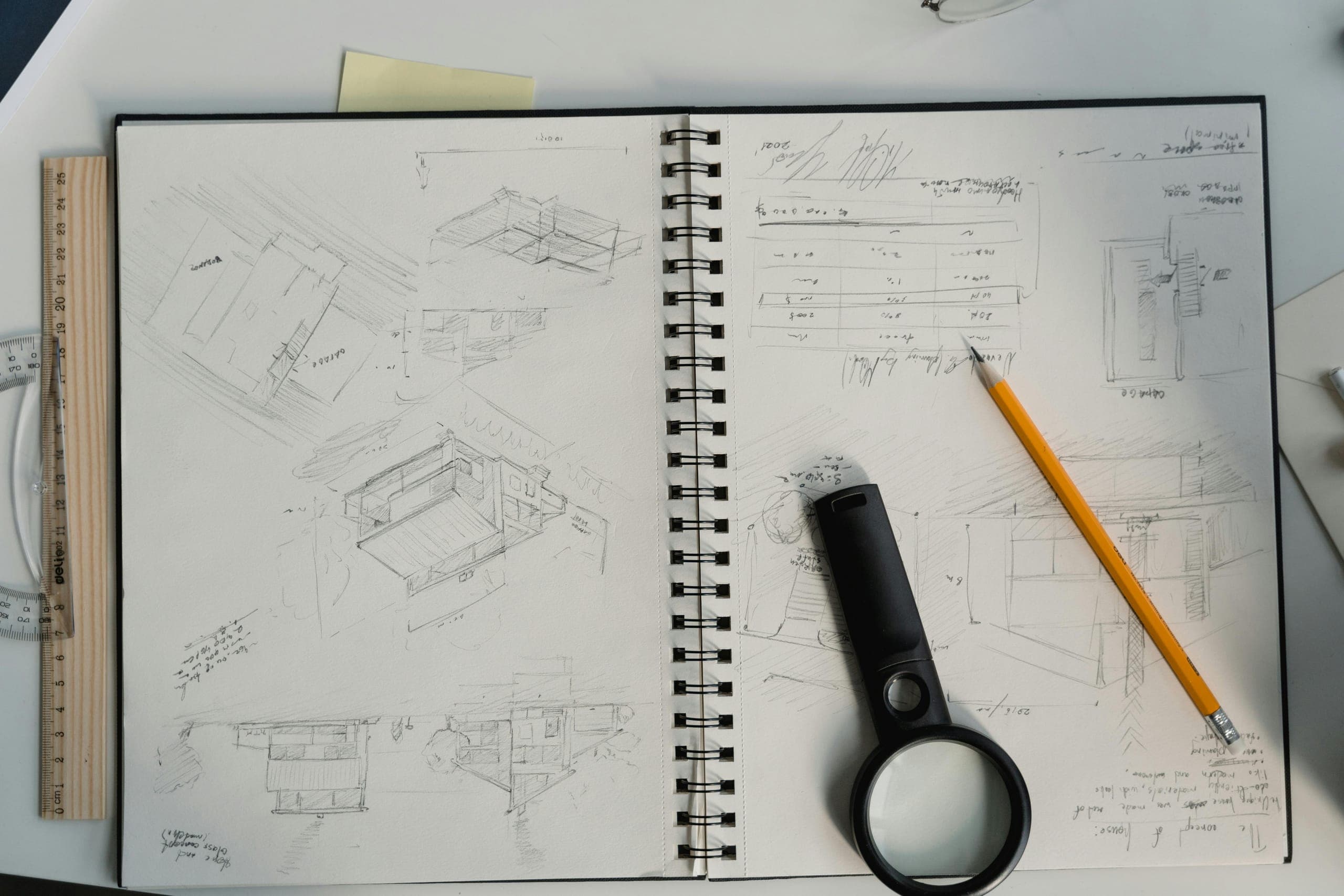
A spread of design sketches and a sketchbook

Section 11

Architectureの知識を深める

Pair it with The Eyes of the Skin by Juhani Pallasmaa for atmosphere, touch and embodied experience.

For social value and professional purpose, use Why Architects Matter by Flora Samuel and Architecture Depends by Jeremy Till. For a compact historical orientation, Modern Architecture: A Very Short Introduction by Adam Sharr is listed as a concise guide to modern architectural ideas and movements.

For regular visual exposure, RIBA Architecture provides professional lectures and architecture culture, The B1M covers major buildings and construction processes, and Dezeen offers short documentaries and interviews on contemporary design. For audio, About Buildings + Cities builds architectural-history vocabulary, 99% Invisible sharpens attention to everyday built environments, and RIBA Future Architects In Conversation covers study, practice, identity, climate and professional pathways.

If you want a structured course, The Architectural Imagination introduces architecture as cultural expression and technical achievement. RIBA Foundation in Architecture course and RIBA Academy can support applicants wanting structured portfolio-building and wider subject awareness.

A study planner, highlighters and a stack of revision cards

Section 12

カレッジ選択と再振り分け

29 colleges offer this subject. 10.2% (2024 cycle: 2,257 open applications out of 22,153 total direct+open applications) of applicants submit an open application. 20.6% (2024 cycle: 4,557 winter-pooled applications out of 22,153 total direct+open applications) of places come through the pool.

Cambridge Architecture applicants apply to a College or make an open application. The chosen or allocated College considers the application first, and the Winter Pool allows other Colleges to review strong applications that cannot be offered by the original College.

In the 2024 cycle, open applications were 10.2% of total direct-plus-open applications, and winter-pooled applications were 20.6% of all direct-plus-open applications.

College choice should be based on living environment, location, accommodation, community and College-specific application instructions. It should not be treated as a reliable tactical route into Architecture, because Cambridge shares the core academic standard and uses pooling to reduce College-choice distortions.

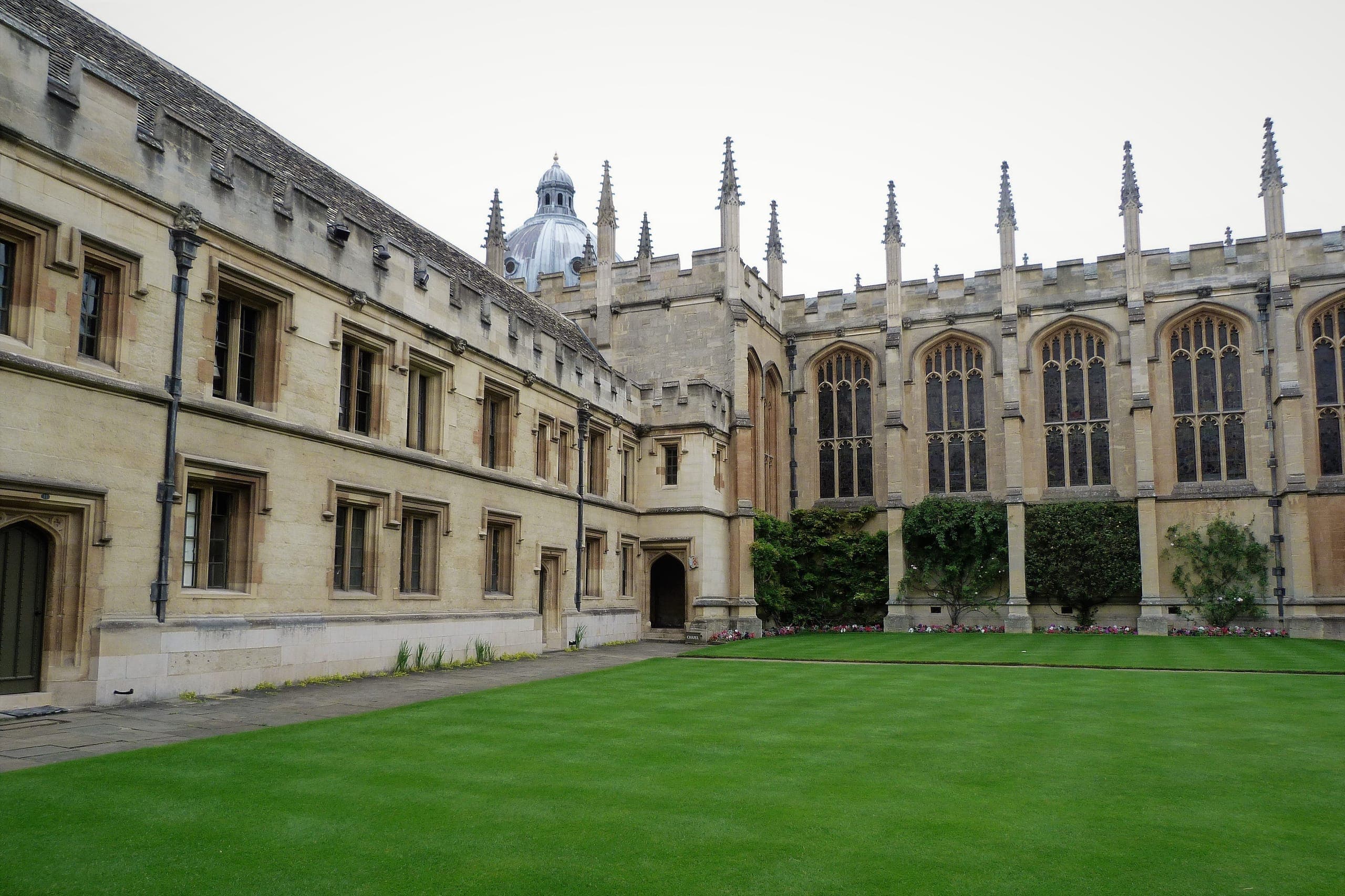
Stone college quadrangle viewed through an archway

Section 13

卒業後のキャリア

Cambridge Architecture graduates move into architectural practice and adjacent built-environment fields, with the Careers Service identifying engineering and architectural consultancy, construction, education, the arts, public service and manufacturing as typical destinations. Newer Careers Service summary data identify engineering and architectural consultancy as the largest listed sector, with further study also visible in the outcomes summary.

The sector chart uses Cambridge Architecture’s fuller official 2012–14 destinations publication because it provides a complete sector distribution across known employment outcomes; treat those percentages as historical context, not a current employment forecast.

Section 14

特別な事情について

Cambridge considers applications holistically and uses contextual data to understand achievement in context rather than as a mechanical points system. Contextual data do not systematically lower offer conditions, and academic achievement and potential remain central.

Relevant circumstances may include care experience, refugee or humanitarian protection status, estrangement, free-school-meal eligibility and declared extenuating circumstances. School context can include GCSE/A-Level performance patterns and previous Oxbridge offer history where reliable data are available.

For Architecture, subject availability matters because some schools may not offer Art and Design, Physics or extensive portfolio support. The Extenuating Circumstances Form route should be used where disruption has materially affected study, assessment or preparation.

Watch & Learn

Cambridge Architecture 参考動画

学生ブログ・模擬面接・講義体験・入試アドバイス。

An Introduction to RIBA Future Architects

A student-facing introduction to RIBA support, study routes and early architecture career thinking.

RIBA Future Architects in Conversation: Disability in Architecture

Discussion format useful for thinking about access, inclusion and lived experience in design.

Inside the World's Wettest Building

A visual case study in ambitious building systems, environment and construction challenges.

This is The World's Most Complex Construction Project

Shows how technical, logistical and spatial constraints shape large built projects.

The US Megaproject You've (Probably) Never Heard Of

A concise infrastructure case study for applicants interested in cities, scale and delivery.

All videos are the property of their respective creators.

Further Reading

Recommended Resources

専門講師が推薦するSupercurricular読書リスト・ウェブサイト・ツール。

  • Cambridge Architecture course page by University of Cambridge[Website]Primary source for current entry requirements, course format, submitted work, assessment and portfolio instructions.
  • Cambridge Department of Architecture reading list for candidates by Department of Architecture, University of Cambridge[Article]Official candidate reading list with introductory and reflective architecture texts.
  • RIBA Future Architects by Royal Institute of British Architects[Website]Pathway overview for prospective architects, including routes into architectural education and early professional formation.
  • RIBA Future Architects resources by Royal Institute of British Architects[Website]Practical student-facing resources on architecture study habits, portfolio development, practice issues and early-career preparation.
  • RIBA Journal by Royal Institute of British Architects Journal[Paper]Current professional discussion, case studies, competitions, technology and design debates.
  • About Buildings + Cities by Luke Jones, George Gingell and Matthew Lloyd Roberts[Podcast]Architectural history and urban culture episodes suitable for building interview discussion material.
  • 99% Invisible architecture archive by 99% Invisible[Podcast]Architecture and design stories that train close observation of the built environment.
  • The Architectural Imagination by Harvard University[Course]Structured introduction to architecture as cultural expression and technical achievement.

よくあるご質問

Yes. Current official 2027 Cambridge Architecture guidance states that Architecture has a College admission assessment at all Colleges. No advance registration is required; shortlisted applicants receive arrangements from their assessing College.
Yes. Applicants are expected to submit a short PDF of their own artwork before interview and, if invited, bring a portfolio of recent work to discuss. The work does not have to be architectural.
Cambridge says work can include drawing, painting, sculpture, photography and photographs of 3D work. A strong admissions portfolio should show observation, process, spatial curiosity, experimentation and reflection, not just polished final images.
The registry and official page agree on A*AA at A Level. The official page lists IB guidance as 41-42 points with 776 at Higher Level.
In the 2024 cycle, Cambridge recorded 526 Architecture applications, 88 offers and 64 acceptances. Using applications divided by acceptances, that is about 8.2 applicants per acceptance.
College choice affects where the application is first assessed and the applicant's living/tutorial environment. The academic standard is Cambridge-wide, and the Winter Pool can move strong applicants between Colleges. Applicants should still check College-specific Architecture instructions carefully.
International applicants use the same UCAS deadline and are assessed against equivalent academic standards. They may also need to meet English-language and visa/immigration requirements.
Cambridge says contextual data help admissions tutors interpret achievement and circumstances, but do not systematically lower offer conditions. Academic achievement and potential remain central.

Architecture(Cambridge)出願の専門サポート

専門講師との無料30分相談をご予約ください。

無料相談を予約する