完全入試ガイド

Education at Cambridge — Admissions Guide 2027

Cambridgeへの当塾生徒の合格率

65%

Cambridgeの平均合格率

21%

Education(University of Cambridge)出願に必要なすべて:出願要件・面接・典型オファーとCambridge卒業生によるインサイダーアドバイス。

最終更新: 2026年5月

主要情報

  • A*AA典型オファー
  • 4:1志願者 / 定員
  • #1UK順位
  • 37定員(年)
  • X300UCAS コード

概要

コース概要

Education at Cambridge is a 3-year BA (Hons) course (UCAS X300) with a standard A-level offer of A*AA, no admissions test, and 2 pieces of submitted written work. It is a standalone Education Tripos rather than teacher training, moving from an interdisciplinary foundation to research preparation and a final-year dissertation.

なぜCambridgeでEducationを?

Cambridge holds #1 for Education in the Complete University Guide 2026, and the audit also records a #1= tie with Edinburgh in The Times and Sunday Times Good University Guide 2026.

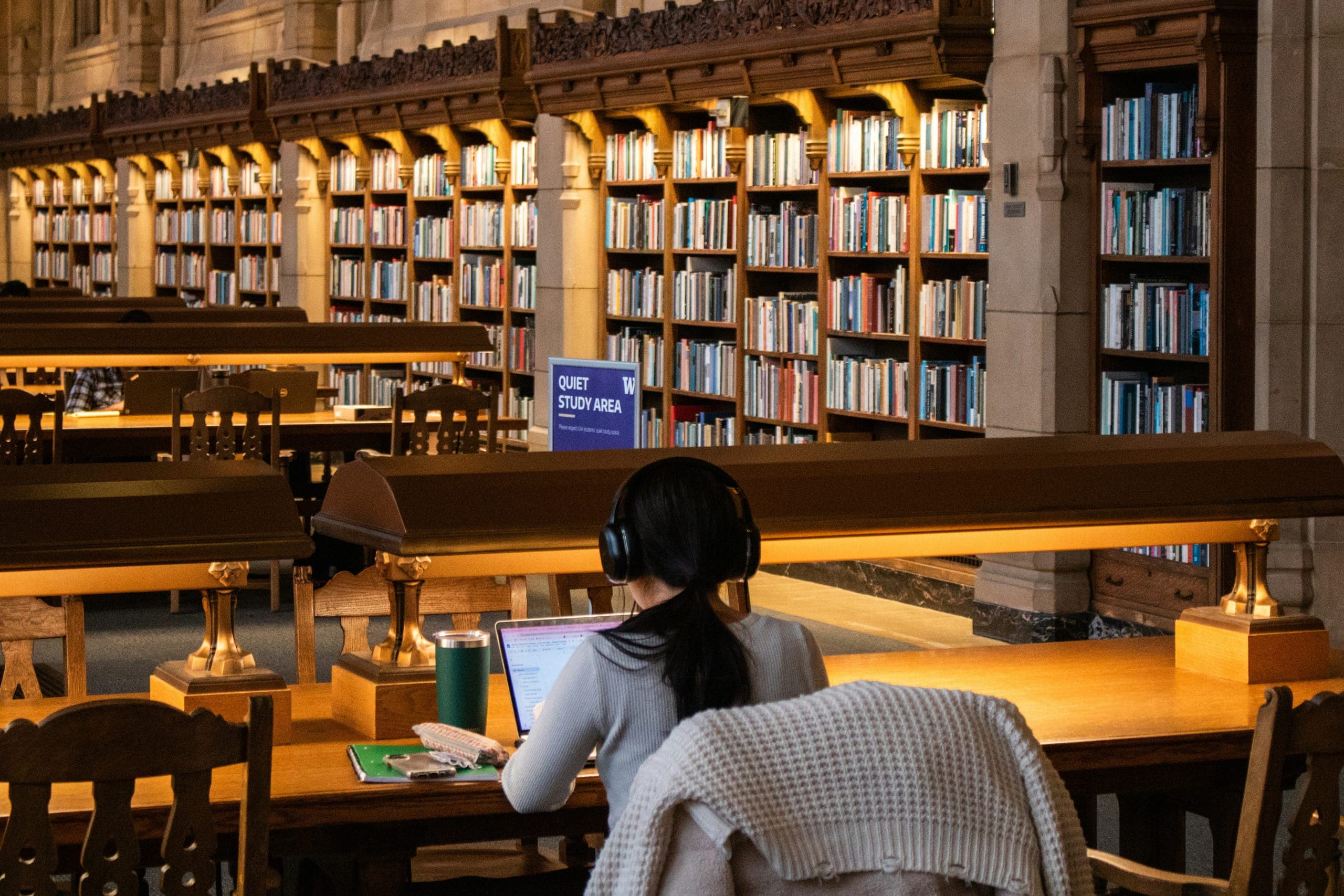
A university lecture hall from the back, students taking notes

Section 01

国際学生の出願

下のマップで自国をクリックすると、出願に必要な情報(受け入れられる資格、要求スコア、英語要件、現地の文脈)が表示されます。

International Applicants

Country-specific admissions requirements

FijiTanzaniaW. SaharaCanadaUnited States of AmericaKazakhstanUzbekistanPapua New GuineaIndonesiaArgentinaChileDem. Rep. CongoSomaliaKenyaSudanChadHaitiDominican Rep.RussiaBahamasFalkland Is.NorwayGreenlandFr. S. Antarctic LandsTimor-LesteSouth AfricaLesothoMexicoUruguayBrazilBoliviaPeruColombiaPanamaCosta RicaNicaraguaHondurasEl SalvadorGuatemalaBelizeVenezuelaGuyanaSurinameFranceEcuadorPuerto RicoJamaicaCubaZimbabweBotswanaNamibiaSenegalMaliMauritaniaBeninNigerNigeriaCameroonTogoGhanaCôte d'IvoireGuineaGuinea-BissauLiberiaSierra LeoneBurkina FasoCentral African Rep.CongoGabonEq. GuineaZambiaMalawiMozambiqueeSwatiniAngolaBurundiIsraelLebanonMadagascarPalestineGambiaTunisiaAlgeriaJordanUnited Arab EmiratesQatarKuwaitIraqOmanVanuatuCambodiaThailandLaosMyanmarVietnamNorth KoreaSouth KoreaMongoliaIndiaBangladeshBhutanNepalPakistanAfghanistanTajikistanKyrgyzstanTurkmenistanIranSyriaArmeniaSwedenBelarusUkrainePolandAustriaHungaryMoldovaRomaniaLithuaniaLatviaEstoniaGermanyBulgariaGreeceTurkeyAlbaniaCroatiaSwitzerlandLuxembourgBelgiumNetherlandsPortugalSpainIrelandNew CaledoniaSolomon Is.New ZealandAustraliaSri LankaChinaTaiwanItalyDenmarkUnited KingdomIcelandAzerbaijanGeorgiaPhilippinesMalaysiaBruneiSloveniaFinlandSlovakiaCzechiaEritreaJapanParaguayYemenSaudi ArabiaAntarcticaN. CyprusCyprusMoroccoEgyptLibyaEthiopiaDjiboutiSomalilandUgandaRwandaBosnia and Herz.MacedoniaSerbiaMontenegroKosovoTrinidad and TobagoS. Sudan

Pick a highlighted country to see the admissions-test, score, and English-language requirements that apply for applicants from that country.

Section 02

出願要件

  • A-LevelA*AA
    English Literature, History, Sociology, Psychology recommended.The listed entry requirements are for 2027 entry or deferred 2028 entry and were marked subject to change until confirmation in May 2026. Some Colleges may set higher or additional offer conditions.
  • IB Diploma40–42 with 776 at HL
    English (language or literature), History, Languages (ancient or modern), Social science subjects recommended at HL.Some Colleges usually make IB offers above the minimum offer level and may ask for 777 or a higher points total; check College requirements.
  • Advanced Placement (AP)Minimum of five AP Test scores at Score 5
    AP subjects particularly relevant to Education, aligned where possible with English, History, Languages, or social science subjects recommended. SAT/ACT: SAT: minimum combined score of at least 1460 with Evidence-Based Reading and Writing at least 730 for non-science/non-Economics courses; ACT: 32 out of 36 for all other courses, alongside APs or equivalent qualifications..AP Tests usually need to have been taken within a two-year period, with the most recent test results achieved within two years of starting the course; applicants should report all tests and scores.
Admissions test
No admissions assessment for 2027 entry — confirmed against the official Cambridge admissions-test table.
Interview
Two college interviews. Tutors look for clear argument from evidence — a short pre-read on policy or research is a typical interview prompt.

Section 03

出願プロセスと重要日程

Jun–Jul 2026

Open days & shortlist colleges

Visit Cambridge in person if you can. Open days run in late June and early July. Begin narrowing your college list and reading first-year reading lists.

Sep 2026

Draft your personal statement

Write for the subject, not the institution. Cambridge admissions tutors look for ~80% academic content and genuine super-curricular engagement.

28 Sep 2026

ESAT / TMUA registration deadline

Pre-registration via the Pearson VUE admissions testing portal closes at 18:00 UK time. Late entry is not normally possible.

15 Oct 2026

UCAS deadline

Submit your UCAS application by 18:00 UK time on 15 October 2026.

12–16 Oct 2026

Sit ESAT / TMUA

ESAT and TMUA are sat in this window at Pearson VUE centres. LNAT and UCAT use their own test windows — check each test's site for booking dates.

22 Oct 2026

My Cambridge Application deadline

Complete the My Cambridge Application supplementary questionnaire by 18:00 UK time on 22 October 2026. This replaced the old SAQ.

10 Nov 2026

Submitted written work deadline

Most arts and humanities courses ask for one or two pieces of marked school work. Each college confirms its exact deadline; 10 November is the standard date.

Dec 2026

Interviews

Around three-quarters of applicants are interviewed. Typically 1–2 interviews of 25–45 minutes each at your chosen or allocated college.

27 Jan 2027

Main decisions released

Cambridge releases its main decisions on 27 January 2027. Around a quarter of offers are made through the Winter Pool — strong applicants reconsidered by colleges with remaining places.

Section 04

入試テスト

Student working through problems at a desk with timed papers

Education(University of Cambridge)の2027年度入試では、出願者に書面の入試テストは課されません。出願は推薦書・成績・パーソナルステートメント・提出物・面接で評価されます。

Always verify on the official Oxford admissions tests page.

Section 05

面接:当日の流れと対策

Invitation → Decision: the interview timeline

Interview Invitation

Late Nov

Arrival to Interview

Early Dec

Technical Question

Mid Dec

Decision

Early Jan

Question Types You’ll See

Discussion of an education-policy articleQuestions on your personal-statement readingArgument about classroom assessment or curriculum

Cambridge describes interviews as academic conversations designed to explore how applicants think and respond to unfamiliar material. The College invitation confirms timing, format, location and any pre-interview reading, task or written-work instructions.

For Education, the discussion may ask you to respond to a current issue, an unfamiliar education scenario, a text or material, your recent school topics, your personal statement, or any pre-interview reading supplied by the College.

Prepare by practising live thinking rather than polished speeches. Take a claim such as “smaller classes improve learning” or “AI will widen educational inequality”, then explain what evidence would change your mind.

Your submitted written work may also matter in preparation, because the official course page requires 2 pieces of written work and the assessing College explains how to submit them.

無料のEducation面接練習問題バンクで本番さながらの問題を練習しましょう。

無料練習問題
Two people in academic discussion across a table

Section 06

合否決定のしくみ

Cambridge Education decisions are made holistically by Colleges, using all available evidence rather than a published points formula.

For this page visualisation, the largest estimated components are interview performance and academic record or predicted grades, with supporting roles for submitted written work, the personal statement, the school or college reference, contextual data and extenuating circumstances.

No admissions-test criterion is included because official Cambridge sources state there is no admission assessment for Education. Cambridge does not publish fixed percentage weights for Education admissions, so the decision-criteria weights are indicative — Cambridge does not publish numerical weightings.

Our recommendation · weighting of admission factors

0102030405046%
Interview
31%
Predicted grades
15%
Personal statement
8%
Contextual factors
% of decisionFactor

Oxbridge Mentors recommendation, drawn from observed offer patterns. University of Cambridge does not publish official weightings — exact balance varies by college, course and year.

Section 07

Personal Statement のコツ

Handwritten notes and a laptop open to a draft document

Your Education personal statement should make clear that you understand the course as an academic degree. It helps to move beyond “I want to teach” and show how you have thought about learning, schools, childhood, inequality, culture or policy.

A strong paragraph usually starts with one precise question. For example, you might compare two explanations for educational inequality, then explain which evidence you found more persuasive and where the evidence remains limited.

Because Education has no admissions test for 2027 entry, the written application and interview evidence carry more of the burden. We recommend using your personal statement to show disciplined reading, not a long inventory of volunteering.

Avoid claiming certainty too early. Cambridge interviews reward applicants who can revise an argument when new evidence appears, so your statement should leave room for intellectual development.

専門家による一行一行の解説付き完全例文を見る。

Education PS例文

Section 08

プロジェクト

  1. 01正当性
  2. 02プロジェクト概要
  3. 03実施内容
  4. 04困難
  5. 05解決策
  6. 06振り返り

A good Education project asks a small question and answers it carefully. It should show how you use evidence, how you handle uncertainty, and how you connect theory to real educational settings.

We recommend writing a short reflection after each project. The reflection is often more useful than the project itself because it shows what changed in your thinking.

Broad project ideas:

  • Compare two education systems through one question — Choose a focused question, such as how Japan and England define school success or how Singapore and Finland approach teacher autonomy. Use official policy documents and OECD or UNESCO data, then write a short argument about what the comparison reveals and what it cannot prove.
  • Mini literature review on a debated education claim — Pick a claim such as smaller classes improve learning, feedback is more powerful than grades, or play supports early learning. Read 6-8 sources across research, policy and practitioner perspectives, then summarise the evidence and identify gaps.
  • Learning environment observation diary — Observe non-sensitive public learning environments such as libraries, museums, school open events, online learning platforms or theatre education programmes. Avoid collecting identifiable personal data; focus on how space, language and activity design shape learning.
Open books, a notebook, and a coffee on a wooden desk

Section 08

その他のサプリキュラム

Other supercurricular work should widen your academic view of Education. Aim for a mix of reading, evidence appraisal, current affairs, talks and analytical writing.

These are support, not substitute. One carefully reflected activity is better than six that you cannot discuss.

  • Interdisciplinary reading:

    Read across psychology, sociology, philosophy, politics, literature and child development, then keep a reading log that records arguments rather than just summaries.

  • Evidence appraisal:

    Use the Education Endowment Foundation toolkit or research summaries to practise asking what counts as evidence, what outcomes were measured and whether findings transfer to different contexts.

  • Policy and current affairs tracking:

    Follow education policy debates on curriculum, assessment, inequality, SEND, school funding or AI in education, and write short reflections comparing competing positions.

  • Public lectures and webinars:

    Attend online lectures from universities, think tanks or education charities. Prepare one question in advance and one paragraph afterwards on how the talk changed your view.

  • Cultural learning spaces:

    Visit museums, theatres, libraries or community learning initiatives and analyse how informal education differs from classroom learning.

  • Argument practice:

    Write short essays or blog-style pieces that defend a view, consider objections and revise the conclusion after reading a contrasting source.

Section 08

コンペティション

Competitions are not required for Cambridge Education. What they do well is stretch your argument, research habits and willingness to work under a tight question.

  1. ** John Locke Institute Global Essay Prize ** — Tests: Independent thought, research, argumentation, originality and persuasive writing across subjects including psychology, politics, public policy and philosophy. Prepare by: Choose a question close to an education-related debate, define terms tightly, read beyond the first page of search results and build a sustained argument with objections.
  2. ** Oxford academic competitions for school-aged students ** — Tests: Research-led essay writing across Oxford college and department competitions, including humanities and social-science themes relevant to Education applicants. Prepare by: Use the Oxford hub to identify live competitions, then treat the question like a mini admissions essay: precise scope, evidence, counterargument and a clear conclusion.
  3. ** Trinity College Cambridge Essay Prizes ** — Tests: Subject-specific essay research and literary, historical, political, linguistic or cultural analysis for Lower and Upper Sixth students. Prepare by: Pick a prize that matches your Education angle, such as literature, politics, history or languages, and use the essay to show independent reading and disciplined structure.
  4. ** Royal Economic Society Young Economist of the Year ** — Tests: Economic reasoning, evidence use and policy analysis, especially useful for applicants interested in education inequality, funding or human capital. Prepare by: Frame an education-related economic question through incentives, trade-offs and evidence rather than opinion alone.
  5. ** Big Oxplore Essay Competition ** — Tests: Curiosity-led argument on big questions, especially for younger applicants or those developing confidence in independent essay writing. Prepare by: Use Oxplore's question prompts to practise connecting examples from education, culture, psychology and society into one coherent argument.

None are required; one or two done well beats five half-attempted.

Section 09

コース内容

  1. Year

    01 / 03

    1

    Education Tripos Part I

    Interdisciplinary foundations

    Year 1 gives students a broad compulsory introduction to Education as an interdisciplinary field. The four required papers introduce education systems and disciplines, learning and development, creativity and culture, and social justice, providing a foundation for more specialist choices in later years.

    All students take the same four compulsory papers, giving a shared foundation across psychology, sociology, philosophy, literature, creativity, culture and social justice.

  2. Year

    02 / 03

    2

    Education Tripos Part IIA

    Research foundations and pathway choice

    Year 2 combines compulsory research preparation with optional papers that allow students to begin shaping their pathway through the degree. The compulsory papers prepare students for the third-year dissertation, while optional papers can support specialisation in areas such as education and philosophy, education and psychology, education and social justice, or education, literature and drama.

    The two compulsory research papers prepare students directly for the Part IIB dissertation.

  3. Year

    03 / 03

    3

    Education Tripos Part IIB

    Dissertation and advanced options

    Year 3 centres on a compulsory dissertation of 8,000 to 10,000 words, allowing students to pursue an independent research project in an area of interest. Students also take three further option papers, giving flexibility to deepen a specialist pathway or continue a broader interdisciplinary route.

    The compulsory dissertation lets students design and complete an independent research project.

Section 10

Educationの知識を深める

Start with resources that give you different intellectual routes into Education, rather than collecting a long reading list.

Books

  • **Education: A Very Short Introduction, Gary Thomas** — A concise route into big questions about what education is for and how schooling has evolved.
  • **Pedagogy of the Oppressed, Paulo Freire** — A classic text for thinking critically about power, dialogue and liberation in education.
  • **The Beautiful Risk of Education, Gert J. J. Biesta** — Useful for applicants interested in philosophy of education and the limits of measurement-led schooling.
  • **The Smartest Kids in the World, Amanda Ripley** — An accessible comparative look at schooling systems and what international comparisons can and cannot show.

Video and lectures

  • **CambridgeEDUC** — Faculty talks and public events give applicants a sense of Cambridge Education research culture.
  • ** TED-Ed ** — Short educational videos are useful for analysing communication, explanation and learning design.
  • **Education Endowment Foundation** — Evidence-focused videos and playlists help applicants ask what improves learning in schools.
  • **Evidence Based Education** — Useful for exploring the bridge between classroom practice, research and policy.

Podcasts

Treat them as one podcast stream for admissions preparation, using episodes to practise listening for evidence, claims and assumptions.

Short courses and policy sources

  • **What future for education?** — A structured MOOC that prompts critical reflection on education, teaching and learning.
  • **Leaders of Learning** — Helps applicants think about theories of learning beyond school classrooms.
  • **Education & Development free courses** — Free short courses on learning, development and education-related themes.
  • **Becoming a Teacher** — A practical introduction to teaching that can help applicants distinguish Education as an academic field from teacher training.

For policy and evidence work, use the Education Endowment Foundation, UNESCO Global Education Monitoring Report, OECD Education and the British Educational Research Association from the recommended resources panel. The UCAS personal statement guide is not Education-specific, but it can help translate interdisciplinary reading, project work and reflection into a clear application narrative.

A study planner, highlighters and a stack of revision cards

Section 11

カレッジ選択と再振り分け

29 colleges offer this subject. 10% of applicants submit an open application. 21% of places come through the pool.

Education is not offered at every College, so applicants should shortlist only Colleges that accept Education.

College choice matters mainly for fit, availability and interview administration rather than for course content. All Cambridge Education students follow the same Faculty course, attend the same lectures and are assessed for the same degree.

The Winter Pool lets Colleges review strong applicants who may not receive an offer from their original College. The audit treats the exact open-application and winter-pool percentages as partial because they were not independently rederived.

Choose a College for practical fit: whether it accepts Education, location, accommodation, size and atmosphere. Avoid choosing solely on perceived competitiveness.

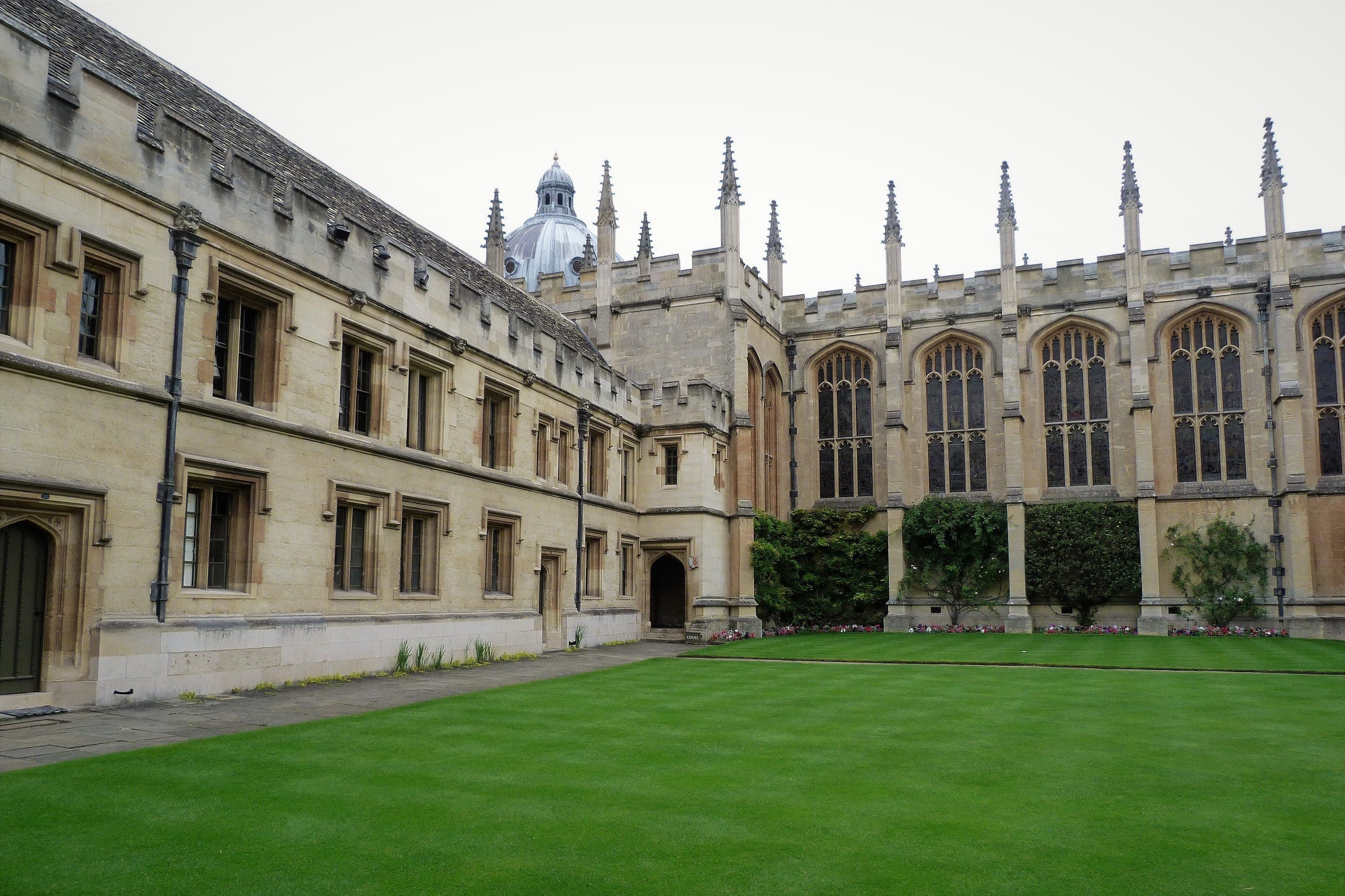
Stone college quadrangle viewed through an archway

Section 12

卒業後のキャリア

Cambridge lists graduate routes including research, educational psychology and neuroscience, teaching, communication, publishing, performing arts, journalism, law, educational leadership, the Civil Service, government policy and administration, media, theatre, heritage and museum education, HR, business and consultancy, charities, NGOs and international development. Discover Uni Graduate Outcomes data for students graduating 2021-23 reports that 75% went on to work and/or study 15 months after the course, with 90% of employed respondents in highly skilled work. Treat those figures as indicative rather than definitive: the Discover Uni employment data is based on 25 students, 60% of those asked.

In practice, this breadth is the point. Education is a good fit if you want a degree that builds reading, argument, research and policy judgement, rather than a degree that points to one narrow job title.

Section 13

特別な事情について

Cambridge uses contextual data to understand an applicant’s achievements in context, including individual circumstances, geodemographic or regional data, and school or college performance data.

Contextual consideration does not mean Cambridge systematically makes lower offers or excuses a weak academic record; recent and relevant academic achievement remains central.

Individual circumstances Cambridge may consider include experience of care, refugee or humanitarian protection status, estrangement, free school meal eligibility in the last six years, and submitted extenuating circumstances.

School or college context may include GCSE and A level performance, progression patterns, and whether the post-16 provider has had fewer than five Oxbridge offers in the previous five years.

Some school-performance datasets are only available for England, so Cambridge notes that different forms of evidence may be used for applicants from Scotland, Wales, Northern Ireland or international systems.

Watch & Learn

Cambridge Education 参考動画

学生ブログ・模擬面接・講義体験・入試アドバイス。

Education at Cambridge

Official overview video introducing the Education course and the Faculty context.

A day in the life of a Cambridge Education student

Student-perspective video linked from the Cambridge Education course page.

Do schools kill creativity?

Sir Ken Robinson's widely discussed TED talk, useful for debating creativity, curriculum and schooling.

RSA ANIMATE: Changing Education Paradigms

Animated talk that raises questions about industrial-era schooling, creativity and reform.

About the Education Endowment Foundation

Short introduction to the EEF's evidence-focused mission and approach.

All videos are the property of their respective creators.

Further Reading

Recommended Resources

専門講師が推薦するSupercurricular読書リスト・ウェブサイト・ツール。

よくあるご質問

No. For 2027 entry, official Cambridge sources state that Education has no admission assessment. This is separate from submitted written work: the official course page states applicants need to submit 2 pieces of written work.
The UCAS course code is X300, and the degree is BA (Hons) over 3 years.
The standard Cambridge Education offer is A*AA at A level. Cambridge's course page lists the IB requirement as 41-42 points overall with 776 at Higher Level.
No specific subjects are required. Cambridge recommends subjects such as English language or literature, history, languages and social sciences, but applicants can come from a range of academic backgrounds.
Cambridge central guidance says most applicants have 1 or 2 interviews lasting 35 minutes to 1 hour total, with exact details confirmed by the assessing College. The earlier registry-specific value of two 25-minute interviews is not centrally published by Cambridge from current central guidance.
Yes. International applicants apply through UCAS by the same 15 October UK deadline and must meet Cambridge's academic and English language expectations for their qualification route.
No. The Faculty course is the same across Colleges, but not every College accepts Education applicants. College choice affects accommodation, community, support and interview administration, not the degree content.
In the 2024 admissions cycle, the official Cambridge table recorded 164 applications, 54 offers and 37 acceptances for Education, which is 4.4 applications per acceptance.
Yes. The official Cambridge Education course page for 2027 entry states that applicants need to submit 2 pieces of written work, with submission method and deadline explained by the College assessing the application.

Education(Cambridge)出願の専門サポート

専門講師との無料30分相談をご予約ください。

無料相談を予約する