完全入試ガイド

History at Cambridge — Admissions Guide 2027

Cambridgeへの当塾生徒の合格率

65%

Cambridgeの平均合格率

21%

CambridgeのHistoryは最も競争的な入試の一つ。Cambridge卒の専門講師による完全対策で合格を目指しましょう。

最終更新: 2026年5月

主要情報

  • A*AA典型オファー
  • 3:1志願者 / 定員
  • #1UK順位
  • 170定員(年)
  • V100UCAS コード

概要

コース概要

History at Cambridge is a three-year BA (Hons) with UCAS code V100 and a typical A*AA offer. The course moves from broad Part IA papers and source work to Part IB research and Part II specialisation, with small-group supervisions central throughout.

なぜCambridgeでHistoryを?

Cambridge ranks #1 in the Complete University Guide and #3 in the Guardian 2026 History subject table, so the strongest headline is not a single universal rank but Cambridge’s position across two verified UK subject tables.

A university lecture hall from the back, students taking notes

Section 01

国際学生の出願

下のマップで自国をクリックすると、出願に必要な情報(受け入れられる資格、要求スコア、英語要件、現地の文脈)が表示されます。

International Applicants

Country-specific admissions requirements

CanadaUnited States of AmericaSouth KoreaIndiaChinaUnited KingdomMalaysiaJapan

Pick a highlighted country to see the admissions-test, score, and English-language requirements that apply for applicants from that country.

Section 02

出願要件

  • A-LevelA*AA
    History, A modern or classical language, English Literature recommended.
  • IB Diploma40–42 with 776 at HL
  • Advanced Placement (AP)Minimum five AP Tests at score 5 in subjects relevant to the course, plus strong SAT or ACT results and high High School Diploma performance.
Admissions test
No pre-registered admissions test. Most colleges set a short at-interview pre-read or document-analysis task — College admission assessment, no advance registration.
Written work
Submit two pieces of recent marked school work in History or a closely related humanities subject. Send normal classroom essays with teacher comments visible. Standard deadline 10 November 2026.
Interview
Two college interviews. A primary source — usually a short document, image or table — is the centre of one interview. Read it for what it says and what it does not say.

Section 03

出願プロセスと重要日程

  1. Jun–Jul 2026

    Open days & shortlist colleges

    Visit Cambridge in person if you can. Open days run in late June and early July. Begin narrowing your college list and reading first-year reading lists.

  2. Sep 2026

    Draft your personal statement

    Write for the subject, not the institution. Cambridge admissions tutors look for ~80% academic content and genuine super-curricular engagement.

  3. 28 Sep 2026

    ESAT / TMUA registration deadline

    Pre-registration via the Pearson VUE admissions testing portal closes at 18:00 UK time. Late entry is not normally possible.

  4. 15 Oct 2026

    UCAS deadline

    Submit your UCAS application by 18:00 UK time on 15 October 2026.

  5. 12–16 Oct 2026

    Sit ESAT / TMUA

    ESAT and TMUA are sat in this window at Pearson VUE centres. LNAT and UCAT use their own test windows — check each test's site for booking dates.

  6. 22 Oct 2026

    My Cambridge Application deadline

    Complete the My Cambridge Application supplementary questionnaire by 18:00 UK time on 22 October 2026. This replaced the old SAQ.

  7. 10 Nov 2026

    Submitted written work deadline

    Most arts and humanities courses ask for one or two pieces of marked school work. Each college confirms its exact deadline; 10 November is the standard date.

  8. Dec 2026

    Interviews

    Around three-quarters of applicants are interviewed. Typically 1–2 interviews of 25–45 minutes each at your chosen or allocated college.

  9. 27 Jan 2027

    Main decisions released

    Cambridge releases its main decisions on 27 January 2027. Around a quarter of offers are made through the Winter Pool — strong applicants reconsidered by colleges with remaining places.

Section 04

入試テスト

Student working through problems at a desk with timed papers

History(University of Cambridge)の2027年度入試では、出願者に書面の入試テストは課されません。出願は推薦書・成績・パーソナルステートメント・提出物・面接で評価されます。

Always verify on the official Oxford admissions tests page.

Section 05

面接:当日の流れと対策

Invitation → Decision: the interview timeline

Interview Invitation

Late Nov

Arrival to Interview

Early Dec

Technical Question

Mid Dec

Decision

Early Jan

Question Types You’ll See

Analysis of a primary sourceDiscussion of your submitted essaysArgument about a historiographical question

The History interview is best understood as a supervision-style historical discussion: you are expected to think aloud, respond to evidence and refine an argument under questioning.

Typical prompts may include discussion of submitted written work, analysis of an unseen source or image, follow-up from personal-statement reading, and comparison of competing historical interpretations.

Preparation should focus on the movement from claim to evidence to qualification. Do not memorise set answers; practise changing your mind when a better interpretation appears.

無料のHistory面接練習問題バンクで本番さながらの問題を練習しましょう。

無料練習問題
Two people in academic discussion across a table

Section 06

合否決定のしくみ

Cambridge does not publish numeric weights for History decisions, so the weights shown for this guide are indicative — Cambridge does not publish numerical weightings.

Cambridge’s decision criteria for History include interview performance, academic record and predicted grades, submitted written work, personal statement and school or college reference, and College admission assessment where required.

The best-supported reading is that History decisions are holistic and academic, with Colleges considering the full application alongside contextual data and interview performance.

In reality, your application needs repeated evidence of the same thing: careful historical thinking under different conditions.

Our recommendation · weighting of admission factors

010203040500%
Interview
0%
Predicted grades
0%
Personal statement
0%
Submitted written work
0%
Contextual factors
% of decisionFactor

Oxbridge Mentors recommendation, drawn from observed offer patterns. University of Cambridge does not publish official weightings — exact balance varies by college, course and year.

Section 07

Personal Statement のコツ

Handwritten notes and a laptop open to a draft document

For History, a strong personal statement is not a list of periods you enjoy. It should show how you handle evidence, how your views changed after reading, and how you compare historians in ways that could lead naturally into a supervision-style discussion or a submitted-work interview.

We recommend choosing two or three linked historical questions. For each one, explain the argument you met, the evidence that mattered, the limitation you noticed and the next question it raised.

Avoid writing as though history is just storytelling. Cambridge History rewards applicants who can ask why a source exists, who it served, what it omits and how later historians have used it; that matches the course’s emphasis on source papers, historical thinking and research skills.

専門家による一行一行の解説付き完全例文を見る。

History PS例文

Section 08

プロジェクト

  1. 01正当性
  2. 02プロジェクト概要
  3. 03実施内容
  4. 04困難
  5. 05解決策
  6. 06振り返り

A good History project gives you something concrete to discuss in a supervision-style setting: a question, a source base, an interpretation, a limitation and a methodological difficulty. A narrow topic is usually stronger than a century-wide survey because interviewers can probe your choices about evidence, scope and interpretation.

  • One event, three historians: Choose a major event such as the French Revolution, the fall of the Roman Republic, the Reformation, Partition, or the Cold War. Compare how three historians explain causation, agency, and significance, then write a 1,500-word review of where they agree and disagree.
  • Microhistory from a small source set: Use a focused group of sources, such as a local newspaper run, parish register extracts, census data, court reports, diaries, or oral-history interviews. Ask what the sources reveal and what they hide, then reflect on reliability, representativeness, and context.
  • Global history through one object: Pick an object, commodity, map, coin, textile, or museum artefact and trace the networks behind it: production, trade, empire, religion, labour, migration, or consumption. Use the object to move beyond a purely national narrative.
Open books, a notebook, and a coffee on a wooden desk

Section 08

その他のサプリキュラム

Other supercurricular work should strengthen the habits that the course tests: source criticism, argument, historiography and precision.

These activities support the application; they are not a substitute for careful reading and clear argument.

  • Primary-source practice:

    Build a habit of analysing provenance, audience, purpose, silence, and context rather than just extracting factual content.

  • Historiography notes:

    For every substantial book or article, record the historian's argument, evidence base, method, and what another historian might challenge.

  • Museum and archive visits:

    Use exhibitions and local archives to practise asking historical questions from material evidence rather than passively consuming displays.

  • Lecture and podcast listening:

    Listen actively: pause to summarise the argument, identify unfamiliar concepts, and follow up one primary or scholarly reference.

  • Extended essay writing:

    Write under self-imposed word limits. Cambridge interviewers value precise arguments more than encyclopaedic coverage.

  • Public-history critique:

    Analyse how history appears in museums, documentaries, memorials, political speeches, and journalism. Ask what choices shape the narrative.

Section 08

コンペティション

Competitions are not required. What they do well is stretch your research habits and force you to write a controlled argument under a fixed brief.

  1. Trinity College Cambridge Robson History Prize tests independent historical research, argument, and essay structure for year 12 or lower sixth students. Prepare by starting from the published question list, build a bibliography of academic books and articles, and draft a clear argument before expanding evidence.
  2. St Hugh's College Oxford Julia Wood History Essay Competition tests original historical essay writing on a self-chosen subject for sixth-form students. Prepare by choosing a focused question, define the period and geography tightly, and show awareness of competing interpretations.
  3. John Locke Institute Global Essay Prize tests independent thought, critical analysis, and persuasive writing across humanities and social-science questions, including history. Prepare by avoiding generic survey essays. Answer the exact question, develop a debatable thesis, and use examples selectively.
  4. Oriel College Oxford Rex Nettleford Essay Prize tests critical engagement with colonialism and its legacies from historical, political, social, cultural, or economic angles. Prepare by defining the colonial context precisely, avoid moralising without evidence, and connect primary material to broader scholarship.
  5. Newnham College Woolf Essay Prize tests interdisciplinary essay writing around women, literature, history, society, politics, philosophy, or related fields. Prepare by using a focused argument and connect historical context to textual, social, or political interpretation where relevant.

None are required; one or two done well beats five half-attempted.

Section 09

コース内容

  1. Year

    01 / 03

    1

    Part IA

    Foundations and breadth

    The first year introduces Cambridge History through broad chronological and geographical outline papers, a primary-source paper, and core training in historical thinking and research skills. Students begin building the habits of essay writing, source analysis and methodological reflection that underpin later specialisation.

    Early training in historical methods, archives, digital sources, oral history and quantitative approaches.

  2. Year

    02 / 03

    2

    Part IB

    Focused topics and independent research

    The second year narrows the focus through topic papers and a research project, while continuing formal work on historical concepts and historiography. It is the bridge between broad foundations and the more specialised final year.

    A dedicated research project develops independent historical research skills before Part II.

  3. Year

    03 / 03

    3

    Part II

    Advanced specialisation

    The final year centres on advanced and specialised study, including a special subject using primary sources and further work in historical thinking. Students either take two advanced topic papers or combine one advanced topic paper with a 10,000-word dissertation.

    Optional dissertation allows sustained original research on a topic chosen by the student.

Section 10

提出書類

A bound essay on a tutor desk beside a fountain pen

Cambridge History requires submitted written work: two pieces at all Colleges except Sidney Sussex, which asks for one piece.

The College tells applicants what to submit and by when; Cambridge written-work guidance says submitted work should normally be marked by a teacher, include teacher comments, use the relevant cover sheet, be submitted as separate PDFs and be work the applicant would be happy to discuss at interview.

Choose work that shows real historical argument, not just factual coverage. You should be able to explain what you would improve if you rewrote it.

Section 11

Historyの知識を深める

Start with method as well as content. The Pursuit of History: Aims, Methods and New Directions in the Study of History by John Tosh is included because it explains historical aims, evidence and method; The Cheese and the Worms: The Cosmos of a Sixteenth-Century Miller by Carlo Ginzburg and The Return of Martin Guerre by Natalie Zemon Davis are included because they model microhistory and reconstruction from unusual sources.

For broader range, The Silk Roads: A New History of the World by Peter Frankopan helps applicants think beyond national narratives and follow connections across trade, empire, religion, labour and migration.

Video resources should be used to practise academic listening and source-aware follow-up. The verified channels are YaleCourses for full university lecture sequences, Gresham College for public lectures by academic historians that model how debates are framed at degree level, HistoryExtra for historian interviews across periods, History Hit for documentary prompts that should lead into further reading, and The British Museum for object-led history useful in material-culture and global-history thinking.

Podcasts can help you test whether you can follow an argument without visual notes. The verified list is HistoryExtra Podcast for historian interviews, In Our Time: History for expert panel debate, You're Dead to Me for accessible episodes that still pair topics with expert historians and help you identify methodological assumptions, and Dan Snow's History Hit for narrative interviews that can help you discover topics before deeper reading.

For sustained study, the verified free courses are The Early Middle Ages, 284–1000, European Civilization, 1648–1945, History & The Arts: Free courses, Open Yale History Courses. Use them to practise taking notes across a sequence of lectures, not just watching one episode.

A study planner, highlighters and a stack of revision cards

Section 12

カレッジ選択と再振り分け

29 colleges offer this subject. not published of applicants submit an open application. Around 19% of October 2024 applications were placed in the Winter Pool, according to Cambridge's current application-decisions guidance. of places come through the pool.

Cambridge History applicants apply to one of 29 Colleges within a collegiate university.

The Winter Pool is Cambridge’s inter-College mechanism for ensuring that strong applicants are not disadvantaged by applying to an oversubscribed College.

For History, College choice can affect residential community, interview format, accommodation, costs, location and College-specific assessment or written-work instructions.

It should not be treated as a tactical shortcut. We recommend shortlisting Colleges by fit, then checking each College’s current History page before applying.

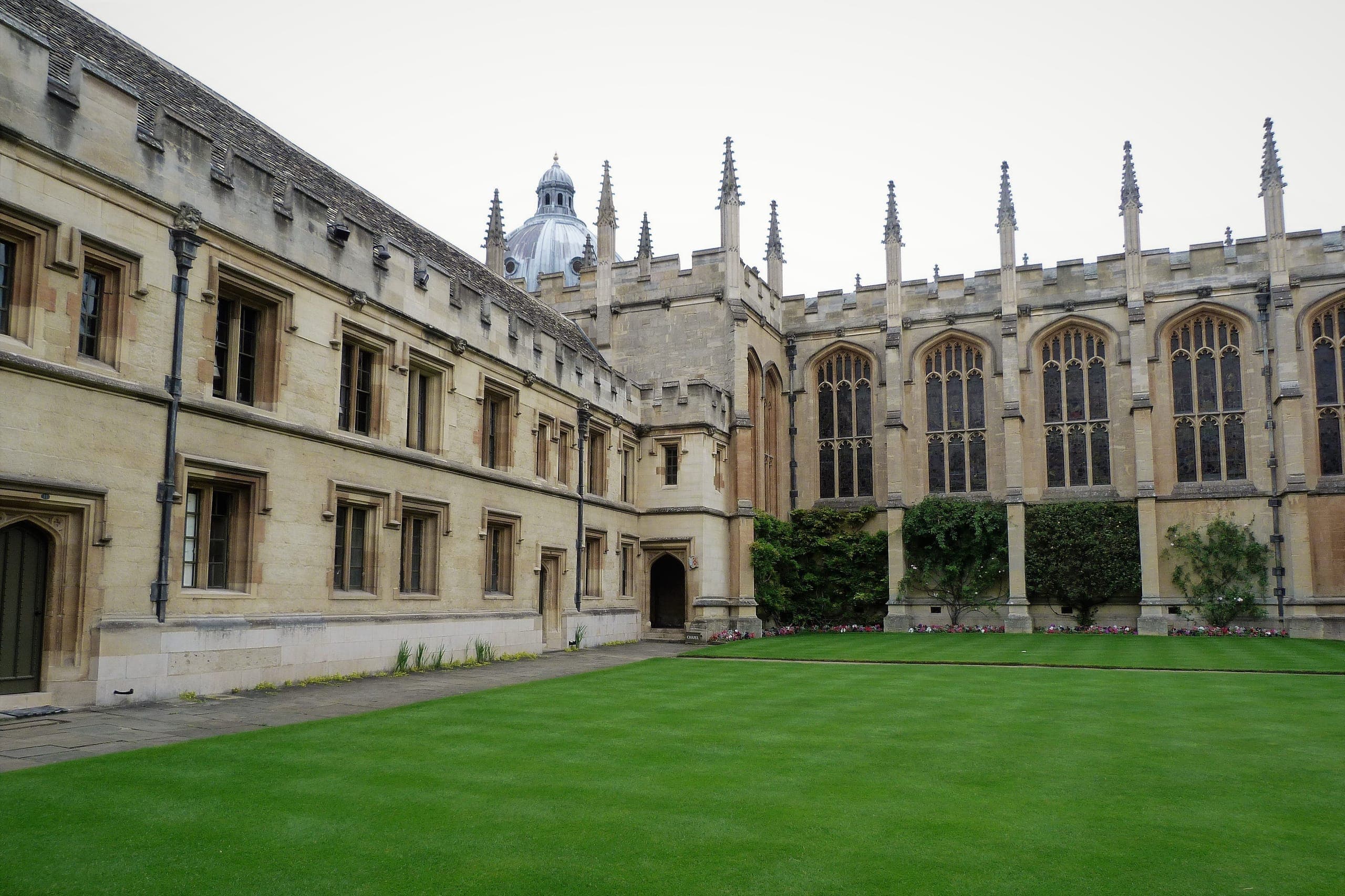
Stone college quadrangle viewed through an archway

Section 13

卒業後のキャリア

Cambridge History graduates enter a wide range of fields because the degree develops independent research, evidence evaluation and persuasive argument.

Recent popular employment areas include law, teaching and public service, while Discover Uni data for Cambridge History graduates from 2021–23 reports that 85% went on to work and/or study 15 months after the course.

The career breakdown uses occupation-type data from 105 employed respondents and separates business/public service/research/administration, finance, teaching, media/journalism/arts/literary roles, natural and social science professions, and a residual other category.

Section 14

特別な事情について

Cambridge considers every applicant individually through a holistic academic assessment using the available application information.

Contextual data gives assessors a fuller picture of educational and social circumstances, but Cambridge states that it does not systematically make lower offers or excuse a poor academic record on this basis.

Contextual indicators can include individual circumstances, geodemographic and UK-region data, and school or college context.

Flags may lead to particularly careful attention during review and pooling, but academic achievement remains central and flagged applicants are not guaranteed an interview, offer or lower offer.

Watch & Learn

Cambridge History 参考動画

学生ブログ・模擬面接・講義体験・入試アドバイス。

1. Introduction

Opening lecture for Yale's European Civilization, 1648–1945 course; useful for framing themes in modern European history.

01. Course Introduction: Rome's Greatness and First Crises

Introductory lecture for Yale's Early Middle Ages course, starting with the Roman Empire and its later transformations.

The Victorians: Time and Space

Richard J. Evans lecture on Victorian history, useful for seeing how historians organise a large historical period thematically.

Pilgrimages, Pandemics and the Past

Tom Holland lecture linking historical memory, pilgrimage, and pandemic contexts.

Mithras: Master of Mystery

Ronald Hutton lecture exploring evidence, uncertainty, and interpretation around the cult of Mithras.

All videos are the property of their respective creators.

Further Reading

Recommended Resources

専門講師が推薦するSupercurricular読書リスト・ウェブサイト・ツール。

  • Cambridge History course page by University of Cambridge[Website]Primary source for course identity, entry requirements, course structure, written work, and applicant-number summary.
  • Cambridge undergraduate admissions statistics by University of Cambridge[Website]Official starting point for admissions statistics by subject, College, school type, and applicant context.
  • What to expect at your Cambridge interview by University of Cambridge[Website]Official overview of interview timing, format, and preparation principles.
  • International entry requirements by University of Cambridge[Website]Country-by-country entry guidance for international applicants.
  • Contextual data by University of Cambridge[Website]Explains what contextual data Cambridge uses and how it affects holistic assessment.
  • Robson History Prize by Trinity College Cambridge[Website]A directly relevant History essay competition for Year 12 or Lower Sixth students.
  • The Early Middle Ages, 284–1000 by Open Yale Courses / Paul Freedman[Course]A free full lecture course that helps applicants practise sustained historical learning beyond school.
  • The Pursuit of History by John Tosh[Book]A useful first book for understanding historical method, evidence, and argument.

よくあるご質問

The UCAS course code is V100. The degree is a BA (Hons) lasting 3 years full-time.
Yes. Cambridge's current official 2027 course page says applicants to any College for History need A level/IB Higher Level, or equivalent, in History. Applicants not taking History but able to demonstrate equivalent skills through other relevant subjects or independent exploration should contact shortlisted College admissions offices for advice.
There is no centrally registered external-provider History test, but Cambridge’s current 2027 pages list a College admission assessment for History at Hughes Hall and St Edmund’s only. Applicants do not register in advance; if shortlisted and the assessment applies, the relevant College provides the format details.
The registry data for this page states two subject-specific interviews of about 25 minutes each. Cambridge's general interview guidance says most applicants have one or two interviews in total.
Yes. Cambridge's History course page lists two pieces of submitted work at all Colleges except Sidney Sussex, which asks for one piece. The College will provide the deadline and submission instructions.
Yes. International applicants use the same Cambridge application process through UCAS, with the same 15 October 2026 deadline for 2027 entry, unless applying through a separate mature-student January route.
In Cambridge’s official 2024 admissions statistics PDF, History had 594 applications, 220 offers, and 174 acceptances. That is about 3.4 applications per acceptance.
Yes, but mostly for fit and practical details rather than gaming admissions. Colleges can differ in interview format, submitted-work instructions, assessment policy, accommodation, location, and support. The Winter Pool helps reduce the risk that a strong applicant is disadvantaged by applying to an oversubscribed College.

History(Cambridge)出願の専門サポート

専門講師との無料30分相談をご予約ください。

無料相談を予約する