完全入試ガイド

Music at Cambridge — Admissions Guide 2027

Cambridgeへの当塾生徒の合格率

65%

Cambridgeの平均合格率

21%

Music(University of Cambridge)出願に必要なすべて:出願要件・面接・典型オファーとCambridge卒業生によるインサイダーアドバイス。

最終更新: 2026年5月

主要情報

  • A*AA典型オファー
  • 2:1志願者 / 定員
  • #2UK順位
  • 64定員(年)
  • W300UCAS コード

概要

コース概要

Music at Cambridge (W300) is a three-year BA (Hons) with a typical A*AA offer, an academic Music requirement, and College-level assessment tasks at interview rather than a central registered test. It combines analysis, history, listening, tonal skills, performance and composition before flexible Part II specialisation.

なぜCambridgeでMusicを?

Cambridge's official Music course page currently presents the course as #2 in the UK for Music in the Complete University Guide 2026.

A university lecture hall from the back, students taking notes

Section 01

国際学生の出願

下のマップで自国をクリックすると、出願に必要な情報(受け入れられる資格、要求スコア、英語要件、現地の文脈)が表示されます。

International Applicants

Country-specific admissions requirements

FijiTanzaniaW. SaharaCanadaUnited States of AmericaKazakhstanUzbekistanPapua New GuineaIndonesiaArgentinaChileDem. Rep. CongoSomaliaKenyaSudanChadHaitiDominican Rep.RussiaBahamasFalkland Is.NorwayGreenlandFr. S. Antarctic LandsTimor-LesteSouth AfricaLesothoMexicoUruguayBrazilBoliviaPeruColombiaPanamaCosta RicaNicaraguaHondurasEl SalvadorGuatemalaBelizeVenezuelaGuyanaSurinameFranceEcuadorPuerto RicoJamaicaCubaZimbabweBotswanaNamibiaSenegalMaliMauritaniaBeninNigerNigeriaCameroonTogoGhanaCôte d'IvoireGuineaGuinea-BissauLiberiaSierra LeoneBurkina FasoCentral African Rep.CongoGabonEq. GuineaZambiaMalawiMozambiqueeSwatiniAngolaBurundiIsraelLebanonMadagascarPalestineGambiaTunisiaAlgeriaJordanUnited Arab EmiratesQatarKuwaitIraqOmanVanuatuCambodiaThailandLaosMyanmarVietnamNorth KoreaSouth KoreaMongoliaIndiaBangladeshBhutanNepalPakistanAfghanistanTajikistanKyrgyzstanTurkmenistanIranSyriaArmeniaSwedenBelarusUkrainePolandAustriaHungaryMoldovaRomaniaLithuaniaLatviaEstoniaGermanyBulgariaGreeceTurkeyAlbaniaCroatiaSwitzerlandLuxembourgBelgiumNetherlandsPortugalSpainIrelandNew CaledoniaSolomon Is.New ZealandAustraliaSri LankaChinaTaiwanItalyDenmarkUnited KingdomIcelandAzerbaijanGeorgiaPhilippinesMalaysiaBruneiSloveniaFinlandSlovakiaCzechiaEritreaJapanParaguayYemenSaudi ArabiaAntarcticaN. CyprusCyprusMoroccoEgyptLibyaEthiopiaDjiboutiSomalilandUgandaRwandaBosnia and Herz.MacedoniaSerbiaMontenegroKosovoTrinidad and TobagoS. Sudan

Pick a highlighted country to see the admissions-test, score, and English-language requirements that apply for applicants from that country.

Section 02

出願要件

  • A-LevelA*AA
    Music (or ABRSM Grade 8 Theory at Merit or above) required.
  • IB Diploma40–42 with 776 at HL
  • Advanced Placement (AP)Minimum five AP Tests at score 5 in subjects relevant to the course, plus strong SAT or ACT results and high High School Diploma performance.
Admissions test
No pre-registered admissions test. Most colleges set short at-interview tasks (sight-singing, harmonisation at the keyboard, dictation) — College admission assessments, no advance registration. Choral and Organ Scholarship auditions are separate processes run earlier in the year.
Written work
Most colleges ask for one or two pieces of recent essay-style work in music or a related subject; some also ask for a short composition or analytical exercise. Each college confirms its exact rules.
Interview
Two interviews. The academic interview discusses your submitted essays, a short pre-read or recent listening; a separate slot may include keyboard skills, sight-singing or a short performance — but the academic interview drives the offer decision.

Section 03

出願プロセスと重要日程

Jun–Jul 2026

Open days & shortlist colleges

Visit Cambridge in person if you can. Open days run in late June and early July. Begin narrowing your college list and reading first-year reading lists.

Sep 2026

Draft your personal statement

Write for the subject, not the institution. Cambridge admissions tutors look for ~80% academic content and genuine super-curricular engagement.

28 Sep 2026

ESAT / TMUA registration deadline

Pre-registration via the Pearson VUE admissions testing portal closes at 18:00 UK time. Late entry is not normally possible.

15 Oct 2026

UCAS deadline

Submit your UCAS application by 18:00 UK time on 15 October 2026.

12–16 Oct 2026

Sit ESAT / TMUA

ESAT and TMUA are sat in this window at Pearson VUE centres. LNAT and UCAT use their own test windows — check each test's site for booking dates.

22 Oct 2026

My Cambridge Application deadline

Complete the My Cambridge Application supplementary questionnaire by 18:00 UK time on 22 October 2026. This replaced the old SAQ.

10 Nov 2026

Submitted written work deadline

Most arts and humanities courses ask for one or two pieces of marked school work. Each college confirms its exact deadline; 10 November is the standard date.

Dec 2026

Interviews

Around three-quarters of applicants are interviewed. Typically 1–2 interviews of 25–45 minutes each at your chosen or allocated college.

27 Jan 2027

Main decisions released

Cambridge releases its main decisions on 27 January 2027. Around a quarter of offers are made through the Winter Pool — strong applicants reconsidered by colleges with remaining places.

Section 04

入試テスト

Student working through problems at a desk with timed papers

Music(University of Cambridge)の2027年度入試では、出願者に書面の入試テストは課されません。出願は推薦書・成績・パーソナルステートメント・提出物・面接で評価されます。

Always verify on the official Oxford admissions tests page.

Section 05

面接:当日の流れと対策

Invitation → Decision: the interview timeline

Interview Invitation

Late Nov

Arrival to Interview

Early Dec

Technical Question

Mid Dec

Decision

Early Jan

Question Types You’ll See

Discussion of your submitted essaysAnalysis of an unseen score or recordingSight-singing, harmonisation or short performance

Cambridge Music interviews are subject-focused conversations about musical thinking.

You may be asked to discuss an unfamiliar score, recording, text or analytical prompt, or to talk about music, composers, genres, performance choices or compositions mentioned in your application.

We recommend practising aloud. A good answer usually starts with evidence — a feature in the score, recording, harmony, texture, rhythm, context or notation — and then turns that evidence into an argument.

The strongest preparation is not memorising scripts. It is being able to change your mind when an interviewer gives you a new angle.

無料のMusic面接練習問題バンクで本番さながらの問題を練習しましょう。

無料練習問題
Two people in academic discussion across a table

Section 06

合否決定のしくみ

Cambridge says each application is considered individually using the academic record, school or college reference, personal statement, submitted work where relevant, assessment evidence where relevant, contextual data, extenuating circumstances and interview performance if interviewed.

For Music, the submitted evidence includes representative written work and musical material.

Cambridge does not publish a numeric weighting formula for Music. That means no single element should be treated as a fixed percentage: selectors read the evidence together and look for a coherent picture of academic readiness, musical understanding and potential.

In reality, the application has to cohere. Strong grades help, but the selectors are also looking for the way you listen, analyse, write, perform, compose, revise and think under discussion.

Our recommendation · weighting of admission factors

0102030405041%
Interview
27%
Predicted grades
14%
Personal statement
11%
Submitted written work
7%
Contextual factors
% of decisionFactor

Oxbridge Mentors recommendation, drawn from observed offer patterns. University of Cambridge does not publish official weightings — exact balance varies by college, course and year.

Section 07

Personal Statement のコツ

Handwritten notes and a laptop open to a draft document

The strongest Music personal statements are specific about musical evidence. Instead of saying you love a period, composer or genre, explain one problem you noticed and how you investigated it.

It helps to combine three kinds of material: close listening, reading and practical musicianship. A useful paragraph might connect a score feature, a recording comparison and a historical or analytical idea.

We recommend avoiding a performance-only statement unless performance is explicitly connected to interpretation. Cambridge Music is an academic course, so your statement should show how you turn musical experience into questions and arguments.

Use any compositions, arrangements or essays carefully. Reflection matters more than listing: what changed between draft 1 and draft 2, and what did that teach you about harmony, form, texture, notation or style?

専門家による一行一行の解説付き完全例文を見る。

Music PS例文

Section 08

プロジェクト

  1. 01正当性
  2. 02プロジェクト概要
  3. 03実施内容
  4. 04困難
  5. 05解決策
  6. 06振り返り

A strong Music project gives you something concrete to discuss at interview. It should have a question, evidence, method and conclusion, even if the conclusion is provisional.

For Cambridge, it helps if the project connects academic and practical musicianship: score analysis, listening, writing, performance decisions or composition. Keep your notes clear enough that you can explain what changed as you worked.

  • Comparative performance study: Choose one substantial work and compare two or three recordings using the score. Track tempo, articulation, phrasing, texture, instrumentation and historical-performance choices, then write an evidence-based commentary.
  • Composition or arrangement with reflective commentary: Create a short composition, arrangement or recomposition in a defined style or for a specific ensemble, then write a technical reflection on harmony, form, texture, notation, idiom and revision choices.
  • Music in context investigation: Investigate a focused question linking music to history, society, politics, technology or identity.
Open books, a notebook, and a coffee on a wooden desk

Section 08

その他のサプリキュラム

Other preparation should widen the way you hear and explain music. The point is not to collect activities; it is to build better musical judgement.

These activities are support, not substitute. They only help if they improve the way you analyse, listen, write or make music.

  • Score analysis:

    Analyse form, harmony, texture, motivic development and instrumentation in contrasting works; keep notes that move from description to argument.

  • Critical listening:

    Build a listening diary across Western classical, contemporary, jazz, popular, early, non-Western and experimental traditions, focusing on what can be evidenced aurally.

  • Concert and recording reviews:

    Write short reviews that explain interpretive choices and musical effects rather than simply saying whether a performance was enjoyable.

  • Composition and arranging:

    Experiment with pastiche, variation, recomposition, orchestration, electronic production or song analysis, and document the technical decisions behind each piece.

  • Performance and ensemble work:

    Use performance to deepen analytical understanding: compare rehearsal decisions with score evidence, style, historical context and practical constraints.

  • Reading beyond the syllabus:

    Read accessible musicology, ethnomusicology, theory and criticism, then connect the reading to actual listening examples and interview-style discussion.

Section 08

コンペティション

Competitions are not required. What they can do well is stretch your preparation, make you work to a deadline and give you a reason to reflect on feedback.

  1. ** BBC Young Musician ** — High-level solo performance, repertoire choice, stage communication, musical maturity and technical command. Plan a contrasting programme, record performances early, seek feedback on phrasing and stagecraft, and make repertoire choices that show both technique and musical judgement.
  2. **BBC Young Composer** — Original composition across genres, creative voice, craft, notation/production choices and ability to develop ideas for professional performance or broadcast contexts. Write regularly, revise with performer feedback, keep clear scores or recordings, and prepare a short explanation of concept, materials and technical decisions.
  3. ** NCEM Young Composers Award ** — Compositional imagination, historical awareness, writing for early-music instruments and response to a defined brief. Study the year's instrumentation and style brief, listen to early-music models, draft idiomatically, and test notation with performers where possible.
  4. ** RPS Young Classical Writers Prize ** — Writing about classical music for a public audience, accuracy, originality, listening insight and engaging communication. Practise 500-word reviews, programme notes or short articles; balance technical accuracy with vivid communication and check every factual claim.
  5. ** Music for Youth National Festival ** — Ensemble performance, stylistic range, collaboration, preparation and response to mentor feedback. Rehearse with attention to balance, ensemble communication and interpretation; use feedback to produce a reflective account of musical development.

None are required; one or two done well beats five half-attempted.

Section 09

コース内容

  1. Year

    01 / 03

    1

    Part IA

    Foundations across history, skills and analysis

    Students take compulsory historical and critical studies, tonal skills and general musicianship, and music analysis, plus two optional half-papers.

    Broad foundation before increasing choice in later years.

  2. Year

    02 / 03

    2

    Part IB

    Developing core areas with wider options

    Students continue historical studies, analysis and applied tonal skills, then choose three additional papers from a changing list of options.

    Transition from common foundations into individual subject choice.

  3. Year

    03 / 03

    3

    Part II

    Advanced choice and independent direction

    There are no compulsory papers. Students choose six papers from a wide selection of options.

    Maximum flexibility in advanced performance, composition, analytical portfolios and dissertation routes.

Section 10

Musicの知識を深める

Start with compact, high-yield reading. Music: A Very Short Introduction is useful for thinking critically about music across culture, performance, history and listening, while A History of Western Music gives a broad historical framework.

For a wider intellectual range, Musicking: The Meanings of Performing and Listening pushes you to treat music as social action, The Rest Is Noise: Listening to the Twentieth Century opens twentieth-century listening through politics and culture, and The Study of Ethnomusicology: Thirty-Three Discussions introduces ethnomusicological questions.

Use video to sharpen explanation, not to replace reading. Adam Neely can help you turn theory, jazz, notation and listening into spoken argument, which is useful for interview discussion. 12tone is useful for practising concise harmonic and formal analysis. Early Music Sources connects historical evidence to performance practice, helping you discuss how sources shape interpretation. David Bruce Composer is useful for composition-minded applicants because it models how to explain orchestration, rhythm, harmony and creative decisions.

For regular listening and argument-building,The Listening Service,Music Matters, Sticky Notes: The Classical Music Podcast and Song Exploder all give different models for turning sound into explanation.

Structured courses can fill gaps. Fundamentals of Music Theory, Listening to Music, Fundamentals of Music andComputational Music Theory and Analysiscover theory, listening, notation and analytical approaches.

A study planner, highlighters and a stack of revision cards

Section 11

カレッジ選択と再振り分け

29 colleges offer this subject. ~10% (2024) of applicants submit an open application. ~19% (2024) of places come through the pool.

You can choose a College or make an open application.

If the original College thinks an applicant is strong but cannot offer a place, it may place the applicant in the Winter Pool so other Colleges can consider them in January.

For Music, College choice should be based mainly on living environment, accommodation, community, access needs and College-specific admissions details such as assessment, submitted material or interview arrangements.

We do not recommend treating College choice as a tactical shortcut. A better question is whether you can live, work and practise there well for 3 years.

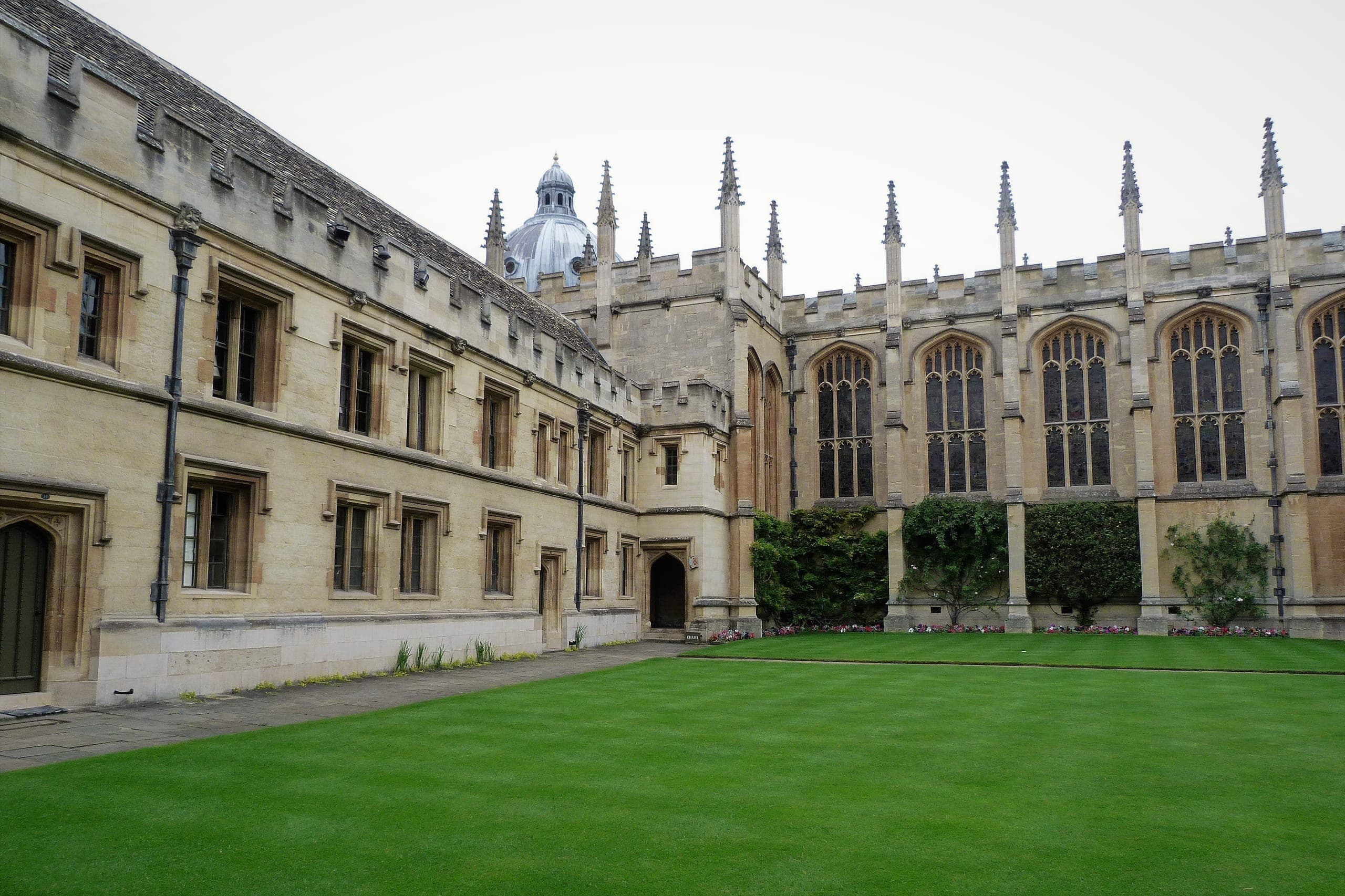
Stone college quadrangle viewed through an archway

Section 12

卒業後のキャリア

Cambridge presents Music graduates as moving into a wide range of music and non-music careers, including publishing and media, academia, arts administration, banking, law, public service, the charity sector, professional performance, composition, conducting, teaching and sound engineering.

Because Cambridge course-level employment data are not published on Discover Uni for this small course, sector percentages in the visual should be labelled as national music-graduate context rather than Cambridge-specific outcomes.

Section 13

特別な事情について

Cambridge uses contextual data as part of holistic admissions rather than applying a systematic lower-offer scheme.

Relevant individual circumstances can include care experience, refugee or humanitarian protection status, estrangement, free-school-meals indicators and declared disruption or extenuating circumstances.

School and college context can help admissions staff interpret GCSE or A-level patterns and the institution's history of Oxbridge offers.

For Music, subject availability matters: if school Music is not available at the required level, Cambridge allows an equivalent such as ABRSM Grade 8 Theory at Merit or above.

Contextual information should support, not replace, evidence of academic readiness in analysis, aural work, writing and musical thinking.

Watch & Learn

Cambridge Music 参考動画

学生ブログ・模擬面接・講義体験・入試アドバイス。

1. Introduction

Introductory Open Yale lecture for Listening to Music, useful for approaching listening as an active analytical process.

How to Learn Music (Epistemology and Music in the Digital Age)

Adam Neely video essay on how musicians learn and evaluate musical knowledge in a digital environment.

Welcome to 12Tone

A concise entry point into 12tone's music-theory explanation style and analytical vocabulary.

Early Music Sources - INTRODUCTION

Introduces the Early Music Sources project and its use of historical evidence for performance and analysis.

Reconstructing Music

Explores how early music can be reconstructed from sources, connecting history, notation and performance practice.

All videos are the property of their respective creators.

Further Reading

Recommended Resources

専門講師が推薦するSupercurricular読書リスト・ウェブサイト・ツール。

  • Cambridge Music BA (Hons) course page by University of Cambridge[Website]Primary official source for Music course structure, entry requirements, submitted work, assessment, teaching and careers.
  • Cambridge interview guidance by University of Cambridge[Website]Explains the purpose and broad format of Cambridge interviews and how applicants are assessed.
  • Cambridge international entry requirements by University of Cambridge[Website]Country-by-country qualification guidance for international applicants.
  • Music: A Very Short Introduction by Nicholas Cook[Book]A compact introduction to thinking critically about music across culture, performance, history and listening.
  • Fundamentals of Music Theory by The University of Edinburgh[Course]A structured refresher on notation, theory, analysis, listening and basics needed for further study.
  • Early Music Sources by Elam Rotem / Early Music Sources[Website]Connects historical sources, performance practice and practical examples for source-based musical interpretation.

よくあるご質問

Cambridge Music uses a College admission assessment rather than a central registered test. Some Colleges assess aptitude, knowledge base and potential through tasks at the time of interview, and applicants do not register separately.
Cambridge's Music entry requirement includes A-level Music, IB Higher Level Music or an accepted equivalent. The official course page states that ABRSM Grade 8 Theory at Merit or above may be accepted as an equivalent route.
The verified requirements are A*AA at A level or 41-42 IB points with 776 at Higher Level, plus Music or an accepted equivalent.
Cambridge says applicants will be informed in advance about how many interviews to expect. Most applicants will have 1 or 2 interviews lasting a total of 35 minutes to an hour; some may have 3 or 4 depending on subject and College.
Yes. Cambridge says Music applicants need to submit representative written work and musical material, normally including one or two essays on the history or analysis of music and one or two technical exercises, if studied, and/or their own compositions.
For the 2024 cycle, Cambridge reported 130 Music applications, 82 offers and 64 acceptances. The current course page also reports 2025-cycle applications per place 2 and accepted 67.
College choice should be based on fit, not tactics. Cambridge uses the Winter Pool so strong applicants can be considered by other Colleges, but College choice still matters for living environment and College-specific Music assessment/submitted-material instructions.
Useful preparation combines academic and practical musicianship: score analysis, critical listening, concert or recording reviews, composition/arranging, performance reflection and reading in musicology, theory, ethnomusicology and music criticism.

Music(Cambridge)出願の専門サポート

専門講師との無料30分相談をご予約ください。

無料相談を予約する