完全入試ガイド

Music at University of Oxford

Oxfordへの当塾生徒の合格率

65%

Oxfordの平均合格率

17%

Music(University of Oxford)出願に必要なすべて:出願要件・面接・典型オファーとOxford卒業生によるインサイダーアドバイス。

最終更新: 2026年5月

主要情報

  • AAA典型オファー
  • 3:1志願者 / 定員
  • #4UK順位
  • 77定員(年)
  • W300UCAS コード

概要

コース概要

Oxford Music is a 3-year BA (UCAS W300) with a standard offer of AAA and required Music or equivalent subject evidence. For 2027 entry, applicants submit written work and a Music performance video, and shortlisted candidates have at least two online, tutorial-style interviews; Oxford does not require a written admissions test.

なぜOxfordでMusicを?

That breadth is the main reason to choose this course over a narrower conservatoire-style route. We recommend it for applicants who want to combine practical musicianship with argument, analysis, history, criticism and independent research.

A university lecture hall from the back, students taking notes

Section 01

国際学生の出願

下のマップで自国をクリックすると、出願に必要な情報(受け入れられる資格、要求スコア、英語要件、現地の文脈)が表示されます。

International Applicants

Country-specific admissions requirements

FijiTanzaniaW. SaharaCanadaUnited States of AmericaKazakhstanUzbekistanPapua New GuineaIndonesiaArgentinaChileDem. Rep. CongoSomaliaKenyaSudanChadHaitiDominican Rep.RussiaBahamasFalkland Is.NorwayGreenlandFr. S. Antarctic LandsTimor-LesteSouth AfricaLesothoMexicoUruguayBrazilBoliviaPeruColombiaPanamaCosta RicaNicaraguaHondurasEl SalvadorGuatemalaBelizeVenezuelaGuyanaSurinameFranceEcuadorPuerto RicoJamaicaCubaZimbabweBotswanaNamibiaSenegalMaliMauritaniaBeninNigerNigeriaCameroonTogoGhanaCôte d'IvoireGuineaGuinea-BissauLiberiaSierra LeoneBurkina FasoCentral African Rep.CongoGabonEq. GuineaZambiaMalawiMozambiqueeSwatiniAngolaBurundiIsraelLebanonMadagascarPalestineGambiaTunisiaAlgeriaJordanUnited Arab EmiratesQatarKuwaitIraqOmanVanuatuCambodiaThailandLaosMyanmarVietnamNorth KoreaSouth KoreaMongoliaIndiaBangladeshBhutanNepalPakistanAfghanistanTajikistanKyrgyzstanTurkmenistanIranSyriaArmeniaSwedenBelarusUkrainePolandAustriaHungaryMoldovaRomaniaLithuaniaLatviaEstoniaGermanyBulgariaGreeceTurkeyAlbaniaCroatiaSwitzerlandLuxembourgBelgiumNetherlandsPortugalSpainIrelandNew CaledoniaSolomon Is.New ZealandAustraliaSri LankaChinaTaiwanItalyDenmarkUnited KingdomIcelandAzerbaijanGeorgiaPhilippinesMalaysiaBruneiSloveniaFinlandSlovakiaCzechiaEritreaJapanParaguayYemenSaudi ArabiaAntarcticaN. CyprusCyprusMoroccoEgyptLibyaEthiopiaDjiboutiSomalilandUgandaRwandaBosnia and Herz.MacedoniaSerbiaMontenegroKosovoTrinidad and TobagoS. Sudan

Pick a highlighted country to see the admissions-test, score, and English-language requirements that apply for applicants from that country.

Section 02

出願要件

  • A-LevelAAA; applicants are expected to have Music to A-level or equivalent, or Music Theory Grade 7 or above.
    Music required.
  • IB Diploma38 (including core points) with 666 at HL; applicants are expected to have Music at Higher Level or equivalent, or Music Theory Grade 7 or above.
  • Advanced Placement (AP)Either four APs at grade 5 (including any subjects required for the course) or three APs at grade 5 plus ACT 31+ or SAT 1460+.
Admissions test
No pre-registered admissions test for 2027 entry. Oxford retired the legacy written test for this course family — applicants are assessed on UCAS application, predicted grades, personal statement and interview alone.
Interview
Two college interviews of around 25 minutes each. Subject-specific discussion or problem-solving interviews typical of Oxford tutorial teaching. Most interviews are in person at the college; many colleges still offer online interviews for international applicants.

Section 03

出願プロセスと重要日程

MAY - AUG

Start UCAS and Music preparation

Prepare UCAS, college choice, personal statement, reference, written-work selection and performance-video material.

1 SEP

UCAS submission opens

Completed undergraduate applications for 2027 entry can be submitted from 1 September 2026.

15 OCT

Submit UCAS by 6pm UK time

Oxford Music applicants must submit UCAS by 6pm UK time on 15 October 2026.

5-10 NOV

Submit Music written work and performance video

Central Oxford pages state 10 November 2026; Faculty page currently says November 5th.

EARLY - MID DEC

Attend online Music interviews

Shortlisted candidates attend online interviews in December; every Music candidate has a minimum of two interviews with two colleges and may have a third panel interview.

12 JAN

Receive Oxford decision

Shortlisted candidates for 2027 entry receive decisions via UCAS on 12 January 2027.

2 JUN

Reply to offers through UCAS

UCAS lists 2 June 2027 as the reply deadline if all decisions are received by 12 May 2027.

Section 04

入試テスト

Student working through problems at a desk with timed papers

Music(University of Oxford)の2027年度入試では、出願者に書面の入試テストは課されません。出願は推薦書・成績・パーソナルステートメント・提出物・面接で評価されます。

Always verify on the official Oxford admissions tests page.

Section 05

面接:当日の流れと対策

Invitation → Decision: the interview timeline

Interview Invitation

Late Nov

Arrival to Interview

Early Dec

Technical Question

Mid Dec

Decision

Early Jan

Question Types You’ll See

Discussion of musical interests in the personal statementDiscussion of submitted written work or harmony/counterpointAnalysis of a short musical, prose or pre-reading extractFollow-up prompts on unfamiliar musical material

The interview is a tutorial-style academic discussion. Tutors may test A-level Music or equivalent knowledge, reasoning about music, communication, debate, and potential to engage with the course.

Typical prompts may include discussion of musical interests in the personal statement, submitted written work or harmony/counterpoint, a short musical or prose extract, and follow-up questions on unfamiliar material. We recommend practising aloud with scores, recordings and short extracts rather than rehearsing fixed answers.

For Music, the strongest preparation is slow, specific and analytical: revisit submitted written work, practise explaining harmony or counterpoint choices, and use score evidence to justify what you hear. It helps to explain not just what you hear, but how you know: harmony, form, texture, timbre, performance choice, context and evidence.

無料のMusic面接練習問題バンクで本番さながらの問題を練習しましょう。

無料練習問題
Two people in academic discussion across a table

Section 06

合否決定のしくみ

Music decisions are based on the full academic application rather than a single score.

The decision criteria include interview performance, submitted written work and musical exercises, academic attainment and predicted grades, the performance video, the UCAS personal statement and academic reference, and contextual or educational circumstances.

In reality, tutors are looking for evidence that travels across formats. A good application usually shows musical understanding in writing, discussion, listening, submitted work and academic results, not just in one polished performance.

Our recommendation · weighting of admission factors

0102030405046%
Interview
31%
Predicted grades
15%
Personal statement
8%
Contextual factors
% of decisionFactor

Oxbridge Mentors recommendation, drawn from observed offer patterns. University of Oxford does not publish official weightings — exact balance varies by college, course and year.

Section 07

Personal Statement のコツ

Handwritten notes and a laptop open to a draft document

Do not write a general biography of your musical life. Choose a few concrete examples and explain what changed in your thinking.

For Oxford Music, it helps to connect musical experience to analysis. A performance, composition, essay, recording project or listening habit becomes stronger when you can explain the musical problem you noticed and how you investigated it.

Use the course breadth carefully. If you mention composition, performance, ethnography, recording, analysis or dissertation-style work, make the link precise rather than decorative.

専門家による一行一行の解説付き完全例文を見る。

Music PS例文

Section 08

プロジェクト

  1. 01正当性
  2. 02プロジェクト概要
  3. 03実施内容
  4. 04困難
  5. 05解決策
  6. 06振り返り

A good Music project should leave evidence: annotated scores, listening notes, short essays, harmonisations, recordings, reflections or a small portfolio of drafts. One focused project is usually stronger than a long list of unrelated activities.

Another option is a harmony, arrangement or composition study with annotations. A third is a music-in-social-context case study focused on a community, institution or historical moment.

Open books, a notebook, and a coffee on a wooden desk

Section 08

その他のサプリキュラム

Other supercurriculars should strengthen the habits you need for interview and written work: listening, reading, notation, argument and revision of ideas.

These are support, not substitute.

  • Keep an analytical listening journal covering form, texture, harmony, timbre, genre and performance choices.:

  • Practise score study and theory work, including harmony, counterpoint, transcription and score reading.:

  • Use recordings and scores together so that your comments are anchored in musical evidence.:

  • Turn practical work into reflective work by writing down what you tried, what changed and what you would do next.:

Section 08

コンペティション

Competitions are not required. They can help if they stretch your writing, composition, performance or argument, but they should not replace sustained musical reading and listening.

Use current official rules before recommending any specific competition route.

  1. BBC Young Composer— national competition for composers aged 12–18; one of the most prestigious platforms for young composers in the UK
  2. BBC Young Musician — biennial national competition for instrumentalists; reaching regional stages is itself a strong portfolio piece
  3. NCEM Young Composers Award — early music composition award run by the National Centre for Early Music
  4. RPS Young Classical Writers Prize — Royal Philharmonic Society prize for writing about music; develops the critical language Oxford music interviews value
  5. Music for Youth National Festival — national performance festival with pathways for ensembles, choirs and soloists; useful for ensemble leadership and programming experience
  6. John Locke Institute Essay Competition — global essay prize; Philosophy and History tracks develop the written analytical argument needed alongside musicianship at Oxford

None are required; one or two done well beats five half-attempted.

Section 09

コース内容

  1. Year

    01 / 03

    1

    Year 1

    Foundations and first options

    Students take six modules: four compulsory papers plus two options.

    Broad grounding across analysis, composition, history/critical listening and selected options.

  2. Year

    02 / 03

    2

    Year 2

    Historical and critical depth

    The second year begins final examinations and focuses on two compulsory Topics papers.

    Compulsory advanced topics bridge first year and final-year flexibility.

  3. Year

    03 / 03

    3

    Year 3

    Options and double-weighted project

    Students select five modules from options, including one double-weighted project.

    The double-weighted project lets students shape the degree around their own interests.

Section 10

Musicの知識を深める

Use the Oxford Faculty of Music site for department context, events and access information.

Use it actively: take one concept, find it in a score, and explain what it changes in the music.

For critical reading, Music: A Very Short Introduction by Nicholas Cook gives a compact route into the study of music across culture, performance and history. The Rest Is Noise: Listening to the Twentieth Century by Alex Ross is essential reading for any applicant interested in twentieth-century music — its combination of historical context and musical analysis directly models what Oxford music essays expect.

For video and audio, Adam Neely explains harmony, theory, jazz and notation with intellectual rigour. Early Music Sources connects historical performance practice to manuscript sources. For listening and argument-building,The Listening Servicefrom BBC Radio 3 and Sticky Notes: The Classical Music Podcast each model how to turn listening into spoken analysis.

For structured theory study, Fundamentals of Music Theory from the University of Edinburgh covers notation, intervals, chords and voice-leading. Listening to Music from Yale Open Courses develops the ability to describe and analyse musical structure in writing — a central skill in Oxford Music interviews.

A study planner, highlighters and a stack of revision cards

Section 11

カレッジ選択と再振り分け

23 colleges offer this subject. <20% of applicants submit an open application. ~33% of places come through the pool.

Oxford Music is collegiate, and the Faculty-stated course figure is 23 colleges offering undergraduate Music, not the total number of Oxford colleges. Applicants can name a college or submit an open application, and Oxford may reallocate applicants to balance interview loads.

College choice affects living and pastoral context, not a tactical admissions shortcut. For Music, check that the college offers the course, then choose for fit.

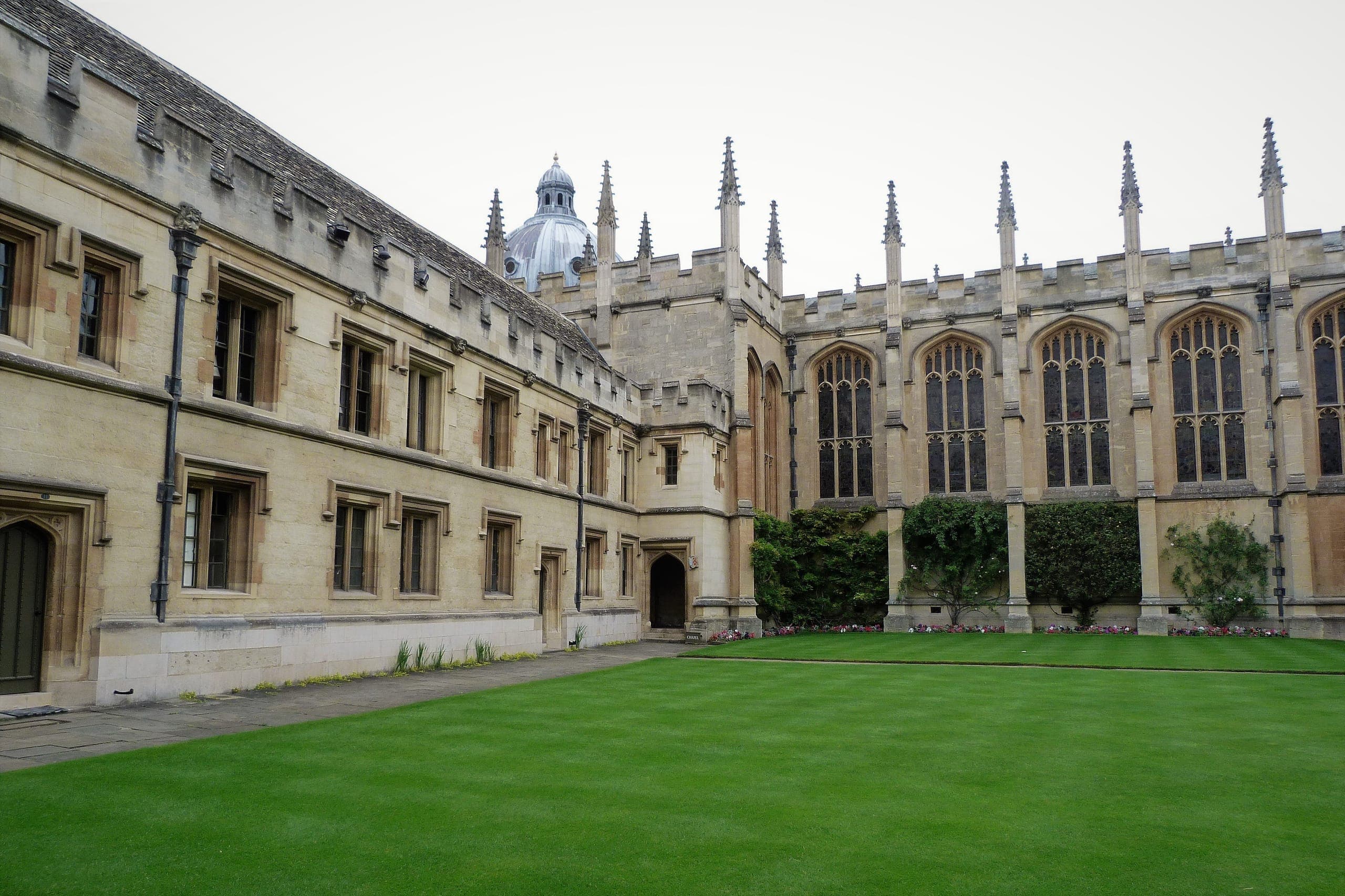
Stone college quadrangle viewed through an archway

Section 12

卒業後のキャリア

The breadth of the degree matters here: the same application evidence that shows listening, writing, analysis, performance judgement and independent research also points toward broad graduate routes.

Section 13

特別な事情について

Oxford considers grades in context where possible. GCSEs and IGCSEs are not required to apply, but they are considered where taken.

Formal performance or keyboard qualifications are not required. If your school does not offer A-level Music, Oxford accepts Music Theory Grade 7 or above plus three A-levels.

Explain disruption, limited subject availability, school context or unusual qualification routes clearly through the reference and relevant application channels. The aim is not to excuse weak preparation, but to make the evidence fair to read.

Watch & Learn

Oxford Music 参考動画

学生ブログ・模擬面接・講義体験・入試アドバイス。

Music at Oxford University

Faculty of Music Admissions Guide 2021

Oxford undergraduate official guide - How to apply

All videos are the property of their respective creators.

Further Reading

Recommended Resources

専門講師が推薦するSupercurricular読書リスト・ウェブサイト・ツール。

よくあるご質問

No written admissions test is required. Applicants must submit a continuous performance video of up to five minutes in any genre or style.
Applicants are asked to submit two teacher-marked essays of around 1,500 words each, one teacher-marked harmony or counterpoint exercise and, optionally, one or two compositions.
The standard offer is AAA at A-level or 38 IB points with 666 at Higher Level. Oxford also expects Music A-level, ABRSM Music Theory Grade 7 or above, or an equivalent qualification.
Tutors look for potential to engage with the course, an ability to think critically about music and a keen interest in music.
Popular routes include teaching, performance and arts administration, but graduates also enter areas such as broadcasting, publishing, law, politics and the Civil Service.

Music(Oxford)出願の専門サポート

専門講師との無料30分相談をご予約ください。

無料相談を予約する