完全入試ガイド

Philosophy and Modern Languages at Oxford

Oxfordへの当塾生徒の合格率

65%

Oxfordの平均合格率

17%

Philosophy and Modern Languages(University of Oxford)出願に必要なすべて:出願要件・面接・典型オファーとOxford卒業生によるインサイダーアドバイス。

最終更新: 2026年5月

主要情報

  • AAA典型オファー
  • 3:1志願者 / 定員
  • 19定員(年)
  • VR57UCAS コード

概要

コース概要

Philosophy and Modern Languages at Oxford is a 4-year BA with a compulsory year abroad and an AAA typical A-level offer. For 2027 entry, Oxford’s central pages record no admissions test and no written-work requirement; UCAS codes vary by language option.

なぜOxfordでPhilosophy and Modern Languagesを?

The audit specifically flags Oxford-specific 2026 ranking claims as not independently verified, so this draft does not state a UK rank.

A university lecture hall from the back, students taking notes

Section 01

国際学生の出願

下のマップで自国をクリックすると、出願に必要な情報(受け入れられる資格、要求スコア、英語要件、現地の文脈)が表示されます。

International Applicants

Country-specific admissions requirements

FijiTanzaniaW. SaharaCanadaUnited States of AmericaKazakhstanUzbekistanPapua New GuineaIndonesiaArgentinaChileDem. Rep. CongoSomaliaKenyaSudanChadHaitiDominican Rep.RussiaBahamasFalkland Is.NorwayGreenlandFr. S. Antarctic LandsTimor-LesteSouth AfricaLesothoMexicoUruguayBrazilBoliviaPeruColombiaPanamaCosta RicaNicaraguaHondurasEl SalvadorGuatemalaBelizeVenezuelaGuyanaSurinameFranceEcuadorPuerto RicoJamaicaCubaZimbabweBotswanaNamibiaSenegalMaliMauritaniaBeninNigerNigeriaCameroonTogoGhanaCôte d'IvoireGuineaGuinea-BissauLiberiaSierra LeoneBurkina FasoCentral African Rep.CongoGabonEq. GuineaZambiaMalawiMozambiqueeSwatiniAngolaBurundiIsraelLebanonMadagascarPalestineGambiaTunisiaAlgeriaJordanUnited Arab EmiratesQatarKuwaitIraqOmanVanuatuCambodiaThailandLaosMyanmarVietnamNorth KoreaSouth KoreaMongoliaIndiaBangladeshBhutanNepalPakistanAfghanistanTajikistanKyrgyzstanTurkmenistanIranSyriaArmeniaSwedenBelarusUkrainePolandAustriaHungaryMoldovaRomaniaLithuaniaLatviaEstoniaGermanyBulgariaGreeceTurkeyAlbaniaCroatiaSwitzerlandLuxembourgBelgiumNetherlandsPortugalSpainIrelandNew CaledoniaSolomon Is.New ZealandAustraliaSri LankaChinaTaiwanItalyDenmarkUnited KingdomIcelandAzerbaijanGeorgiaPhilippinesMalaysiaBruneiSloveniaFinlandSlovakiaCzechiaEritreaJapanParaguayYemenSaudi ArabiaAntarcticaN. CyprusCyprusMoroccoEgyptLibyaEthiopiaDjiboutiSomalilandUgandaRwandaBosnia and Herz.MacedoniaSerbiaMontenegroKosovoTrinidad and TobagoS. Sudan

Pick a highlighted country to see the admissions-test, score, and English-language requirements that apply for applicants from that country.

Section 02

出願要件

  • A-LevelAAA; applicants continuing a modern language are usually expected to have that language to A-level or equivalent, unless applying for a beginner's course.
    A modern language required.
  • IB Diploma39 (including core points) with 666 at HL; applicants continuing a modern language are usually expected to have that language at Higher Level or equivalent, unless applying for a beginner's course.
  • Advanced Placement (AP)Either four APs at grade 5 (including any subjects required for the course) or three APs at grade 5 plus ACT 31+ or SAT 1460+.
Admissions test
No pre-registered admissions test for 2027 entry. Oxford retired the legacy written test for this course family — applicants are assessed on UCAS application, predicted grades, personal statement and interview alone.
Written work
Submit one or two pieces of recent marked school work in the subject (or a closely related humanities subject), normally with the teacher's comments visible. Standard Oxford written-work deadline is 10 November 2026 — each course's admissions page confirms the exact rules.
Interview
Two college interviews of around 25 minutes each. Subject-specific discussion or problem-solving interviews typical of Oxford tutorial teaching. Most interviews are in person at the college; many colleges still offer online interviews for international applicants.

Section 03

出願プロセスと重要日程

Start preparing the UCAS application

Choose course and college/open application, draft the personal statement, and organise the academic reference.

UCAS submission opens

Oxford’s timeline says applications can be submitted from early September.

UCAS deadline

Final Oxford application deadline for 2027 entry.

Written-work deadline not applicable

Oxford’s general written-work deadline exists, but Philosophy and Modern Languages has no written-work requirement.

Shortlisting begins

Oxford’s timeline says shortlisting takes place from the end of November.

First college interviews

Published timetable window for Philosophy and Modern Languages first college interviews.

Second college interview decisions

Applicants are told whether second college interviews are needed.

Second college interviews

Published timetable window for any second college interviews.

Decisions released

Oxford’s published decision date for 2027 entry.

Section 04

入試テスト

Student working through problems at a desk with timed papers

Philosophy and Modern Languages(University of Oxford)の2027年度入試では、出願者に書面の入試テストは課されません。出願は推薦書・成績・パーソナルステートメント・提出物・面接で評価されます。

Always verify on the official Oxford admissions tests page.

Section 05

面接:当日の流れと対策

Invitation → Decision: the interview timeline

Interview Invitation

Late Nov

Arrival to Interview

Early Dec

Technical Question

Mid Dec

Decision

Early Jan

Question Types You’ll See

Discuss a philosophical claim and defend a viewpoint by reasoned argument.Respond critically and analytically to a question or text.Show relevant linguistic ability for the chosen language route.

All shortlisted applicants will be invited to online interviews in December. The published Philosophy and Modern Languages timetable lists first college interviews on Monday 8, Tuesday 9, Wednesday 10 and Thursday 11 December, with any second college interviews on Monday 15, Tuesday 16 and Wednesday 17 December.

For Philosophy and Modern Languages, preparation should connect argument with language study. It helps to practise explaining a philosophical claim clearly, then testing it against a passage, example, or counterargument.

Do not try to script answers. In our experience, stronger preparation comes from reading actively, making precise distinctions, and being able to revise a view when a tutor challenges one premise.

無料のPhilosophy and Modern Languages面接練習問題バンクで本番さながらの問題を練習しましょう。

無料練習問題
Two people in academic discussion across a table

Section 06

合否決定のしくみ

We recommend avoiding any claim that grades, interviews, written work, or tests carry fixed percentages.

In reality, a strong application needs consistency. Your achieved or predicted grades, submitted application, teacher reference, and interview discussion should all point in the same academic direction.

For this course, intellectual fit means showing that you can move between philosophical abstraction and close language work: defining terms carefully, noticing textual detail, and defending a view without ignoring historical, literary, or linguistic context.

Our recommendation · weighting of admission factors

0102030405041%
Interview
27%
Predicted grades
14%
Personal statement
11%
Submitted written work
7%
Contextual factors
% of decisionFactor

Oxbridge Mentors recommendation, drawn from observed offer patterns. University of Oxford does not publish official weightings — exact balance varies by college, course and year.

Section 07

Personal Statement のコツ

Handwritten notes and a laptop open to a draft document

Do not write a generic statement about loving philosophy and languages. We recommend making the link between the two subjects visible: for example, how a text changes in translation, how a concept behaves differently in another language, or how philosophical argument depends on exact wording.

Use fewer examples and go deeper. It is better to analyse one philosophical problem or one language-related textual question carefully than to list several books without reflection.

Avoid claiming certainty too early. A good statement can show curiosity, disagreement, and development: what you first thought, what challenged that view, and what you now want to investigate.

専門家による一行一行の解説付き完全例文を見る。

Philosophy and Modern Languages PS例文

Section 08

プロジェクト

  1. 01正当性
  2. 02プロジェクト概要
  3. 03実施内容
  4. 04困難
  5. 05解決策
  6. 06振り返り

A useful project for this course should connect close reading with argument. We recommend choosing something small enough to analyse properly: one concept, one passage, one translation problem, or one philosophical question across two authors.

Possible project directions include comparing a translated passage with the original, tracing one philosophical concept across two texts, or writing a short argument map for a problem raised by a language text.

Open books, a notebook, and a coffee on a wooden desk

Section 08

その他のサプリキュラム

Other supercurricular work should support the application rather than decorate it.

These are support, not substitute.

  • Keep a reading log with objections, not just summaries.:

  • Practise translating short passages and noting what cannot be carried over neatly.:

  • Discuss one philosophical problem with a teacher or reading group.:

  • Write short reflections that turn reading into argument.:

  • Revisit earlier notes after two weeks and record what changed.:

Section 08

コンペティション

Competitions are not required. What they can do well is give you a deadline, a sharper question, and a reason to write with precision.

For this course, a philosophy essay prize or a language-focused competition can be useful only if it produces close reasoning or stronger language analysis; one or two done well beats five half-attempted.

  1. John Locke Institute Essay Competition — global essay prize with a Philosophy track; practises sustained independent argument on abstract questions
  2. Trinity College Cambridge Philosophy Essay Prize — essay competition in philosophy building precision in conceptual argument
  3. Oxford Modern Languages Faculty Language Competitions — language competitions run by the Oxford Modern Languages faculty
  4. Stephen Spender Prize — poetry translation prize; directly relevant to applicants working between philosophical and literary traditions
  5. Anthea Bell Prize for Young Translators — national translation competition developing cross-linguistic precision
  6. Big Oxplore Essay Competition — Oxford-run essay competition; Philosophy topics reward clear abstract argument and independent thinking

Section 09

コース内容

  1. Year

    01 / 04

    1

    Year 1

    Prelims year combining core philosophy and modern-language work.

  2. Year

    02 / 04

    2

    Year 2

    Oxford-based study before the year abroad, with core philosophy options and modern-language/literature work.

  3. Year

    03 / 04

    3

    Year 3

    Compulsory year abroad for Modern Languages students.

  4. Year

    04 / 04

    4

    Year 4

    Final Oxford-based year completing advanced options and final assessment.

Section 10

Philosophy and Modern Languagesの知識を深める

We recommend avoiding named books, channels, podcasts, or courses in the CMS copy until they have been verified in the resources.

A good preparation pattern is still clear. Build one strand in philosophy, one strand in the target language, and one strand where the two meet; at Oxford, that might mean using the official course page to understand the Prelims shape, then practising the kind of close textual attention the course description emphasises.

Reflection matters more than volume. Keep notes on what a text made you think, where an argument was weak, and how your view changed after rereading.

Think: A Compelling Introduction to Philosophy by Simon Blackburn is the clearest entry point for the core problems of mind, knowledge, freedom and reality. Pair it with In Other Words by Jhumpa Lahiri — a linguistically precise memoir about inhabiting a second language that speaks to both the philosophy-of-language and modern-languages sides of this degree.

For philosophy preparation, Philosophy Bites gives short, precise interviews on specific philosophical problems, and In Our Time: Philosophy covers major figures from Wittgenstein to de Beauvoir. For the modern languages component, Oxford Modern Languages publishes faculty talks on language, literature and translation.

For language practice, Duolingo builds daily vocabulary habits. For a structured course in philosophy, Introduction to Philosophy from the University of Edinburgh covers knowledge, reality and ethics with strong written exercises that develop the analytical style Oxford PML interviews expect.

A study planner, highlighters and a stack of revision cards

Section 11

カレッジ選択と再振り分け

29 colleges offer this subject.

We recommend keeping this section advisory rather than numerical until the college block is verified.

Use college choice as a fit question, not a ranking exercise. Because Philosophy and Modern Languages availability depends on the chosen language combination, applicants should check the current college options for their specific language route rather than assuming every college offers every combination.

Do not over-optimise. A carefully chosen college can be sensible, but a strong application should not depend on trying to game the college system.

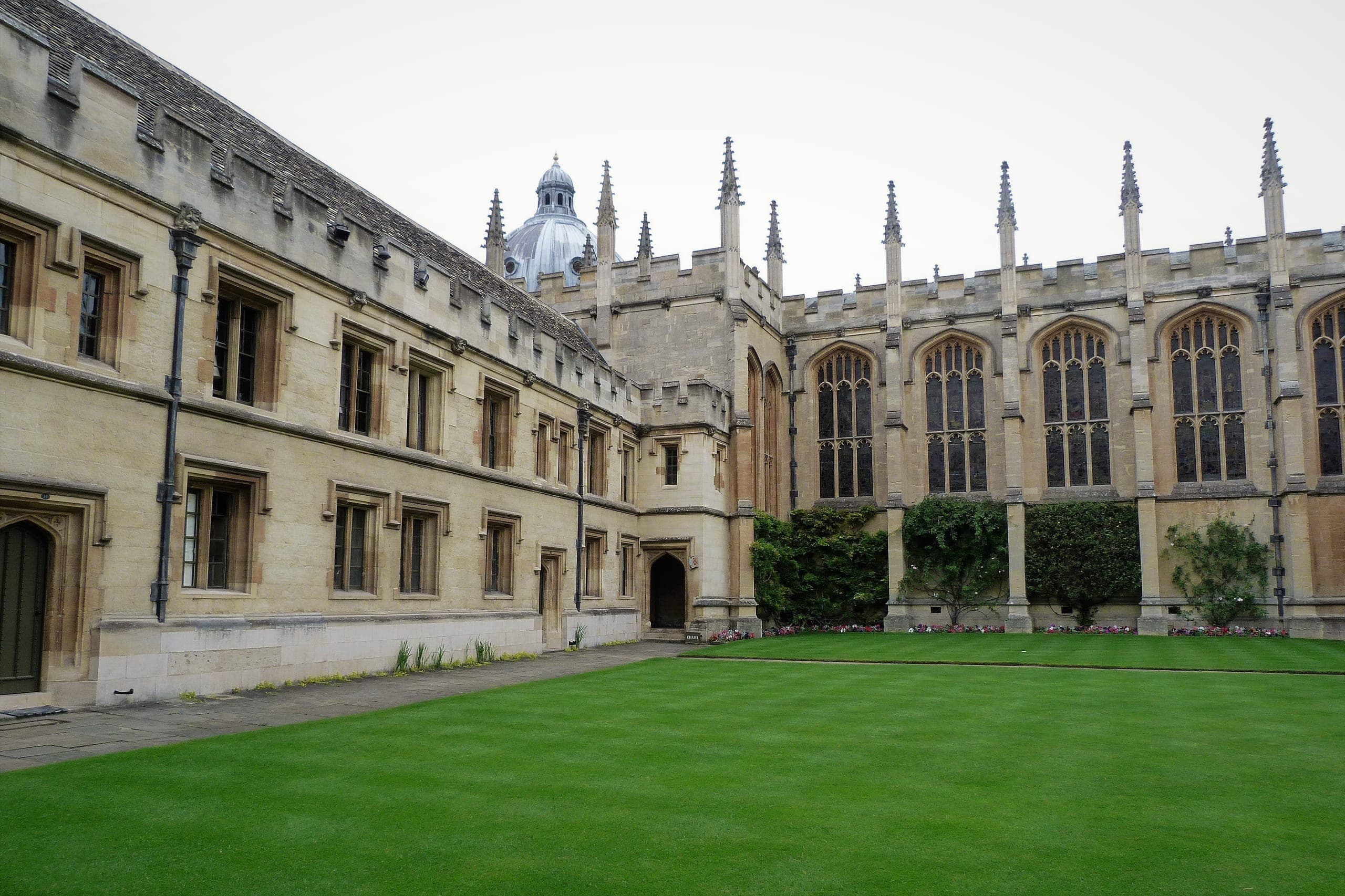
Stone college quadrangle viewed through an archway

Section 12

卒業後のキャリア

In our view, Philosophy and Modern Languages can be framed as training in argument, interpretation, language ability, and written communication; employer names and percentages should wait for verified data.

The Oxford faculty page lists broad graduate paths including academic teaching and research, teaching, commerce, banking and financial services, journalism and communications, but this draft avoids turning those examples into percentages.

Section 13

特別な事情について

Use this section to explain genuine educational context. It can include school subject availability, disruption, caring responsibilities, illness, or other circumstances that affected preparation.

We recommend being specific and restrained. The strongest contextual information tells admissions tutors what happened, when it happened, and how it affected academic opportunity.

Do not turn context into an excuse. Present it as information that helps readers interpret the rest of the application fairly.

Watch & Learn

Oxford Philosophy and Modern Languages 参考動画

学生ブログ・模擬面接・講義体験・入試アドバイス。

Philosophy and Modern Languages at Oxford University

Modern Languages Demonstration Interview

Oxford undergraduate official guide - How to apply

All videos are the property of their respective creators.

Further Reading

Recommended Resources

専門講師が推薦するSupercurricular読書リスト・ウェブサイト・ツール。

よくあるご質問

No. The verified ledger treats Oxford central course and admissions-test pages as authoritative and records no admissions test for this course for 2027 entry.
No. The verified ledger records no written-work requirement for Philosophy and Modern Languages.
There is not one single central code: Oxford lists separate UCAS codes by language option, so applicants should use the code for their chosen language route.
Yes. The verified course structure is a 4-year BA with a compulsory year abroad, usually in the third year.
No prior study of Philosophy is required, though background reading is recommended. Language requirements depend on whether the applicant chooses a post-A-level or beginners’ language route.

Philosophy and Modern Languages(Oxford)出願の専門サポート

専門講師との無料30分相談をご予約ください。

無料相談を予約する