完全入試ガイド

Human, Social, and Political Sciences (HSPS) at Cambridge — Admissions Guide 2027

Cambridgeへの当塾生徒の合格率

65%

Cambridgeの平均合格率

21%

CambridgeのHSPSは最も競争的な入試の一つ。Cambridge卒の専門講師による完全対策で合格を目指しましょう。

最終更新: 2026年5月

主要情報

  • A*AA典型オファー
  • 7:1志願者 / 定員
  • #2026UK順位
  • 173定員(年)
  • L000UCAS コード

概要

コース概要

Human, Social, and Political Sciences (HSPS) at the University of Cambridge is a 3-year BA (Hons) with UCAS code L000 and a typical A-Level offer of A*AA. It covers politics and international relations, social anthropology and sociology, with a flexible first year before specialisation in Part II.

なぜCambridgeでHSPSを?

Cambridge’s official course page frames HSPS around politics and international relations, social anthropology and sociology, rather than as PPE or as a generic social-science degree.

A university lecture hall from the back, students taking notes

Section 01

国際学生の出願

下のマップで自国をクリックすると、出願に必要な情報(受け入れられる資格、要求スコア、英語要件、現地の文脈)が表示されます。

International Applicants

Country-specific admissions requirements

CanadaUnited States of AmericaSouth KoreaIndiaChinaUnited KingdomMalaysiaJapan

Pick a highlighted country to see the admissions-test, score, and English-language requirements that apply for applicants from that country.

Section 02

出願要件

  • A-LevelA*AA
    History, Politics, Sociology, A modern language recommended.
  • IB Diploma40–42 with 776 at HL
  • Advanced Placement (AP)Minimum five AP Tests at score 5 in subjects relevant to the course, plus strong SAT or ACT results and high High School Diploma performance.
Admissions test
No pre-registered admissions test for 2027 entry. Most colleges set a short at-interview pre-read or argument task — College admission assessment, no advance registration.
Interview
Two college interviews. A pre-read text or article 30 minutes before interview is common; come ready to identify the central claim, the evidence and the obvious counter-argument.

Section 03

出願プロセスと重要日程

  1. Jun–Jul 2026

    Open days & shortlist colleges

    Visit Cambridge in person if you can. Open days run in late June and early July. Begin narrowing your college list and reading first-year reading lists.

  2. Sep 2026

    Draft your personal statement

    Write for the subject, not the institution. Cambridge admissions tutors look for ~80% academic content and genuine super-curricular engagement.

  3. 28 Sep 2026

    ESAT / TMUA registration deadline

    Pre-registration via the Pearson VUE admissions testing portal closes at 18:00 UK time. Late entry is not normally possible.

  4. 15 Oct 2026

    UCAS deadline

    Submit your UCAS application by 18:00 UK time on 15 October 2026.

  5. 12–16 Oct 2026

    Sit ESAT / TMUA

    ESAT and TMUA are sat in this window at Pearson VUE centres. LNAT and UCAT use their own test windows — check each test's site for booking dates.

  6. 22 Oct 2026

    My Cambridge Application deadline

    Complete the My Cambridge Application supplementary questionnaire by 18:00 UK time on 22 October 2026. This replaced the old SAQ.

  7. 10 Nov 2026

    Submitted written work deadline

    Most arts and humanities courses ask for one or two pieces of marked school work. Each college confirms its exact deadline; 10 November is the standard date.

  8. Dec 2026

    Interviews

    Around three-quarters of applicants are interviewed. Typically 1–2 interviews of 25–45 minutes each at your chosen or allocated college.

  9. 27 Jan 2027

    Main decisions released

    Cambridge releases its main decisions on 27 January 2027. Around a quarter of offers are made through the Winter Pool — strong applicants reconsidered by colleges with remaining places.

Section 04

入試テスト

Student working through problems at a desk with timed papers

HSPS(University of Cambridge)の2027年度入試では、出願者に書面の入試テストは課されません。出願は推薦書・成績・パーソナルステートメント・提出物・面接で評価されます。

Always verify on the official Oxford admissions tests page.

Section 05

面接:当日の流れと対策

Invitation → Decision: the interview timeline

Interview Invitation

Late Nov

Arrival to Interview

Early Dec

Technical Question

Mid Dec

Decision

Early Jan

Question Types You’ll See

Argument about a contemporary political or social issueDiscussion of an ethnographic or sociological textQuestions on your personal-statement reading

Cambridge describes interviews as academic conversations about the subject, and each interview can differ by course and College.

For HSPS, preparation should focus on thinking aloud about politics, international relations, anthropology and sociology rather than memorising set answers. We recommend practising with unfamiliar articles, data extracts or arguments, then explaining what you notice and what would change your view.

Cambridge’s listed interview aims include assessing understanding of the chosen subject area, readiness for high-level study, whether the applicant will thrive in the Cambridge learning environment, critical and independent thinking, curiosity and openness to new ideas, and enthusiasm for the subject.

You may be asked to apply knowledge to new situations, materials, problems or scenarios.

It helps to treat the interview like a short supervision. Give a clear first answer, notice objections, and refine your argument when the interviewer adds pressure or new evidence.

無料のHSPS面接練習問題バンクで本番さながらの問題を練習しましょう。

無料練習問題
Two people in academic discussion across a table

Section 06

合否決定のしくみ

Cambridge states that College Admissions Tutors consider all the information available together before making decisions.

The listed decision inputs include academic record, school or college reference, personal statement, any submitted written work, how well you do in your written admissions assessment, contextual data and any extenuating circumstances, and interview performance if interviewed.

Cambridge does not publish percentage weightings for HSPS, so this page should not present the process as a points formula.

In reality, this means your application has to be coherent. Strong grades matter, but your submitted work, interview and written application should point in the same academic direction.

Our recommendation · weighting of admission factors

010203040500%
Interview
0%
Predicted grades
0%
Personal statement
0%
Contextual factors
% of decisionFactor

Oxbridge Mentors recommendation, drawn from observed offer patterns. University of Cambridge does not publish official weightings — exact balance varies by college, course and year.

Section 07

Personal Statement のコツ

Handwritten notes and a laptop open to a draft document

For HSPS, a good personal statement usually has a clear academic thread. We recommend choosing one or two problems that genuinely interest you: democracy and polarisation, nationalism, inequality, social class, gender, religion, migration, criminal justice or the politics of global order.

Do not try to cover politics, sociology and anthropology equally. It is better to show how one question can be approached from more than one discipline.

Use reading as evidence of thinking, not as decoration. A strong paragraph might explain what an author argued, where you agree, where you hesitate, and what you read next because of that hesitation.

Avoid describing HSPS as PPE or as a general social sciences degree. Cambridge’s HSPS course includes politics and international relations, social anthropology and sociology.

専門家による一行一行の解説付き完全例文を見る。

HSPS PS例文

Section 08

プロジェクト

  1. 01正当性
  2. 02プロジェクト概要
  3. 03実施内容
  4. 04困難
  5. 05解決策
  6. 06振り返り

A good HSPS project is small enough to complete and precise enough to discuss. Build it around a question rather than a title.

Open books, a notebook, and a coffee on a wooden desk

Section 08

その他のサプリキュラム

These activities support your application; they do not substitute for careful reading and clear writing.

  • Keep a reading notebook.:

  • Practise long-form news analysis.:

  • Attend public lectures and use podcasts selectively.:

  • Write timed and untimed essays.:

  • Build basic methods and data awareness.:

  • Discuss or debate serious questions with people who disagree with you.:

Section 08

コンペティション

Competitions are not required for HSPS, but essay competitions can practise the argument structure, written precision and source handling that matter when Cambridge reads submitted work.

  1. John Locke Institute Essay Competition: use it to practise sustained argument and independent judgement.
  2. St Hugh’s Kavita Singh PPE Essay Competition: use it if your HSPS interests sit close to politics, philosophy or economics.
  3. Trinity College Cambridge Essay Prizes: use it to practise precise academic writing for a Cambridge audience.
  4. Oriel Rex Nettleford Essay Prize: use it if your interests connect to society, politics and culture.
  5. Young Economist of the Year: use it if your HSPS interests include political economy or policy trade-offs.

None are required; one or two done well beats five half-attempted.

Section 09

コース内容

  1. Year

    01 / 03

    1

    Year 1 (Part I)

    Introductory papers

    In Part I, students take four introductory papers; three are selected from core HSPS subjects and one further paper from the listed options.

    Flexible Part I before choosing Part II tracks.

  2. Year

    02 / 03

    2

    Year 2 (Part IIA)

    Choose a single or joint subject track

    In second year, students choose one of the HSPS Part II single-subject or two-subject tracks and begin more specialised study.

    Main point where the degree becomes more specialised.

  3. Year

    03 / 03

    3

    Year 3 (Part IIB)

    Advanced papers and dissertation option

    Students continue in the chosen Part II track. In the third year, one paper can be replaced with a 10,000-word dissertation.

    Optional extended dissertation.

Section 10

HSPSの知識を深める

Use reading to build comparison. For example, a politics-focused applicant might compare state power and nationalism, while an anthropology-focused applicant might compare everyday social practice with larger institutions.

Thinking Sociologically by Zygmunt Bauman introduces sociology as a mode of questioning everyday assumptions. For political philosophy, An Introduction to Political Philosophy by Jonathan Wolff covers the main HSPS themes of liberty, justice, democracy and authority in an accessible academic register.

For audio, Thinking Allowed is a BBC Radio 4 sociology programme directly relevant to HSPS. Social Science Bites gives short research-led interviews on topics across psychology, economics, political science and anthropology.

For structured study, Crash Course has full series in sociology, psychology, government and economics that give clear overviews of core concepts and evidence. Talking Politics connects academic political theory to current events, useful for the politics strand of HSPS.

A study planner, highlighters and a stack of revision cards

Section 11

カレッジ選択と再振り分け

31 colleges offer this subject. 25% of applicants submit an open application. 20% of places come through the pool.

For HSPS, College choice can affect process details because the College assessing or interviewing you supplies interview, submitted-work and any College admission assessment instructions.

It should not be treated as an admissions shortcut. Choose a College for practical fit, accommodation preferences and environment, while making sure you can follow that College’s HSPS instructions carefully.

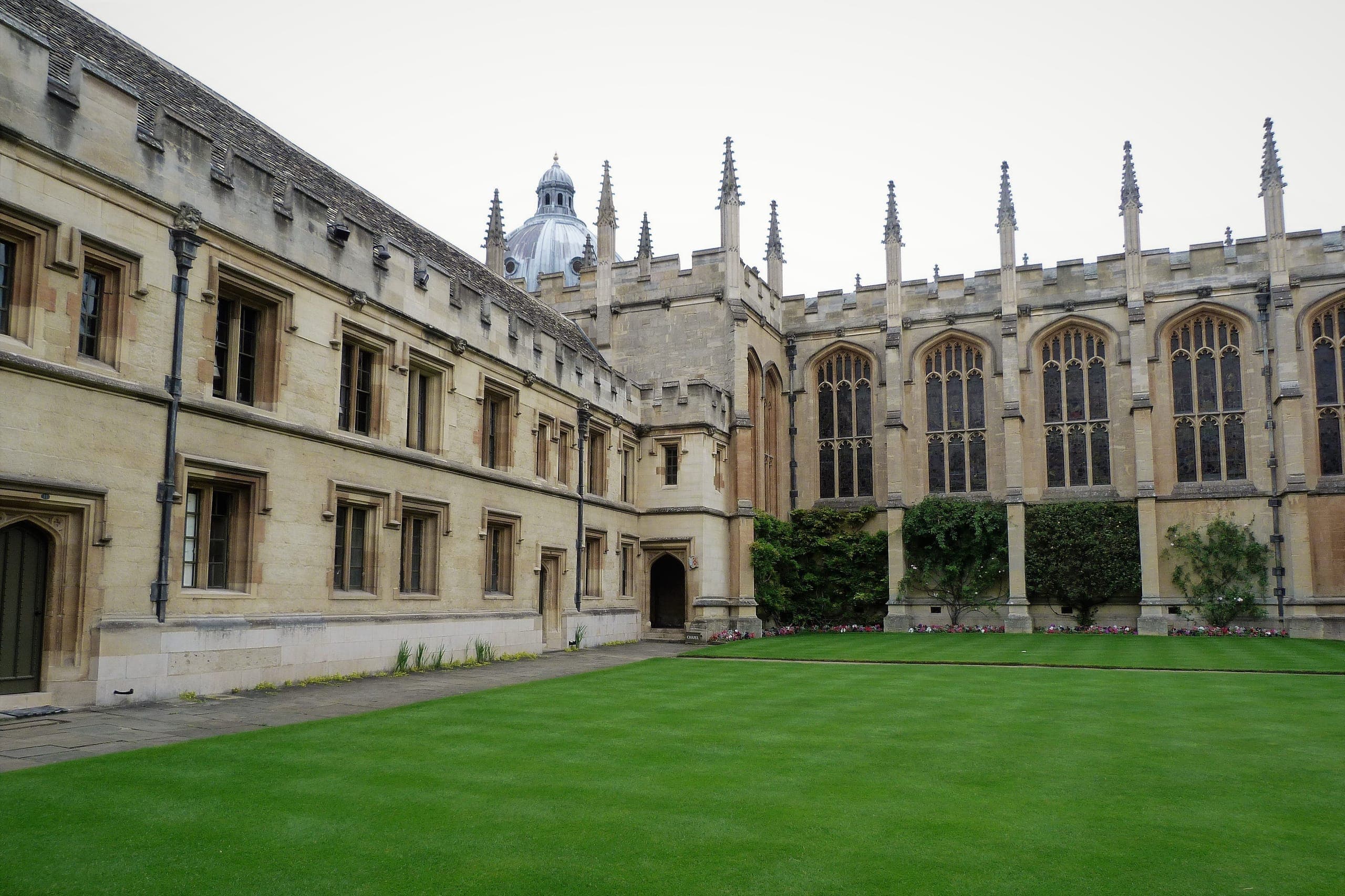
Stone college quadrangle viewed through an archway

Section 12

卒業後のキャリア

In practical terms, HSPS is a degree for applicants who want to keep several routes open: research, policy, law conversion, communications, public service, consulting, education or further specialist study.

Section 13

特別な事情について

Cambridge considers contextual data and any extenuating circumstances as part of application decisions.

Cambridge considers each application individually using all listed information.

This matters for HSPS applicants whose subject choices were constrained by school provision. If your school did not offer politics, sociology, anthropology or a relevant language, show subject development through reading, writing and independent work rather than apologising for what was unavailable.

Where disruption affected exams, coursework, attendance or submitted work, make sure the relevant evidence is included through the appropriate school or application route. The aim is not to excuse weak preparation; it is to make sure Cambridge reads your record in its proper context.

Editorial source notes

Watch & Learn

Cambridge HSPS 参考動画

学生ブログ・模擬面接・講義体験・入試アドバイス。

HSPS video resource

Subject-related video retained from the Stage 3 sidecar; verify active YouTube metadata before publication.

HSPS discussion resource

Subject-related video retained from the Stage 3 sidecar; verify active YouTube metadata before publication.

Politics and society resource

Subject-related video retained from the Stage 3 sidecar; verify active YouTube metadata before publication.

Anthropology and sociology resource

Subject-related video retained from the Stage 3 sidecar; verify active YouTube metadata before publication.

Cambridge social-science resource

Subject-related video retained from the Stage 3 sidecar; verify active YouTube metadata before publication.

All videos are the property of their respective creators.

Further Reading

Recommended Resources

専門講師が推薦するSupercurricular読書リスト・ウェブサイト・ツール。

  • Cambridge HSPS official course page by University of Cambridge[Website]Official undergraduate course page for Human, Social, and Political Sciences, including entry requirements, course outline and applicant numbers.
  • HSPS Suggested Reading List for Prospective Students by Faculty of Human, Social and Political Sciences, University of Cambridge[Website]Official prospective reading list retained as the verified reading resource in the ledger.
  • Imagined Communities by Benedict Anderson[Book]Classic work on nationalism and political belonging.
  • Thinking Allowed by BBC Radio 4[Podcast]Podcast/radio resource for sociological research and social analysis; non-official resource retained with partial verification.
  • Talking Politics: History of Ideas by Talking Politics[Podcast]Podcast resource for political thought and the history of political ideas; non-official resource retained with partial verification.
  • Justice by Harvard University / Michael Sandel[Course]Introductory political philosophy course resource retained in the ledger; non-official resource not exhaustively revalidated.
  • Classical Sociological Theory by Open Yale Courses / Iván Szelényi[Course]Introductory sociological theory course resource retained in the ledger; non-official resource not exhaustively revalidated.

よくあるご質問

The UCAS code is L000.
Cambridge says: We don't ask for any specific subjects to apply to Human, Social, and Political Sciences. Cambridge recommends English (language or literature), History and Languages (ancient or modern) for a strong application.
Cambridge wording: There is an admission assessment at some Colleges for this course. You do not need to register in advance. The College admission assessments page lists Hughes Hall, King's and Newnham for Human, Social and Political Sciences.
Cambridge wording: You will need to submit 2 pieces of written work. The College that assesses your application explains how to send it and the deadline.
Cambridge says most applicants will have 1 or 2 interviews lasting a total of 35 minutes to an hour; some may have 3 or 4, depending on subject and College.
Cambridge says College Admissions Tutors consider all the information available together before making decisions, and that each part of the application is important.
HSPS includes politics and international relations, social anthropology and sociology, with the flexibility to explore a variety of subjects in the first year.
Yes, but Cambridge guidance varies by country or region. Applicants should check the international entry requirements and course requirements.

HSPS(Cambridge)出願の専門サポート

専門講師との無料30分相談をご予約ください。

無料相談を予約する