完全入試ガイド

Natural Sciences at Cambridge — Admissions Guide 2027

Cambridgeへの当塾生徒の合格率

65%

Cambridgeの平均合格率

21%

CambridgeのNatural Sciencesは最も競争的な入試の一つ。Cambridge卒の専門講師による完全対策で合格を目指しましょう。

最終更新: 2026年5月

主要情報

  • A*A*A典型オファー
  • 4:1志願者 / 定員
  • #1UK順位
  • ESAT入試テスト
  • 569定員(年)
  • BCF0UCAS コード

概要

コース概要

Natural Sciences at Cambridge (UCAS BCF0) is a broad BA/MSci route for applicants who want to keep biological and physical sciences open before specialising. The typical offer is A*A*A, and applicants should plan for Mathematics-led subject requirements plus the ESAT.

なぜCambridgeでNatural Sciencesを?

Cambridge reports Natural Sciences as a broad Tripos-style course rather than a single-subject degree, and the course covers biological and physical sciences across 14 departments.

A university lecture hall from the back, students taking notes

Section 01

国際学生の出願

下のマップで自国をクリックすると、出願に必要な情報(受け入れられる資格、要求スコア、英語要件、現地の文脈)が表示されます。

International Applicants

Country-specific admissions requirements

CanadaUnited States of AmericaSouth KoreaIndiaChinaUnited KingdomMalaysiaJapan

Pick a highlighted country to see the admissions-test, score, and English-language requirements that apply for applicants from that country.

Section 02

出願要件

  • A-LevelA*A*A
    Mathematics, Two further sciences (any two of Biology, Chemistry, Physics, Further Mathematics, Geology, Computer Science) required. Further Mathematics recommended.
  • IB Diploma40–42 with 776 at HL incl. Maths + two further sciences
    HL: Mathematics required.
  • Advanced Placement (AP)Minimum five AP Tests at score 5 in subjects relevant to the course, plus strong SAT or ACT results and high High School Diploma performance.
Admissions test
Pre-registered ESAT (Mathematics 1 + chosen science). Registration closes 28 September 2026; the test sits 12–16 October 2026. There is no standalone Physics, Biology or Chemistry course at Cambridge — all three are routes through Natural Sciences.
Interview
Two interviews of around 25–30 minutes, usually focused on the science subjects you have flagged interest in (e.g. Physics + Chemistry, or Biology + Chemistry). Expect short problem-solving on paper.
Required Tests:ESAT

Section 03

出願プロセスと重要日程

  1. Jun–Jul 2026

    Open days & shortlist colleges

    Visit Cambridge in person if you can. Open days run in late June and early July. Begin narrowing your college list and reading first-year reading lists.

  2. Sep 2026

    Draft your personal statement

    Write for the subject, not the institution. Cambridge admissions tutors look for ~80% academic content and genuine super-curricular engagement.

  3. 28 Sep 2026

    ESAT registration deadline

    Pre-registration via the Pearson VUE admissions testing portal closes at 18:00 UK time. Late entry is not normally possible.

  4. 15 Oct 2026

    UCAS deadline

    Submit your UCAS application by 18:00 UK time on 15 October 2026.

  5. 12–16 Oct 2026

    Sit ESAT

    ESAT and TMUA are sat in this window at Pearson VUE centres. LNAT and UCAT use their own test windows — check each test's site for booking dates.

  6. 22 Oct 2026

    My Cambridge Application deadline

    Complete the My Cambridge Application supplementary questionnaire by 18:00 UK time on 22 October 2026. This replaced the old SAQ.

  7. 10 Nov 2026

    Submitted written work deadline

    Most arts and humanities courses ask for one or two pieces of marked school work. Each college confirms its exact deadline; 10 November is the standard date.

  8. Dec 2026

    Interviews

    Around three-quarters of applicants are interviewed. Typically 1–2 interviews of 25–45 minutes each at your chosen or allocated college.

  9. 27 Jan 2027

    Main decisions released

    Cambridge releases its main decisions on 27 January 2027. Around a quarter of offers are made through the Winter Pool — strong applicants reconsidered by colleges with remaining places.

Section 04

入試テスト

Student working through problems at a desk with timed papers

Natural Sciences applicants take the Engineering and Science Admissions Test (ESAT).

The test is administered by UAT-UK and delivered through Pearson VUE test centres.

For Natural Sciences, applicants take Mathematics 1 plus two additional modules, chosen from Biology, Chemistry, Physics and Mathematics 2; the ESAT itself is delivered in multiple-choice format.

For the main 2027-entry Cambridge round, the October ESAT sitting runs from 12 to 16 October 2026; eligible January-round mature applicants use the January sitting from 4 to 8 January 2027.

Do not confuse account setup with test booking: UAT-UK account creation, access-arrangement requests and bursary applications open on 1 June 2026 at 3pm BST; Pearson VUE booking for the October sitting opens on 20 July 2026 at 3pm BST and closes on 28 September 2026 at 6pm UK time.

The ESAT has no published pass/fail mark and is considered alongside the rest of the application.

For international students, the ESAT matters because it gives Cambridge another way to compare applicants from different school systems. It is worth planning test-centre booking early if you are outside the UK.

ESAT完全対策ガイド | 試験形式・採点・戦略・練習リソース。

ESATガイド

Section 05

面接:当日の流れと対策

Invitation → Decision: the interview timeline

Interview Invitation

Late Nov

Arrival to Interview

Early Dec

Technical Question

Mid Dec

Decision

Early Jan

Question Types You’ll See

Physics: mechanics or circuits problemChemistry: reaction mechanism or equilibriumBiology: experimental-design or genetics problemMaths-for-NatSci: short calculation

The interview is a problem-based academic conversation, usually focused on subject-specific reasoning rather than polished presentation.

Cambridge’s Natural Sciences interview testing areas include school-level science and mathematics, unfamiliar problem solving, critical thinking, curiosity and readiness for supervision-style study.

Typical question types include quantitative problems, graph or diagram interpretation, experimental results, short scientific passages and deeper discussion of personal-statement topics.

We recommend practising aloud. The aim is not to sound scripted; it is to make your reasoning visible, correct mistakes calmly, and respond when an interviewer changes the problem.

無料のNatural Sciences面接練習問題バンクで本番さながらの問題を練習しましょう。

無料練習問題
Two people in academic discussion across a table

Section 06

合否決定のしくみ

Cambridge does not publish a fixed weighting formula for Natural Sciences.

In reality, the decisive evidence is academic. For Natural Sciences, the strongest applications usually show that a candidate can reason across science and mathematics, not just recall syllabus material.

Our recommendation · weighting of admission factors

0102030400%
ESAT score
0%
Interview
0%
Predicted grades
0%
Personal statement
0%
Contextual factors
% of decisionFactor

Oxbridge Mentors recommendation, drawn from observed offer patterns. University of Cambridge does not publish official weightings — exact balance varies by college, course and year.

Section 07

Personal Statement のコツ

Handwritten notes and a laptop open to a draft document

Because Natural Sciences begins broadly before narrowing through the Tripos, your personal statement should explain why a combination of sciences is intellectually coherent for you and how that breadth prepares you for supervision-style academic discussion.

We recommend using one or two linked themes rather than trying to mention every branch of science. A chemistry applicant might connect bonding, thermodynamics and materials; a biological applicant might connect genetics, evolution and quantitative modelling.

Avoid presenting activities as a checklist. It helps to explain what changed your thinking, what problem you tried to solve, and what you would investigate next.

Use supercurricular evidence to show reasoning that connects to Cambridge’s process: the ESAT rewards accurate application under time pressure, while interviews reward explaining how you think through unfamiliar scientific problems.

専門家による一行一行の解説付き完全例文を見る。

Natural Sciences PS例文

Section 08

プロジェクト

  1. 01正当性
  2. 02プロジェクト概要
  3. 03実施内容
  4. 04困難
  5. 05解決策
  6. 06振り返り

Projects are useful because Natural Sciences interviews and admissions tests reward problem solving, explanation and unfamiliar application.

A good project does not need expensive equipment. It needs a question, a method, data or evidence, an honest limitation, and a scientific explanation.

This presentation format is useful because it mirrors what Cambridge is trying to see in interviews: whether you can explain a problem, test an idea, recognise a limitation and adapt your reasoning.

  • Model a natural system quantitatively: Choose a biological, chemical, or physical system such as enzyme rate, cooling, diffusion, population growth, or electrical circuits. Build a simple model, collect or source data, test assumptions, and write a short evaluation of where the model fails.
  • Design a cross-disciplinary investigation: Investigate a topic such as water quality, photosynthesis under different light conditions, battery performance, or material strength. Combine experimental data with molecular, mathematical, or physical explanation.
  • Create a literature-to-data research notebook: Read two or three accessible review articles on a Natural Sciences topic, reproduce a figure or calculation using public data, then summarise the scientific claim, method, limitations, and next questions.
Open books, a notebook, and a coffee on a wooden desk

Section 08

その他のサプリキュラム

These are support, not substitute. They only help if they improve your scientific reasoning.

  • Wider reading:

    Read beyond the A Level or IB syllabus, but keep a short reading log focused on questions, mechanisms, and links between disciplines rather than book summaries.

  • Problem-solving practice:

    Use ESAT-style questions, Isaac Science, Olympiad papers, and challenging mathematics problems to practise unfamiliar applications under time pressure.

  • Practical investigation:

    Run safe home or school experiments where possible, keep a lab notebook, record uncertainty, and reflect on experimental design rather than only final results.

  • Lectures and masterclasses:

    Attend university lectures, Royal Institution events, Isaac Science events, or department open lectures, then write a short critical reflection connecting them to known science.

  • Coding and data analysis:

    Use Python, spreadsheets, or graphing tools to simulate systems, analyse public datasets, or test mathematical models relevant to biology, chemistry, physics, or materials.

  • Discussion and explanation:

    Explain difficult scientific ideas to peers or younger students; the ability to reason aloud and respond to questions is directly useful for Cambridge-style interviews.

Section 08

コンペティション

Competitions are not required, but they stretch timing, precision and unfamiliar problem solving.

  1. BPhO Round 1 tests Advanced physics problem-solving, mathematical modelling, and unfamiliar applications beyond standard school exam style. Preparation should focus on work through past BPhO papers, review core mechanics, electricity, waves, thermal physics, and practise explaining each step clearly.
  2. BPhO Senior Physics Challenge tests Year 12 physics reasoning through shorter challenging physics papers. Preparation should focus on use BPhO Senior Physics Challenge past papers and Isaac Science problem sets to build speed and confidence with non-routine problems.
  3. UK Senior Mathematical Challenge tests Mathematical reasoning, precision, and problem-solving fluency through a 90-minute multiple-choice challenge. Preparation should focus on practise UKMT Senior Challenge papers, review number theory, geometry, algebra, and combinatorics, and focus on elegant reasoning rather than brute force.
  4. British Mathematical Olympiad Round 1 tests Full written mathematical solutions across proof, geometry, number theory, and problem solving. Preparation should focus on attempt BMO1 problems under timed conditions, then rewrite solutions rigorously and compare with official marking schemes.
  5. Cambridge Chemistry Challenge (C3L6) tests Application of A Level chemistry ideas to unfamiliar, university-style chemical problems. Preparation should focus on practise past C3L6 papers, strengthen physical chemistry and organic mechanisms, and focus on multi-step reasoning.

None are required; one or two done well beats five half-attempted.

Section 09

コース内容

  1. Year

    01 / 04

    1

    Natural Sciences Tripos Part IA

    Broad scientific foundations

    Students take three experimental subjects and one mathematics-based subject. The year is deliberately broad, allowing students to combine biological and physical sciences while building mathematical, practical and conceptual foundations before narrowing their choices.

    Three experimental subjects plus a mathematics option make Part IA unusually broad.

  2. Year

    02 / 04

    2

    Natural Sciences Tripos Part IB

    Focused breadth

    Students normally take three subjects, choosing from a wide menu across biological and physical sciences. Part IB is the main transition year: it narrows the course while still preserving enough breadth to change direction before final-year specialisation.

    Part IB offers many possible subject combinations, subject to timetable and progression restrictions.

  3. Year

    03 / 04

    3

    Natural Sciences Tripos Part II

    Single-subject or interdisciplinary specialisation

    Students specialise in one subject or an approved interdisciplinary route. This is the final year for the BA route and commonly includes advanced papers plus extended work such as a dissertation or research project, depending on the chosen subject.

    Part II is where Natural Sciences becomes most like a specialist degree pathway.

  4. Year

    04 / 04

    4

    Natural Sciences Tripos Part III / MSci

    Optional integrated Master's year

    Students who meet the progression requirement can apply to continue to a fourth year in an eligible subject and graduate with an MSci. The year is designed for advanced scientific training and commonly includes substantial research or self-directed project work.

    The MSci year is especially relevant for applicants considering research or technical scientific careers.

Section 10

Natural Sciencesの知識を深める

For science preparation across the biological and physical routes, use reading to deepen mechanisms rather than to collect titles. The Feynman Lectures on Physics, Why Chemical Reactions Happen, Campbell Biology, The Selfish Gene and Life Ascending give different entry points into physics, chemistry, biology, evolution and biochemical reasoning.

For video learning, choose channels that help you explain ideas aloud and connect diagrams, experiments and mathematics. Numberphile, Periodic Videos, The Royal Institution, MIT OpenCourseWare and PBS Space Time are useful when you pause, solve, summarise and test the argument rather than watching passively.

For current research and scientific careers, podcasts such as The Life Scientific, Nature Podcast, Science Magazine Podcast and In Our Time: Science help applicants hear how scientists frame questions, deal with uncertainty and move between disciplines.

For structured problem solving, Isaac Science, MIT 8.01SC Classical Mechanics, MIT 7.012 Introduction to Biology and Khan Academy AP/College Chemistry are most useful when linked to timed problem practice, ESAT module choices and post-mistake review.

Keep a notebook of problems, assumptions, failed explanations and follow-up questions. The goal is to build the kind of active scientific reasoning that Cambridge tests through the ESAT, interviews and supervision-style study.

A study planner, highlighters and a stack of revision cards

Section 11

カレッジ選択と再振り分け

29 colleges offer this subject. ~25% (unverified estimate) of applicants submit an open application. 19% (October 2024 applications placed in the January Winter Pool) of places come through the pool.

Cambridge has 29 undergraduate Colleges listed for this field.

The Winter Pool allows strong applicants to be considered by other Colleges if their original College is impressed but cannot make an offer.

For Natural Sciences, College choice affects interview arrangements, pastoral setting, accommodation and small-group teaching environment, but it should not be treated as a tactical shortcut.

Choose a College you would be happy to live in. The Pool means College choice is not the only factor for strong applicants, but it does not make College choice irrelevant.

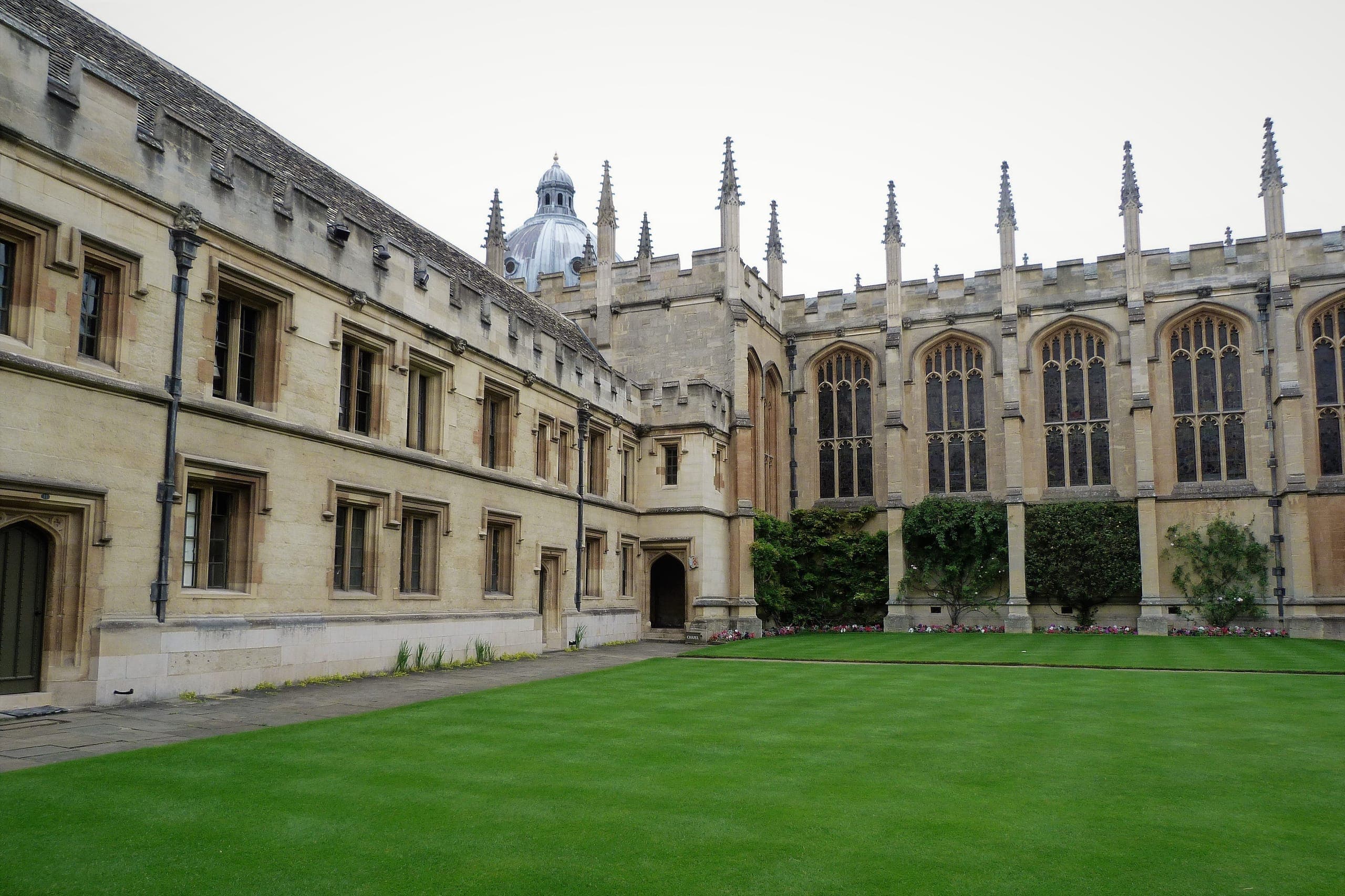
Stone college quadrangle viewed through an archway

Section 12

卒業後のキャリア

Discover Uni reports that 83% of Cambridge Natural Sciences graduates were in work and/or study 15 months after the course in the 2022-23 dataset.

In reality, the course keeps several routes open. That breadth is useful, but it means you should build evidence for the direction you are considering, whether that is research, data, teaching, consulting, software or another technical path.

Section 13

特別な事情について

Cambridge considers contextual data as part of holistic assessment, including individual circumstances, school or college context and geodemographic indicators.

Relevant individual circumstances may include care experience, refugee or humanitarian protection status, estrangement, free school meals or significant disruption to education.

For Natural Sciences, applicants whose school could not offer a relevant recommended subject should make that clear through the UCAS reference or other Cambridge-requested information.

Watch & Learn

Cambridge Natural Sciences 参考動画

学生ブログ・模擬面接・講義体験・入試アドバイス。

Natural Sciences at Cambridge

Overview of the Natural Sciences course and the breadth of subjects studied in the first and second years.

8.01SC Classical Mechanics Introduction

MIT OpenCourseWare introduction to a structured classical mechanics course.

Lecture 1: Introduction to Superposition

A university-level introduction to quantum superposition, useful for mathematically confident physics applicants.

An Introduction to Quantum Biology - with Philip Ball

A Royal Institution lecture connecting quantum theory with biological processes.

The Map of Chemistry

A visual overview of chemistry and its major subfields.

All videos are the property of their respective creators.

Further Reading

Recommended Resources

専門講師が推薦するSupercurricular読書リスト・ウェブサイト・ツール。

  • Cambridge Natural Sciences course page by University of Cambridge[Website]The core official page for course structure, entry requirements, admissions test, written work, and careers information.
  • Cambridge ESAT guidance by University of Cambridge[Website]The most important current source for ESAT modules, timing, registration, and preparation guidance.
  • Isaac Science by Isaac Science / University of Cambridge[Course]High-quality problem solving across physics, chemistry, biology, and maths.
  • The Feynman Lectures on Physics by Richard P. Feynman, Robert B. Leighton and Matthew Sands[Book]A challenging conceptual physics resource for applicants exploring physical Natural Sciences.
  • Why Chemical Reactions Happen by James Keeler and Peter Wothers[Book]A strong bridge between school chemistry and university-style chemical reasoning.
  • MIT OpenCourseWare Classical Mechanics by MIT OpenCourseWare[Course]Good preparation for applicants who want to extend mechanics beyond school level.
  • Nature Podcast by Nature[Podcast]Useful for keeping up with current scientific research across disciplines.
  • Cambridge Chemistry Challenge by Cambridge Chemistry Challenge[Website]A good chemistry challenge for applicants interested in applying school chemistry to unfamiliar problems.

よくあるご質問

No. At Cambridge, these subjects are studied through the Natural Sciences Tripos. Students can specialise increasingly as they progress, but applicants apply for Natural Sciences, not a standalone Physics, Chemistry, Biology, or Biochemistry degree.
The UCAS course code is BCF0, and the Cambridge institution code is C05.
Yes. Natural Sciences applicants take the Engineering and Science Admissions Test. For Natural Sciences, applicants take Mathematics 1 and two further modules from Biology, Chemistry, Physics, and Mathematics 2.
No. Cambridge states that Natural Sciences applicants are not usually asked to submit examples of written work.
It varies by College. Central Cambridge guidance says most applicants have 1 or 2 interviews lasting 35 minutes to an hour in total; some College Natural Sciences pages specify two subject-specific interviews of roughly 20-30 or 30 minutes.
No College should be treated as an easier route. Colleges assess applicants using the full application, and the Winter Pool allows strong applicants to be considered by other Colleges if their original College cannot make an offer.
No. International applicants normally follow the same UCAS deadline as UK applicants: 15 October 2026 for 2027 entry, followed by the My Cambridge Application deadline.
The most useful activities show curiosity, independent reasoning, and scientific problem-solving. Examples include wider reading with critical notes, Olympiad or Isaac Science problem practice, safe practical investigations, coding or data analysis, lectures, and projects linking more than one science.

Natural Sciences(Cambridge)出願の専門サポート

専門講師との無料30分相談をご予約ください。

無料相談を予約する