完全入試ガイド

History and Politics at University of Oxford

Oxfordへの当塾生徒の合格率

65%

Oxfordの平均合格率

17%

History and Politics(University of Oxford)出願に必要なすべて:出願要件・面接・典型オファーとOxford卒業生によるインサイダーアドバイス。

最終更新: 2026年5月

主要情報

  • AAA典型オファー
  • 7:1志願者 / 定員
  • #1UK順位
  • TARA入試テスト
  • 46定員(年)
  • LV21UCAS コード

概要

コース概要

History and Politics at Oxford is a 3-year BA with UCAS code LV21 for 2027 entry. The standard offer is AAA or IB 38 with 666 at HL, History is highly recommended, and all applicants must take TARA and submit one argument-driven historical essay.

なぜOxfordでHistory and Politicsを?

The verified rankings table records Oxford as #1 in the primary ranking display for this page.

A university lecture hall from the back, students taking notes

Section 01

国際学生の出願

下のマップで自国をクリックすると、出願に必要な情報(受け入れられる資格、要求スコア、英語要件、現地の文脈)が表示されます。

International Applicants

Country-specific admissions requirements

FijiTanzaniaW. SaharaCanadaUnited States of AmericaKazakhstanUzbekistanPapua New GuineaIndonesiaArgentinaChileDem. Rep. CongoSomaliaKenyaSudanChadHaitiDominican Rep.RussiaBahamasFalkland Is.NorwayGreenlandFr. S. Antarctic LandsTimor-LesteSouth AfricaLesothoMexicoUruguayBrazilBoliviaPeruColombiaPanamaCosta RicaNicaraguaHondurasEl SalvadorGuatemalaBelizeVenezuelaGuyanaSurinameFranceEcuadorPuerto RicoJamaicaCubaZimbabweBotswanaNamibiaSenegalMaliMauritaniaBeninNigerNigeriaCameroonTogoGhanaCôte d'IvoireGuineaGuinea-BissauLiberiaSierra LeoneBurkina FasoCentral African Rep.CongoGabonEq. GuineaZambiaMalawiMozambiqueeSwatiniAngolaBurundiIsraelLebanonMadagascarPalestineGambiaTunisiaAlgeriaJordanUnited Arab EmiratesQatarKuwaitIraqOmanVanuatuCambodiaThailandLaosMyanmarVietnamNorth KoreaSouth KoreaMongoliaIndiaBangladeshBhutanNepalPakistanAfghanistanTajikistanKyrgyzstanTurkmenistanIranSyriaArmeniaSwedenBelarusUkrainePolandAustriaHungaryMoldovaRomaniaLithuaniaLatviaEstoniaGermanyBulgariaGreeceTurkeyAlbaniaCroatiaSwitzerlandLuxembourgBelgiumNetherlandsPortugalSpainIrelandNew CaledoniaSolomon Is.New ZealandAustraliaSri LankaChinaTaiwanItalyDenmarkUnited KingdomIcelandAzerbaijanGeorgiaPhilippinesMalaysiaBruneiSloveniaFinlandSlovakiaCzechiaEritreaJapanParaguayYemenSaudi ArabiaAntarcticaN. CyprusCyprusMoroccoEgyptLibyaEthiopiaDjiboutiSomalilandUgandaRwandaBosnia and Herz.MacedoniaSerbiaMontenegroKosovoTrinidad and TobagoS. Sudan

Pick a highlighted country to see the admissions-test, score, and English-language requirements that apply for applicants from that country.

Section 02

出願要件

  • A-LevelAAA
    History recommended.
  • IB Diploma38 (including core points) with 666 at HL
  • Advanced Placement (AP)Either four APs at grade 5 (including any subjects required for the course) or three APs at grade 5 (including any subjects required for the course) plus ACT 31+ or SAT 1460+.
Admissions test
Pre-registered TARA (Test of Academic Reasoning for Admissions). Registration closes 28 September 2026; the test sits in the autumn UAT-UK window at Pearson VUE centres. TARA replaced the TSA for Oxford's social-sciences cluster from 2027 entry.
Written work
Submit one or two pieces of recent marked school work in the subject (or a closely related humanities subject), normally with the teacher's comments visible. Standard Oxford written-work deadline is 10 November 2026 — each course's admissions page confirms the exact rules.
Interview
Two college interviews of around 25 minutes each. Subject-specific discussion or problem-solving interviews typical of Oxford tutorial teaching. Most interviews are in person at the college; many colleges still offer online interviews for international applicants.
Required Tests:TARA

Section 03

出願プロセスと重要日程

MAY

Start your Oxford application planning

Oxford advises 2027-entry applicants to begin working on the UCAS application from May 2026. Use this period to choose History and Politics, compare colleges or decide on an open application, draft the personal statement and organise the academic reference.

JUN — SEP

Register and book TARA

History and Politics applicants for 2027 entry must take TARA. Account creation and access-arrangement/bursary requests open on 1 June 2026 at 3pm UK time; October test booking runs from 20 July 2026 at 3pm to 28 September 2026 at 6pm UK time.

1 SEP — 15 OCT

Submit UCAS

Completed UCAS applications can be submitted from 1 September 2026. The Oxford deadline is 15 October 2026 at 6pm UK time.

12 — 16 OCT

Sit TARA

Oxford’s 2026 UAT-UK test window for 2027 entry is 12-16 October 2026. History and Politics applicants sit TARA, including Critical Thinking, Problem Solving and the Writing Task. Candidates in China, Hong Kong and Macau must use the single TARA delivery date specified by UAT-UK.

10 NOV

Submit written work

History and Politics applicants must submit an argument-driven historical essay by 10 November 2026. The essay should be school or college work, in English, no more than 2,000 words, and accompanied by the signed written-work certificate.

LATE NOV

Watch for shortlisting and interview details

Shortlisting normally begins from the end of November. The college considering the application contacts shortlisted candidates with online interview arrangements.

8 — 18 DEC

Attend online interviews

For 2026 interviews, History and Politics first-college interviews are scheduled for 8-12 December, with possible second-college interviews on 15-18 December. Joint-school applicants normally have one interview for each side of the course.

12 JAN

Receive Oxford decision

Shortlisted candidates for 2027 entry are informed of the outcome via UCAS on 12 January 2027, with colleges following up directly later that day.

MAY — AUG

Reply to offers and meet conditions

UCAS reply deadlines depend on when all your university decisions have arrived; for many 2027-entry applicants this will be 5 May or 2 June 2027. Conditional offer holders then wait for qualification results and confirmation.

Section 04

入試テスト

Student working through problems at a desk with timed papers

For 2027 entry, History and Politics applicants must take the Test of Academic Reasoning for Admissions, or TARA.

TARA is delivered through UAT-UK, with tests hosted or delivered through Pearson test centres.

All Oxford applicants taking TARA must take Critical Thinking, Problem Solving and the Writing Task.

The October 2026 test window is 12–16 October 2026. Account creation, access-arrangement requests and bursary requests open on 1 June 2026 at 3pm UK time/BST; October test booking opens on 20 July 2026 at 3pm and closes on 28 September 2026 at 6pm UK time/BST.

This is a change from 2026 entry, when History and Politics applicants did not take an admissions test. For 2027 entry, TARA is a material admissions requirement, but no official cutoff or pass mark is published.

For the Writing Task, prepare it as an argument exercise: define terms, structure quickly and make the reasoning visible.

TARA完全対策ガイド | 試験形式・採点・戦略・練習リソース。

TARAガイド

Section 05

面接:当日の流れと対策

Invitation → Decision: the interview timeline

Interview Invitation

Late Nov

Arrival to Interview

Early Dec

Technical Question

Mid Dec

Decision

Early Jan

Question Types You’ll See

Discussion of the argument, assumptions and evidence in the submitted history essayAnalysis of a short historical passage or source-style extractQuestions about books, topics or political ideas mentioned in the personal statementConceptual comparison across political systems, institutions or forms of powerFollow-up prompts that ask the applicant to refine or reconsider an initial answer

Oxford lists History and Politics interviews as online for this cycle.

The interview is designed as an academic discussion, with joint-school candidates normally interviewed across both sides of the course.

Tutors may test intellectual curiosity, flexible engagement with unfamiliar material, clarity of thought and the ability to explain or revise an argument from written work.

Preparation should therefore be active: reread your submitted essay, build short arguments from unfamiliar extracts and practise saying when an argument needs qualification.

無料のHistory and Politics面接練習問題バンクで本番さながらの問題を練習しましょう。

無料練習問題
Two people in academic discussion across a table

Section 06

合否決定のしくみ

Oxford does not publish a single confirmed 2027 weighting formula for History and Politics decisions.

In reality, a strong application is consistent across evidence types. It is not enough to have one polished essay if your interview discussion, TARA reasoning and school record point in a different direction.

Our recommendation · weighting of admission factors

01020304032%
TARA score
28%
Interview
19%
Predicted grades
9%
Personal statement
7%
Submitted written work
5%
Contextual factors
% of decisionFactor

Oxbridge Mentors recommendation, drawn from observed offer patterns. University of Oxford does not publish official weightings — exact balance varies by college, course and year.

Section 07

Personal Statement のコツ

Handwritten notes and a laptop open to a draft document

For History and Politics, avoid a personal statement that reads like a list of political opinions. Show how a question changed as you read more.

A strong paragraph usually does three things: names a specific issue, explains the evidence or argument you studied, and shows what you now think is difficult about it. That is more useful than saying you have always loved History and Politics.

It helps to include both disciplines in the same line of thought. For example, a paragraph on revolution, empire, welfare states, sovereignty or political violence can work well if it shows how historical evidence changes the political argument, and how political concepts sharpen the historical question.

Do not over-claim expertise. The best tone is precise, provisional and curious.

専門家による一行一行の解説付き完全例文を見る。

History and Politics PS例文

Section 08

プロジェクト

  1. 01正当性
  2. 02プロジェクト概要
  3. 03実施内容
  4. 04困難
  5. 05解決策
  6. 06振り返り

A good project for this course should make you practise evidence and argument together. Choose a question where a historian and a political scientist would not answer in exactly the same way.

  • Historical roots of a current political crisis: Choose one contemporary political issue, such as constitutional reform, migration, populism or state capacity, and trace how a historian and a political scientist would frame the same problem differently. Produce a short annotated bibliography and a 1500-word argument comparing the two approaches.
  • Comparative revolution or regime-change study: Compare two moments of political upheaval from different regions or periods. Focus on evidence, causation and institutions rather than narrative alone: what explains why similar pressures produced different political outcomes?
  • Parliament, empire and citizenship: Investigate how ideas of representation, sovereignty or citizenship changed across an imperial or post-imperial context. Use primary sources where possible, then connect the historical evidence to a political-theory concept.
Open books, a notebook, and a coffee on a wooden desk

Section 08

その他のサプリキュラム

Oxford’s for this page emphasises activities that build reading, argument, evidence and quantitative awareness.

These are support, not substitute. One focused reading project discussed well is stronger than six activities listed without reflection.

  • Primary-source analysis:

    Practise reading speeches, laws, manifestos, memoirs or parliamentary debates as evidence. Ask who produced the source, for what audience, under what constraints and what alternative evidence might challenge it.

  • Academic reading logs:

    Keep concise notes on each book or article: thesis, evidence base, strongest objection and one follow-up question. This supports interview discussion more effectively than listing many books superficially.

  • Essay competitions:

    Use competitions to practise independent argument, source selection, structure and revision. The outcome matters less than being able to explain how your argument changed during research.

  • Lectures and public seminars:

    Attend or watch university-level talks in history, political thought, international relations or economics. After each talk, summarise the speaker's claim and your strongest challenge to it.

  • Debate and model institutions:

    Debating, Model UN or youth parliament can be useful if you connect them to substantive reading rather than treating them as generic leadership evidence.

  • Quantitative political awareness:

    Because the course includes quantitative methods preparation, develop comfort with interpreting graphs, election data, polling claims and basic causal arguments.

Section 08

コンペティション

Competitions are not required, but they can stretch your argument, structure and independent research. Use them to practise thinking under a question, not to collect badges.

  1. John Locke Institute Global Essay Prize — Independent argument, critical reasoning, knowledge beyond the school curriculum and persuasive essay writing across categories including History, Politics, International Relations, Public Policy and Economics. Choose a question that genuinely interests you, define your terms precisely, read at least two serious academic sources on opposing sides, and build a clear answer rather than a survey.
  2. Trinity College Cambridge Robson History Prize — Historical essay writing, interpretation, evidence selection and sustained argument for Year 12 or Lower Sixth students. Pick a question where you can use precise examples. Avoid narrative-only answers and make the introduction state a contestable thesis.
  3. Trinity College Cambridge R.A. Butler Politics Prize — Political analysis, international-studies reasoning, use of examples and argumentative essay structure. Use both contemporary and historical examples, define key political concepts, and address the strongest counterargument before concluding.
  4. St Hugh's College Julia Wood History Essay Competition — Original historical research, topic selection, independent reading, referencing and extended essay writing. Choose a focused topic rather than an over-large survey. Use a clear research question, primary material if available, and careful citation.
  5. Royal Economic Society Young Economist of the Year — Application of economic reasoning to public questions, policy analysis and clear explanation of trade-offs. Select a question with political or historical dimensions, use data carefully, and explain the assumptions behind any policy judgement.

None are required; one or two done well beats five half-attempted.

Section 09

コース内容

  1. Year

    01 / 03

    1

    Preliminary Examination

    Foundations across History and Politics

    Year 1 introduces the two disciplines side by side: students choose a British Isles or European/World history period, study political theory, take a politics practice paper, complete an optional history/methods/foreign-text subject, and learn quantitative methods. The first-year Preliminary Examination must be passed to progress to Year 2.

    Students begin combining historical context with political analysis from the start of the degree.

  2. Year

    02 / 03

    2

    Final Honours School taught components

    Breadth across History periods and Politics cores

    Oxford publishes Years 2 and 3 together, so this year is best understood as the first part of the Final Honours School component set. Students broaden their historical coverage through British Isles and European/World history components while building depth in Politics through two of five core subjects.

    The course moves from first-year foundations to a flexible, interdisciplinary Final Honours School.

  3. Year

    03 / 03

    3

    Advanced options and thesis

    Specialisation and independent research

    The final year completes the Final Honours School component set through advanced History and Politics options and a thesis in either History or Politics. The thesis is the course's main independent research element and allows students to pursue a focused question within one of the two disciplines.

    The third-year thesis gives students the opportunity to conduct an independent research project.

Section 10

提出書類

A bound essay on a tutor desk beside a fountain pen

History and Politics applicants must submit one argument-driven historical essay.

The deadline is 10 November 2026.

The essay should normally be school or college work, in English, no more than 2,000 words, and submitted with the signed certificate or cover sheet.

Shortlisted applicants may be asked about the submitted work at interview.

We recommend choosing a piece you can discuss under challenge. A clean argument with visible evidence is better than an over-complex essay you cannot explain.

Section 11

History and Politicsの知識を深める

Start with Political Philosophy: A Very Short Introduction by David Miller for authority, democracy, freedom and justice, then use The Age of Revolution: 1789-1848 by Eric Hobsbawm to connect revolution, social change and political argument.

For more demanding reading, The Origins of Totalitarianism by Hannah Arendt helps with ideology, empire and mass politics; The Pursuit of Power: Europe 1815-1914 by Richard J. Evans gives a broad modern European frame; and The Rise and Fall of Modern Empires is useful for exploring empire, state formation and political power through historical case studies.

Use Oxford-produced audio where possible: History Faculty podcasts and Politics and International Relations podcasts expose you to university-style historical and political discussion.

For public debate, treat Intelligence Squared and Intelligence Squared Podcasts as the same debate brand in video and audio formats, not as two separate academic sources. The Rest Is History can be useful as a topic-finding starting point, but it should lead into deeper academic reading rather than replace it.

The Oxford Supercurricular Hub and Oxford academic competitions for school-aged students are the safest starting points for finding Oxford-aligned exploration and verified school-level competitions.

A study planner, highlighters and a stack of revision cards

Section 12

カレッジ選択と再振り分け

33 colleges offer this subject. ~33% of places come through the pool.

Applicants can choose a college or make an open application, but Oxford colleges work through a common admissions framework.

College choice can affect the environment in which you are first considered, but it should not be treated as a way to game admission.

A practical choice is a college that offers History and Politics and suits your preferences for size, accommodation, location and community.

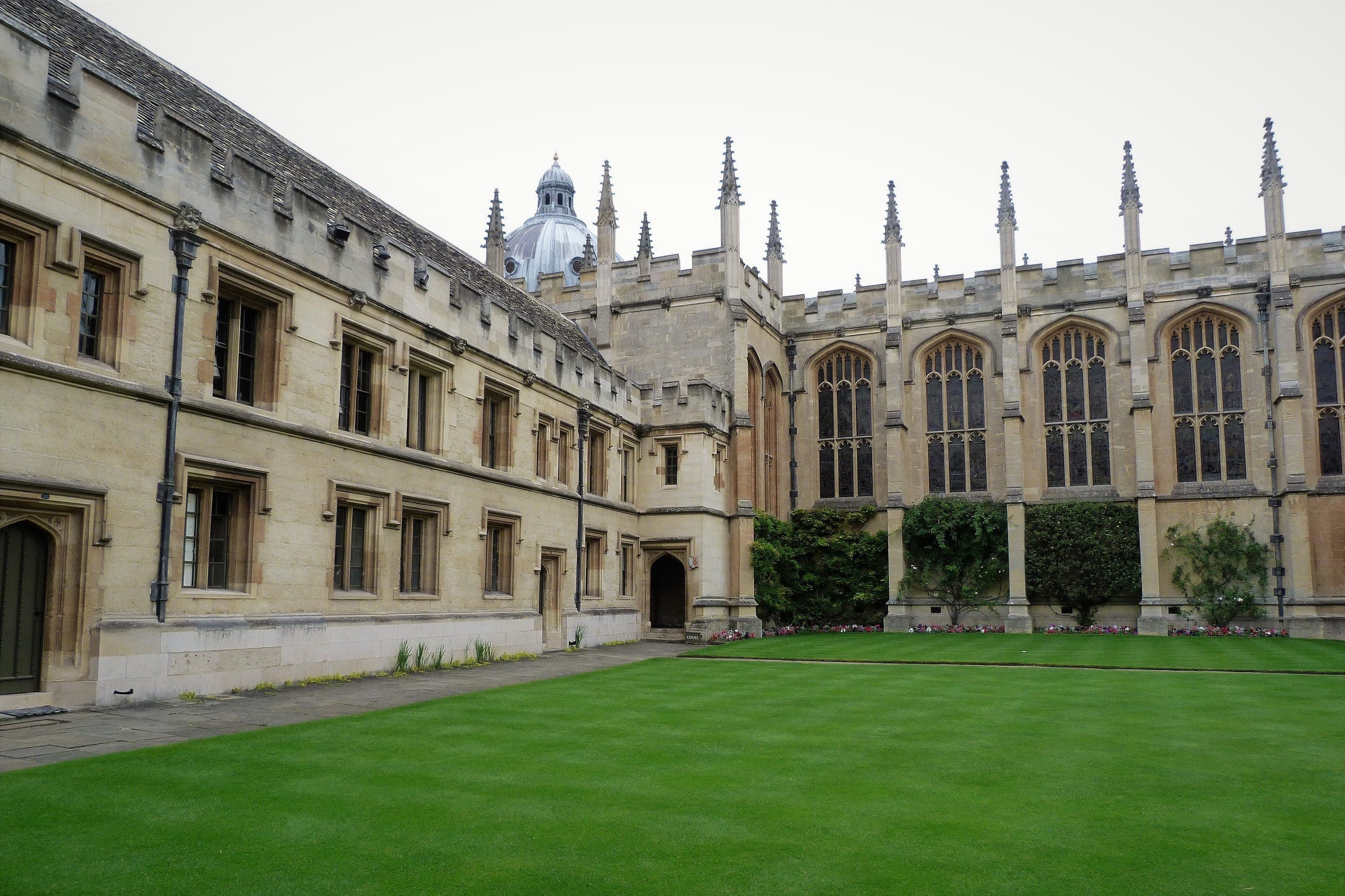
Stone college quadrangle viewed through an archway

Section 13

卒業後のキャリア

Discover Uni reports that 90% of Oxford History and Politics graduates in the dataset were in work and/or study 15 months after the course.

Oxford’s course page lists recent graduate routes including accountancy, advertising, archive work, finance, the Civil Service, consultancy, international charity work, media, law, librarianship, management consultancy, museums, politics, publishing, research, social work, teaching and theatre.

Section 14

特別な事情について

Oxford states that grades are considered in the context in which they were achieved wherever possible.

For applicants who have taken GCSEs or IGCSEs, Oxford says they can form an important part of assessment but are considered alongside all other elements and, where possible, in context.

International applicants without GCSE-equivalent qualifications are not disadvantaged solely for lacking GCSEs; Oxford assesses the application in line with course selection criteria and available evidence.

Watch & Learn

Oxford History and Politics 参考動画

学生ブログ・模擬面接・講義体験・入試アドバイス。

PPE Centenary Lecture 2023: The Power of Narratives in Nation Building - Professor Mathias Thoenig

A lecture connecting politics, history, identity and nation-building.

Why Are There Countries? | What? Why? When? Podcast

A discussion useful for thinking about sovereignty, state formation and political geography.

License to Kill | What? Why? When? Podcast

A politics-focused discussion that can prompt wider reading on state authority and violence.

James Ford Lectures 2021 - Ireland, empire, and the early modern world

A history lecture series relevant to empire, identity and political change.

Oxford Political Thought Seminar 5 - Law

A political thought seminar that introduces university-style discussion of law and political ideas.

All videos are the property of their respective creators.

Further Reading

Recommended Resources

専門講師が推薦するSupercurricular読書リスト・ウェブサイト・ツール。

よくあるご質問

Oxford's live 2027-entry course page currently lists UCAS code LV21. The supplied registry value VL12 should be treated as superseded or an editorial discrepancy unless a future official source reverses it.
Yes. Oxford's live course page and admissions-test guide list TARA for History and Politics for 2027 entry, and UAT-UK confirms TARA is running for the cycle. This supersedes the uploaded registry's 'NONE' test note.
Applicants must submit one argument-driven historical essay, normally written as part of school or college work. It should be no more than 2000 words, include the question being answered, avoid source commentaries, and be submitted with the required signed certificate or cover sheet by 10 November 2026.
Oxford lists no required subjects for History and Politics. History is highly recommended, and Sociology, Politics or Government and Politics can be helpful but are not required.
The live Oxford page lists A-level AAA, Advanced Highers AA/AAB and IB 38 including core points with 666 at Higher Level. International applicants should check the country-specific qualification page.
Oxford's live course page says shortlisted History and Politics applicants will be invited to online interviews in December. Applicants may be asked about their written work, personal statement, and possibly a short passage.
College choice matters for community, accommodation, location and first consideration, but Oxford colleges operate within a common admissions framework and work together to ensure strong applicants can be considered across colleges. Applicants should choose a college they like rather than trying to game statistics.
No. International applicants follow the same UCAS deadline as UK applicants: 6pm UK time on 15 October 2026 for 2027 entry. They must also meet any qualification, English-language and visa requirements.

History and Politics(Oxford)出願の専門サポート

専門講師との無料30分相談をご予約ください。

無料相談を予約する