完全入試ガイド

Philosophy, Politics and Economics (PPE) at University of Oxford

Oxfordへの当塾生徒の合格率

65%

Oxfordの平均合格率

17%

OxfordのPPEは最も競争的な入試の一つ。Oxford卒の専門講師による完全対策で合格を目指しましょう。

最終更新: 2026年5月

主要情報

  • AAA典型オファー
  • 8:1志願者 / 定員
  • #1UK順位
  • TARA入試テスト
  • 227定員(年)
  • L0V0UCAS コード

概要

コース概要

Philosophy, Politics and Economics (PPE) at the University of Oxford is a 3-year BA with UCAS code L0V0 and a typical offer of AAA or IB 39 with 766 at HL. For 2027 entry, all applicants must take TARA; after first year, students can continue with all three branches or specialise in two.

なぜOxfordでPPEを?

Oxford PPE is listed as Philosophy, Politics and Economics on the official course page, with BA as the award and 3 years as the course duration.

A university lecture hall from the back, students taking notes

Section 01

国際学生の出願

下のマップで自国をクリックすると、出願に必要な情報(受け入れられる資格、要求スコア、英語要件、現地の文脈)が表示されます。

International Applicants

Country-specific admissions requirements

CanadaUnited States of AmericaSouth KoreaIndiaChinaUnited KingdomMalaysiaJapan

Pick a highlighted country to see the admissions-test, score, and English-language requirements that apply for applicants from that country.

Section 02

出願要件

  • A-LevelAAA
    Mathematics (A-Level or AS-Level) required.
  • IB Diploma39 with 766 at HL
    HL: Mathematics (A-Level or AS-Level) required.
  • Advanced Placement (AP)Either four APs at grade 5, including any subjects required for the course you are applying to, or three APs at grade 5, including any required subjects, plus a score of 31 or above in the ACT or 1460 or above out of 1600 in the SAT.
Admissions test
Pre-registered TARA (Test of Academic Reasoning for Admissions). Registration closes 28 September 2026; the test sits in the autumn UAT-UK window at Pearson VUE centres. TARA replaced the TSA for Oxford's social-sciences cluster from 2027 entry.
Interview
Two college interviews of around 25 minutes each. Separate interviews for at least two of the three disciplines (Philosophy, Politics, Economics). Focus on analytical reasoning and argument evaluation. Most interviews are in person at the college; many colleges still offer online interviews for international applicants.
Required Tests:TARA

Section 03

出願プロセスと重要日程

  1. MAY — SEP

    Build the application

    Start the UCAS application from May 2026, research PPE and colleges, draft the personal statement, and organise the academic reference before submissions open.

  2. 1 JUN — 28 SEP

    Register and book TARA

    Create a UAT-UK account from 1 June 2026 and book the October TARA test during the 20 July to 28 September 2026 booking window.

  3. 12–16 OCT

    Sit TARA

    PPE applicants must sit TARA in the October 2026 UAT-UK window. Candidates sitting in China, Hong Kong or Macau must sit TARA on 14 October 2026. Oxford applicants are expected to use the October sitting rather than the January sitting.

  4. 15 OCT

    Submit UCAS

    Submit the UCAS application by 6pm UK time on 15 October 2026. The PPE course code is L0V0.

  5. LATE NOV — EARLY DEC

    Watch for interview shortlisting

    Oxford usually sends interview invitations between mid-November and early December. PPE applicants may be reallocated or invited by a college other than the one originally chosen.

  6. EARLY — MID DEC

    Attend online interviews

    Shortlisted PPE applicants attend online academic interviews in December 2026. Oxford says interviews are expected in early to mid-December; subject timetables are published when available.

  7. 12 JAN

    Receive Oxford decision

    Oxford releases 2027-entry decisions through UCAS on 12 January 2027, followed by direct college communication.

  8. 5 MAY

    Reply to offers if your UCAS deadline applies

    UCAS states that applicants who receive all decisions by 31 March 2027 must reply by 5 May 2027. Your personal UCAS Hub deadline is the authority if it differs.

  9. AUG

    Meet offer conditions

    Conditional offer holders should check UCAS Hub when results are released and follow their college's instructions. Oxford does not normally participate in UCAS Clearing.

Section 04

入試テスト

Student working through problems at a desk with timed papers

All Oxford PPE applicants for 2027 entry must take the Test of Academic Reasoning for Admissions (TARA).

TARA is provided by UAT-UK and delivered online by Pearson through Pearson test centres.

Oxford requires PPE applicants to take Critical Thinking, Problem Solving and the Writing Task.

The October 2026 test window is 12-16 October 2026, and candidates sitting in China, Hong Kong or Macau must sit TARA on 14 October 2026.

Registration account creation, access-arrangement requests and bursary requests open on 1 June 2026 at 3pm UK time. The Oxford/UAT-UK test-booking window is separate: it runs from 20 July to 28 September 2026, closing at 6pm UK time.

For international applicants, the test gives Oxford a common way to compare reasoning across different school systems and qualifications. Prepare the writing, critical-thinking and problem-solving elements together, because PPE interviews can draw on the same habits of thought.

TARA完全対策ガイド | 試験形式・採点・戦略・練習リソース。

TARAガイド

Section 05

面接:当日の流れと対策

Invitation → Decision: the interview timeline

Interview Invitation

Late Nov

Arrival to Interview

Early Dec

Technical Question

Mid Dec

Decision

Early Jan

Question Types You’ll See

argument-analysis prompt from a short passage or claimpolicy or political reasoning scenario requiring trade-offseconomics-style reasoning using a graph, data pattern or simple modellogic or problem-solving task where the method matters more than prior knowledgediscussion of an idea, book or issue mentioned in the personal statement

Oxford PPE interviews are online for 2027 entry and are expected in early to mid-December 2026.

The interview style is a tutorial-style, problem-based academic discussion, and Oxford commonly uses panels of two tutors, though more may be present.

PPE interviews test clear analytical thinking, reasoning ability, understanding of arguments and assumptions, flexibility when challenged, communication, and motivation across all three branches.

Typical prompt types may include argument analysis, policy trade-offs, economics-style reasoning using a graph or data pattern, logic or problem-solving tasks, and discussion of material from the personal statement.

Practise by thinking aloud through unfamiliar material. A strong answer is usually a clear method, a reasoned qualification, and a willingness to revise when the tutor changes the problem.

無料のPPE面接練習問題バンクで本番さながらの問題を練習しましょう。

無料練習問題
Two people in academic discussion across a table

Section 06

合否決定のしくみ

Oxford states that PPE decisions use the full range of available evidence, including interview performance, admissions-test results, prior and predicted academic achievement, the academic reference, the personal statement and contextual information.

In reality, you should not optimise for a single component. The safest application is one where grades, TARA preparation, interview thinking and subject motivation all point in the same academic direction.

Our recommendation · weighting of admission factors

0102030400%
TARA score
0%
Interview
0%
Predicted grades
0%
Personal statement
0%
Contextual factors
% of decisionFactor

Oxbridge Mentors recommendation, drawn from observed offer patterns. University of Oxford does not publish official weightings — exact balance varies by college, course and year.

Section 07

Personal Statement のコツ

Handwritten notes and a laptop open to a draft document

For PPE, the personal statement should show that you can connect philosophy, politics and economics without reducing the course to current affairs. Choose a small number of ideas and treat each one analytically.

A useful paragraph might begin with a political or economic question, identify the philosophical issue underneath it, and then explain what reading or evidence changed your view. This is stronger than listing books, clubs and headlines without analysis.

Mathematics is recommended for PPE, not required, so applicants without a full Maths route should show how they are developing quantitative readiness.

Avoid writing as if PPE is a route into politics alone. Oxford's course structure includes logic, political analysis, microeconomics, macroeconomics, and mathematical and statistical techniques in the first year.

専門家による一行一行の解説付き完全例文を見る。

PPE PS例文

Section 08

プロジェクト

  1. 01正当性
  2. 02プロジェクト概要
  3. 03実施内容
  4. 04困難
  5. 05解決策
  6. 06振り返り

A strong PPE project should force the three branches to interact. The strongest project questions make evidence, institutions and values matter together.

  • Policy trade-off dossier: Choose one live public-policy issue, such as housing affordability, carbon pricing, rent controls, or minimum wages. Analyse it through one economic model, one political-institutional lens, and one philosophical question about justice or rights.
  • Argument map of a classic PPE debate: Compare two thinkers or schools of thought on a question such as equality, liberty, democracy, markets, or state power. Build a structured argument map that separates claims, assumptions, objections, and replies.
  • Data-led politics and economics briefing: Use public data from a credible source to investigate a political-economic question. Present the limits of the data, possible causal explanations, and how policy conclusions might change under different assumptions.
Open books, a notebook, and a coffee on a wooden desk

Section 08

その他のサプリキュラム

Other supercurriculars should support your academic thinking, not decorate the application.

These activities are support, not substitute. One carefully analysed book or data question is more useful than a long list with no reflection.

  • Reading across all three disciplines:

    Build a balanced reading log covering introductory philosophy, political theory, comparative politics, microeconomics, macroeconomics, and current affairs. For each item, write down the core argument and one serious objection.

  • Essay writing:

    Practise making a precise claim, defending it logically, considering counterarguments, and concluding with a qualified judgement. PPE selectors value analytical structure more than sweeping opinions.

  • Quantitative preparation:

    Strengthen algebra, graphs, percentages, probability, and interpretation of economic data. PPE recommends Mathematics, and economics interviews and tests may reward comfort with unfamiliar quantitative reasoning.

  • Debate and discussion:

    Join debates, model parliaments, economics clubs, philosophy societies, or discussion groups, but focus on intellectual flexibility and evidence-based reasoning rather than performance or rhetoric.

  • Current affairs analysis:

    Follow high-quality journalism and policy analysis. For major events, ask what an economist, a political scientist, and a philosopher would each notice or challenge.

  • Admissions-test style reasoning:

    Practise critical-thinking, problem-solving, and concise writing tasks under timed conditions, because Oxford now requires TARA for PPE applicants.

Section 08

コンペティション

Competitions are not required for Oxford PPE. They can stretch argument, evidence and timed reasoning when used well. Some listed essay prizes are run by Cambridge colleges but are included here as open subject-stretch opportunities, not as Oxford-specific requirements.

  1. International Economics Olympiad tests Economics, finance, and business-case reasoning for high-school students. Prepare by: Review the official syllabus, practise past tasks, and connect economic theory to real-world policy and business cases.
  2. RES Young Economist of the Year tests Independent economic analysis of contemporary issues, usually through an essay or report-style submission. Prepare by: Choose a focused question, use clear economic concepts, support claims with evidence, and avoid purely descriptive journalism.
  3. John Locke Institute Global Essay Prize tests Independent argument, critical analysis, and persuasive writing across subjects including philosophy, politics, economics, history, theology, psychology, and law. Prepare by: Select a question where you can make a distinctive argument, define terms carefully, and engage with objections rather than only summarising sources.
  4. Trinity College Cambridge R.A. Butler Politics Prize tests Political and international-studies essay writing for Year 12 or Lower Sixth students. Prepare by: Frame a precise political question, use evidence from more than one country or institution where relevant, and make the argument analytical rather than partisan.
  5. Trinity College Cambridge Essay Prizes tests Subject-specific long-form academic writing across humanities and social-science topics, including politics, law, history, languages, and related areas. Prepare by: Use the annual question list, read beyond school syllabuses, and practise building a clear thesis with references and counterargument.

None are required. One or two done well beats five half-attempted.

Section 09

コース内容

  1. Year

    01 / 03

    1

    Prelims across Philosophy, Politics and Economics

    Foundations in all three branches

    The first year gives every PPE student a shared foundation across philosophy, politics and economics. Students study introductory philosophical reasoning and logic, political theory and comparative politics, and core microeconomics, macroeconomics, mathematics and statistics before taking First University examinations.

    A common first-year foundation lets students test all three disciplines before deciding whether to continue tripartite or specialise later.

  2. Year

    02 / 03

    2

    Final Honour School choices begin

    Choose tripartite PPE or concentrate on two branches

    From the second year, Oxford treats PPE as the Final Honour School stage across Years 2 and 3. Students either continue with Philosophy, Politics and Economics together or concentrate on any two branches, combining compulsory papers in the chosen branches with optional papers.

    The main structural decision is whether to keep all three disciplines or build a more specialised two-branch degree.

  3. Year

    03 / 03

    3

    Advanced options and Finals

    Specialised papers, optional thesis and final assessment

    The final year continues the Final Honour School structure, with students selecting from a wide range of advanced papers in their chosen branch combination. Oxford notes that available options may change from year to year, and one of the eight final papers may be a thesis or supervised dissertation.

    The optional thesis route allows a student to pursue an extended independent project within PPE.

Section 10

PPEの知識を深める

Start with books that give you a disciplined route into each branch: Think: A Compelling Introduction to Philosophy by Simon Blackburn, An Introduction to Political Philosophy by Jonathan Wolff, The Undercover Economist by Tim Harford, Justice: What's the Right Thing to Do? by Michael J. Sandel, The Logic Manual by Volker Halbach.

Episode 01: The Moral Side of Murder, and Intro to Economics: Crash Course Econ #1.

For listening, More or Less: Behind the Stats, Philosophy Bites, Freakonomics Radio, The Inquiry can help you test how arguments, evidence and statistics are handled in public discussion.

For structured study, Principles of Economics: Microeconomics, Principles of Economics: Macroeconomics, Principles of Microeconomics, Introducing philosophy, What Is Economics? offer introductions to microeconomics, macroeconomics, philosophy and economic method.

We recommend keeping a reading log with three columns: claim, evidence, objection. That habit transfers directly into TARA writing, interview discussion and first-year tutorial preparation.

A study planner, highlighters and a stack of revision cards

Section 11

カレッジ選択と再振り分け

39 colleges offer this subject. 14% of applicants submit an open application. Oxford has previously reported that around a third of successful applicants receive an offer from a college they did not specify; treat this as a lower-confidence older-source figure. of places come through the pool.

Oxford applicants can name a college or submit an open application, and the PPE 2024-25 admissions round reported 262 open applications out of 1,888 applicants.

Oxford uses reallocation where a course or college is oversubscribed, so strong candidates can be considered, interviewed or offered by a different college.

College choice mainly affects where you may be considered, interviewed, live and receive tutorial support. Oxford says colleges do not specialise in particular subjects, the same course process is used at every college, and no college is easy to get into.

We recommend choosing for practical fit: location, accommodation, accessibility, facilities and community. An open application is sensible if you have no real preference.

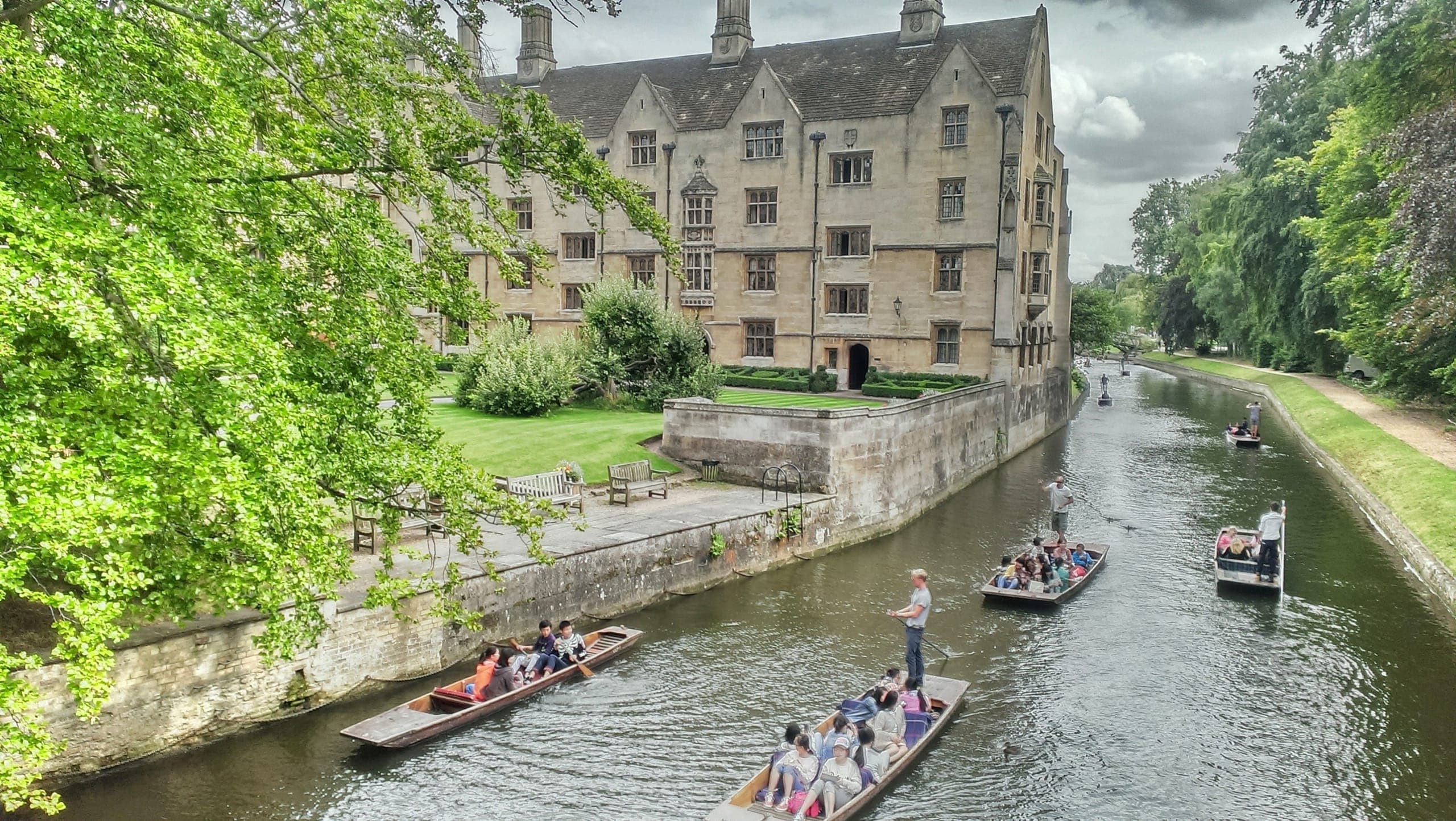
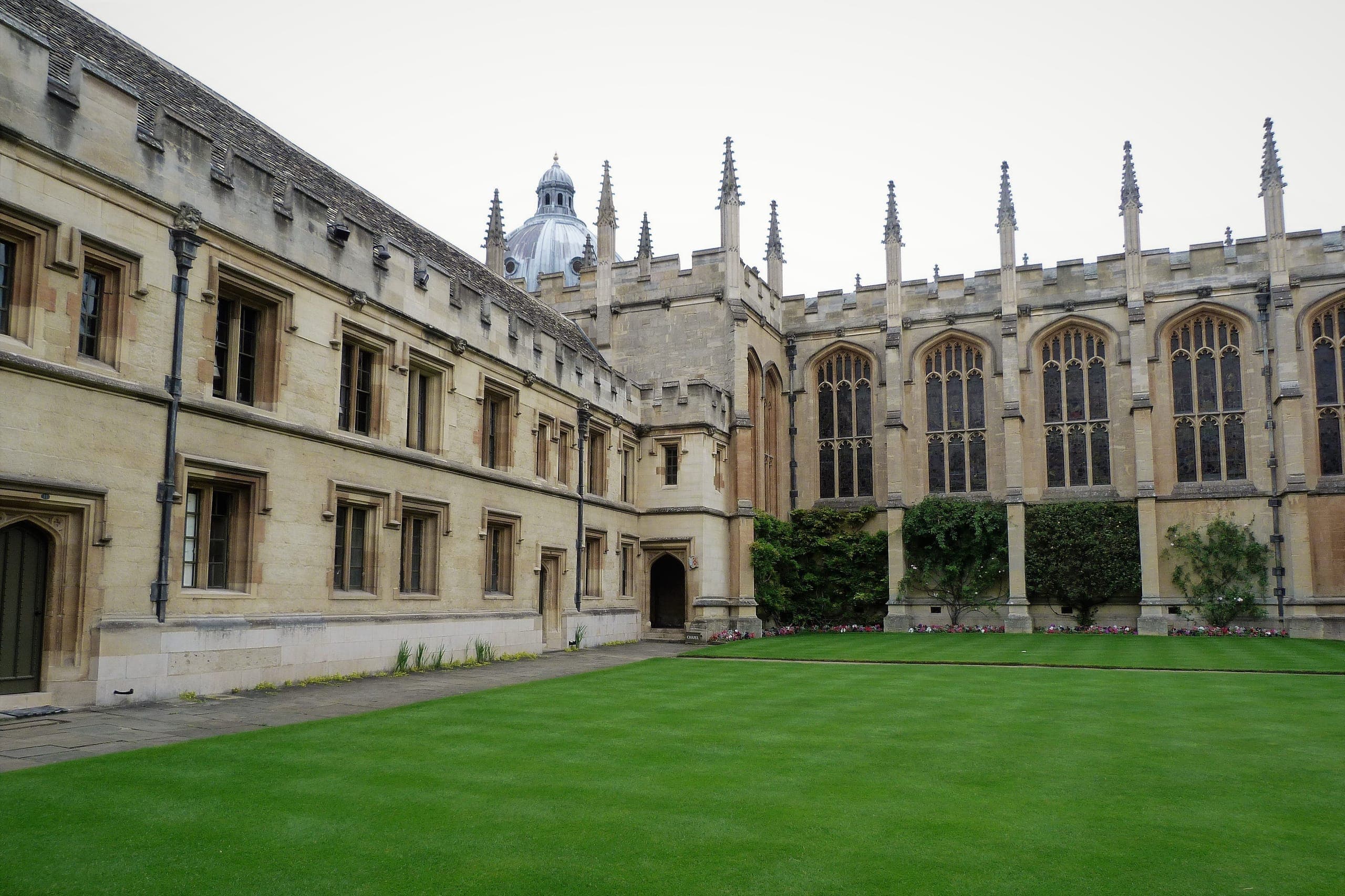
Stone college quadrangle viewed through an archway

Section 12

卒業後のキャリア

Oxford's course page lists PPE destinations including banking and finance, politics, journalism, law, public service, management consultancy, advertising, charities, think tanks, international organisations, teaching and research.

The structured careers chart uses Discover Uni 2022-23 Graduate Outcomes occupation data, with business/research/administrative professionals, finance professionals and business/public-service associate professionals as the largest named categories.

In reality, PPE is broad rather than vocational. The career advantage comes from combining argument, numerical reasoning and institutional analysis, not from following a single fixed profession.

Section 13

特別な事情について

Oxford uses contextual data to interpret achievement in light of individual circumstances, including school performance and socio-economic disadvantage; this helps tutors read attainment and potential fairly, but it does not replace the need to meet academic requirements.

Applicants whose schooling has limited access to economics, philosophy, politics or advanced mathematics should explain relevant academic development through the appropriate UCAS or Oxford channels where appropriate. Disruption, disability, illness, caring responsibilities, bereavement or other serious circumstances should be declared through the formal routes rather than relying on the personal statement alone.

For PPE, contextual evaluation should still be supported by evidence of analytical reasoning, mathematical readiness and curiosity across all three disciplines.

Watch & Learn

Oxford PPE 参考動画

学生ブログ・模擬面接・講義体験・入試アドバイス。

Philosophy, Politics and Economics at Oxford University

Official Oxford course video introducing PPE through tutors and students.

PPE Centenary Lecture 2023: The Power of Narratives in Economics

Oxford PPE centenary lecture connecting economics with narratives and public reasoning.

PPE Centenary Lecture with Professor Christina Davis: Economic Diplomacy and Balance of Power

Lecture on political economy, international relations, and economic diplomacy.

Justice: What's The Right Thing To Do? Episode 01: The Moral Side of Murder

Michael Sandel introduces moral reasoning through the trolley problem and related cases.

Intro to Economics: Crash Course Econ #1

A beginner-friendly introduction to scarcity, opportunity cost, incentives, and economic thinking.

All videos are the property of their respective creators.

Further Reading

Recommended Resources

専門講師が推薦するSupercurricular読書リスト・ウェブサイト・ツール。

  • Oxford PPE course page by University of Oxford[Website]Primary source for entry requirements, course structure, test requirements, interviews, and course statistics.
  • Oxford admissions tests by University of Oxford[Website]Official source for TARA, UAT-UK test dates, registration, and booking windows.
  • Oxford international qualifications by University of Oxford[Website]Country-by-country qualification equivalence and accepted qualification guidance.
  • Oxford English language requirements and visas by University of Oxford[Website]Official IELTS, TOEFL caveat, exemption, evidence-deadline, and visa guidance for international applicants.
  • Oxford college choice guidance by University of Oxford[Website]Explains college preference, open applications, reallocation, and what applicants should consider.
  • PPE admissions statistics by University of Oxford Department of Politics and International Relations / PPE[Article]Departmental PPE admissions statistics and applicant information.
  • Oxford interview guidance by University of Oxford[Website]Official advice on how Oxford interviews work and how to approach academic interview discussion.

よくあるご質問

Yes. Oxford's current PPE page states that all applicants must take TARA for 2027 entry. This differs from the registry field that said no admissions test, so the discrepancy has been flagged.
No. Oxford's current PPE course page states that applicants are not required to submit written work.
For 2027 entry, Oxford lists AAA at A-level or IB 39 with 766 at Higher Level. PPE has no required subjects, but Mathematics is recommended and successful applicants commonly have strong mathematical preparation.
Yes. Oxford lists Philosophy, Politics and Economics as a three-year BA course.
Oxford's PPE departmental information for the 2024-25 admissions round reports 1,888 applicants, 685 shortlisted applicants, 266 offers, and 7.8 applicants per place. The official course page reports a three-year average intake of 227.
Applicants may name a college or make an open application. Oxford says colleges do not specialise in particular subjects and that the same course process is used at every college. College choice should be based on practical fit rather than a belief that one college is easier.
Yes. The same UCAS deadline applies. International applicants must also meet Oxford's qualification, English-language, admissions-test, and visa requirements where relevant. Candidates sitting TARA in China, Hong Kong or Macau should note UAT-UK's one-day TARA sitting in those locations.
It should show genuine academic engagement with philosophy, politics, and economics, not just one of the three. Strong statements usually connect reading, arguments, data, and public-policy questions while showing analytical reasoning and intellectual curiosity.

PPE(Oxford)出願の専門サポート

専門講師との無料30分相談をご予約ください。

無料相談を予約する