完全入試ガイド

Psychology, Philosophy and Linguistics at University of Oxford

Oxfordへの当塾生徒の合格率

65%

Oxfordの平均合格率

17%

Psychology, Philosophy and Linguistics (PPL)(University of Oxford)出願に必要なすべて:出願要件・面接・典型オファーとOxford卒業生によるインサイダーアドバイス。

最終更新: 2026年5月

主要情報

  • A*AA典型オファー
  • 7:1志願者 / 定員
  • #1UK順位
  • TARA入試テスト
  • 37定員(年)
  • CV85UCAS コード

概要

コース概要

Psychology, Philosophy and Linguistics at Oxford is a joint course for applicants who want to connect mind, language, argument and behaviour. For 2027 entry the typical offer is A*AA, the course uses option-specific UCAS codes, and all applicants must take TARA.

なぜOxfordでPsychology, Philosophy and Linguistics (PPL)を?

PPL at Oxford is distinctive because it asks applicants to move between empirical psychology, philosophical argument and linguistic analysis rather than treating the mind, language and reasoning as separate topics. It is best understood as a two-subject Oxford course with the possibility of studying papers from all three areas, subject to college approval.

A university lecture hall from the back, students taking notes

Section 01

国際学生の出願

下のマップで自国をクリックすると、出願に必要な情報(受け入れられる資格、要求スコア、英語要件、現地の文脈)が表示されます。

International Applicants

Country-specific admissions requirements

FijiTanzaniaW. SaharaCanadaUnited States of AmericaKazakhstanUzbekistanPapua New GuineaIndonesiaArgentinaChileDem. Rep. CongoSomaliaKenyaSudanChadHaitiDominican Rep.RussiaBahamasFalkland Is.NorwayGreenlandFr. S. Antarctic LandsTimor-LesteSouth AfricaLesothoMexicoUruguayBrazilBoliviaPeruColombiaPanamaCosta RicaNicaraguaHondurasEl SalvadorGuatemalaBelizeVenezuelaGuyanaSurinameFranceEcuadorPuerto RicoJamaicaCubaZimbabweBotswanaNamibiaSenegalMaliMauritaniaBeninNigerNigeriaCameroonTogoGhanaCôte d'IvoireGuineaGuinea-BissauLiberiaSierra LeoneBurkina FasoCentral African Rep.CongoGabonEq. GuineaZambiaMalawiMozambiqueeSwatiniAngolaBurundiIsraelLebanonMadagascarPalestineGambiaTunisiaAlgeriaJordanUnited Arab EmiratesQatarKuwaitIraqOmanVanuatuCambodiaThailandLaosMyanmarVietnamNorth KoreaSouth KoreaMongoliaIndiaBangladeshBhutanNepalPakistanAfghanistanTajikistanKyrgyzstanTurkmenistanIranSyriaArmeniaSwedenBelarusUkrainePolandAustriaHungaryMoldovaRomaniaLithuaniaLatviaEstoniaGermanyBulgariaGreeceTurkeyAlbaniaCroatiaSwitzerlandLuxembourgBelgiumNetherlandsPortugalSpainIrelandNew CaledoniaSolomon Is.New ZealandAustraliaSri LankaChinaTaiwanItalyDenmarkUnited KingdomIcelandAzerbaijanGeorgiaPhilippinesMalaysiaBruneiSloveniaFinlandSlovakiaCzechiaEritreaJapanParaguayYemenSaudi ArabiaAntarcticaN. CyprusCyprusMoroccoEgyptLibyaEthiopiaDjiboutiSomalilandUgandaRwandaBosnia and Herz.MacedoniaSerbiaMontenegroKosovoTrinidad and TobagoS. Sudan

Pick a highlighted country to see the admissions-test, score, and English-language requirements that apply for applicants from that country.

Section 02

出願要件

  • A-LevelA*AA
  • IB Diploma39 (including core points) with 766 at HL
  • Advanced Placement (AP)For an A*AA course: either four APs at grade 5, including any subjects required for the course, or three APs at grade 5 plus ACT 32+ or SAT 1470+.
Admissions test
Pre-registered TARA (Test of Academic Reasoning for Admissions). Registration closes 28 September 2026; the test sits in the autumn UAT-UK window at Pearson VUE centres. TARA replaced the TSA for Oxford's social-sciences cluster from 2027 entry.
Interview
Two college interviews of around 25 minutes each. Subject-specific discussion or problem-solving interviews typical of Oxford tutorial teaching. Most interviews are in person at the college; many colleges still offer online interviews for international applicants.
Required Tests:TARA

Section 03

出願プロセスと重要日程

YEAR 12

Build the PPL academic base

Explore the two PPL subjects you plan to apply for and check that your qualification profile is competitive for Oxford. If applying for a Psychology pathway, prioritise science or mathematics preparation because the official page highly recommends it.

1 JUN — 28 SEP

Register and book TARA

TARA account creation, access-arrangements requests and bursary requests open on 1 June 2026 at 3pm UK time; test booking opens 20 July 2026 and closes 28 September 2026 at 6pm UK time. All PPL applicants must take TARA for 2027 entry.

1 SEP — 15 OCT

Submit UCAS

UCAS applications for 2027 entry can be submitted from early September, and Oxford's deadline is 15 October 2026 at 6pm UK time. Applicants choose the relevant PPL course option and either a college preference or an open application.

12 — 16 OCT

Sit TARA

Oxford PPL applicants must take TARA during the 12-16 October 2026 test window. Oxford states that applicants must take all three TARA modules: Critical Thinking, Problem Solving and the Writing Task.

LATE NOV — EARLY DEC

Receive shortlisting outcome

Oxford shortlisting begins from the end of November, and interview invitations are usually sent between mid-November and early December depending on subject timetable. Some applicants may be invited by a college other than the one named on UCAS as part of reallocation.

EARLY — MID DEC

Attend online interviews

Shortlisted applicants for entry in 2027 are invited to online interviews in December 2026. Interviews are academic conversations, similar to a short tutorial, designed to explore how applicants think and engage with new ideas.

12 JAN

Receive Oxford decision

Shortlisted candidates for 2027 entry will receive the outcome of their Oxford application via UCAS on 12 January 2027. Colleges are expected to follow up directly later the same day.

MAY — JUN

Reply to offers on UCAS

UCAS reply deadlines depend on when all universities have made their decisions. For 2027 entry, applicants who receive all decisions by 12 May 2027 must reply by 2 June 2027 unless using Extra.

AUG

Results and confirmation

Conditional offer holders must meet the academic and any English-language conditions by the relevant deadline for their qualification route. The exact 2027 UK Level 3/A-level results-day date was not verified in this audit.

Section 04

入試テスト

Student working through problems at a desk with timed papers

For 2027 entry, Oxford requires the Test of Academic Reasoning for Admissions (TARA) for all PPL applicants.

TARA is provided by UAT-UK and delivered through Pearson's professional test-centre network.

The October 2026 PPL test window is 12–16 October 2026, with account creation opening on 1 June 2026 at 3pm UK time, test booking opening on 20 July 2026 at 3pm UK time and October booking closing on 28 September 2026 at 6pm UK time.

TARA replaced the prior-cycle TSA arrangement for PPL, and this change is flagged as a high-risk update because the registry incorrectly listed no admissions test.

For international applicants, TARA gives Oxford another common evidence point across different school systems, but Oxford does not publish a fixed PPL score threshold.

Treat TARA preparation as reasoning practice, not a memorisation exercise.

TARA完全対策ガイド | 試験形式・採点・戦略・練習リソース。

TARAガイド

Section 05

面接:当日の流れと対策

Invitation → Decision: the interview timeline

Interview Invitation

Late Nov

Arrival to Interview

Early Dec

Technical Question

Mid Dec

Decision

Early Jan

Question Types You’ll See

Discussion of unfamiliar evidence, data, graph or short promptReasoning aloud through a psychology, philosophy or linguistics problemAnalysis of assumptions in an argument or research claimFollow-up questions on subject interests raised in the UCAS applicationComparison of alternative explanations or perspectives

Shortlisted PPL applicants are invited to online interviews in December 2026, with Oxford's general 2027 guidance placing interviews in early to mid-December.

The interview style is an Oxford tutorial-style academic conversation, usually taken from home, school or another quiet place with reliable technology.

The official evidence base points to problem-based and prompt-based discussion, with tutors looking at evidence evaluation, different perspectives, logical and creative thinking, empirical evidence and the scope of the two PPL subjects chosen.

In preparation, we recommend practising with unfamiliar short prompts: a graph, a paragraph of argument, an example of language use, or a small experimental claim. The aim is to show how your reasoning changes when a tutor adds a new condition.

無料のPsychology, Philosophy and Linguistics (PPL)面接練習問題バンクで本番さながらの問題を練習しましょう。

無料練習問題
Two people in academic discussion across a table

Section 06

合否決定のしくみ

The criteria include interview performance, TARA, prior academic attainment and predicted or obtained grades, academic reference, personal statement, and contextual or other relevant information.

This means a strong application needs consistency across evidence. In reality, a polished personal statement will not compensate for weak reasoning evidence, and a good test performance still has to be supported by interview discussion.

Our recommendation · weighting of admission factors

01020304035%
TARA score
30%
Interview
20%
Predicted grades
10%
Personal statement
5%
Contextual factors
% of decisionFactor

Oxbridge Mentors recommendation, drawn from observed offer patterns. University of Oxford does not publish official weightings — exact balance varies by college, course and year.

Section 07

Personal Statement のコツ

Handwritten notes and a laptop open to a draft document

A PPL personal statement should show why your chosen pair of subjects belongs together. If you are applying for Psychology and Philosophy, connect evidence about mind or behaviour to a conceptual problem; if you are applying for Psychology and Linguistics, connect language data to cognition; if you are applying for Philosophy and Linguistics, connect meaning, logic or communication to language structure.

Oxford lists no required school subjects for PPL, so the personal statement should not pretend there is a single required route into the course.

It helps to write about one or two resources in depth. Explain what you initially thought, what the resource changed, where you disagreed, and what question you pursued next.

Avoid a three-subject shopping list. PPL is a joint course with two-subject specialisation and possible papers from all three areas subject to college approval, so your statement should show intellectual connection rather than separate enthusiasm blocks.

専門家による一行一行の解説付き完全例文を見る。

Psychology, Philosophy and Linguistics (PPL) PS例文

Section 08

プロジェクト

  1. 01正当性
  2. 02プロジェクト概要
  3. 03実施内容
  4. 04困難
  5. 05解決策
  6. 06振り返り

Projects work well for PPL because they force you to connect observation, argument and method. We recommend choosing a manageable question and producing a written output you can discuss clearly.

  • Mini cognitive-science investigation: Choose a simple question about attention, memory, perception or decision-making; read one introductory paper or chapter; design a low-risk observation or self-experiment; record limitations, confounds and what the data can and cannot show.
  • Philosophy of mind reading dossier: Compare two or three positions such as dualism, behaviourism, functionalism or physicalism; write short summaries, objections and replies, and link the debate to evidence from psychology or neuroscience.
  • Language and cognition case study: Investigate a linguistic phenomenon such as ambiguity, code-switching, sound change, child language acquisition or signed languages; connect the example to empirical evidence and one philosophical question about meaning, thought or communication.
Open books, a notebook, and a coffee on a wooden desk

Section 08

その他のサプリキュラム

  • Reading with reflection:

    Oxford explicitly values being able to talk in depth about one resource rather than listing many.

  • Public lectures and talks:

    Attend talks and keep a short reflection log focused on what changed your mind.

  • Online courses:

    Use free courses to fill gaps in psychology methods, basic linguistics or introductory philosophy, then produce a small independent output.

  • Essay competitions:

    Use competitions to practise independent argument, precise definitions and counterarguments.

  • Data and methods practice:

    Practise reading simple graphs, interpreting correlations, spotting weak causal claims and explaining limitations.

  • Language observation:

    Collect everyday language examples and analyse them using phonetics, syntax, semantics or pragmatics.

Section 08

コンペティション

Essay competitions can still be useful where they practise independent argument, precise definitions and counterarguments.

  1. UK Linguistics Olympiad (UKLO) — national linguistics competition with problem-solving format; no prior formal linguistics training required
  2. International Linguistics Olympiad — international linguistics competition; builds script analysis, language structure, and logical deduction skills
  3. John Locke Institute Essay Competition — global essay prize with Philosophy and Psychology tracks; builds extended analytical argument
  4. Trinity College Cambridge Philosophy Essay Prize — essay competition in philosophy; develops the conceptual precision needed for Oxford PPL interviews
  5. Oxford Scholastica Essay Competition — essay competition open to UK and international students
  6. Big Oxplore Essay Competition — Oxford-run competition; Psychology, Philosophy and Linguistics topics appear regularly

None are required; one or two done well is stronger than five half-attempted activities, and all supercurricular work should support clear academic reasoning rather than replace it.

Section 09

コース内容

  1. Year

    01 / 04

    1

    Prelims / introductory PPL

    Foundations across the chosen subjects

    The first year introduces students to core intellectual tools through preliminary courses. Introductory courses are taken for three of five areas: Psychology, Philosophy, Linguistics, Neurophysiology, and Probability theory and statistics.

    The first year keeps the joint course broad before students move into more specialised bipartite or, with college approval, tripartite study.

  2. Year

    02 / 04

    2

    Final Honour School begins

    Core methods and subject deepening

    In the second year, students move beyond introductory work into the main Honours course. Psychology students take core subject areas alongside experimental design, methods, practical classes and data-science training, while Philosophy and Linguistics students select from approved subject papers.

    The Psychology route becomes more explicitly experimental, methodological and data-driven.

  3. Year

    03 / 04

    3

    Advanced options and finals

    Advanced study and independent work

    The third year allows students to pursue advanced options in their chosen subject combination. Psychology students may take advanced options and practical work; Philosophy and Linguistics students continue through approved specialist papers, with a research project or thesis available in some routes.

    Finals combine written examination with practical and independent work where the route includes Psychology.

  4. Year

    04 / 04

    4

    MSci in PPL

    Psychology route only

    The fourth year is available only to students whose course includes Psychology. It is an integrated Master's year centred on an extended project in Experimental Psychology and allied disciplines, supported by advanced and critical skills training.

    The MSci year gives Psychology-route students a substantial research-intensive capstone.

Section 10

Psychology, Philosophy and Linguistics (PPL)の知識を深める

For Psychology and decision-making, Thinking, Fast and Slow is a readable entry point into judgement, bias and decision-making.

For Philosophy, Think: A Compelling Introduction to Philosophy gives a broad introduction to core problems, while Knowledge: A Very Short Introduction offers a compact route into epistemology.

For Linguistics, How Language Works introduces language structure, change and use, and The Language Instinct is a popular account of language and mind that should be evaluated critically.

For official checks, use PPL official course page, TARA official page, Oxford interview guidance, Oxford contextual data.

A useful note-taking habit is to compare methods: what counts as evidence in psychology, what counts as a good objection in philosophy, and what counts as a pattern in linguistics.

A study planner, highlighters and a stack of revision cards

Section 11

カレッジ選択と再振り分け

32 colleges offer this subject. around 20% of applicants submit an open application. Not published of places come through the pool.

Oxford applicants may name a college or make an open application, and open applications are assigned to a college or hall with relatively fewer applications.

Oxford states that a college preference does not guarantee consideration, interview or offer by that college, and reallocation is used so strong candidates have a similar chance regardless of initial college preference.

College choice should therefore be treated as a practical fit decision: accommodation, location, size, facilities and subject community matter more than attempts to game PPL admissions.

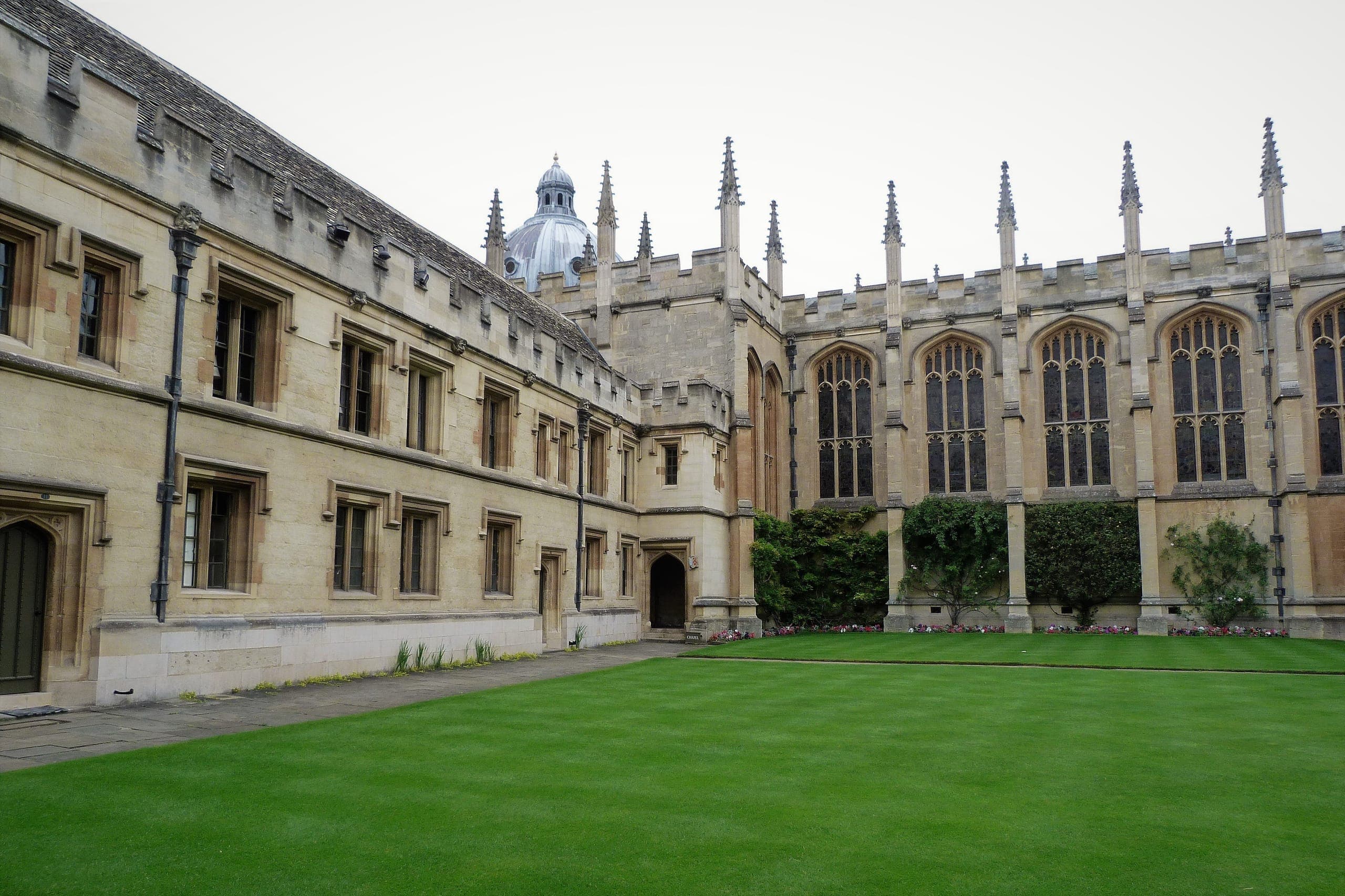
Stone college quadrangle viewed through an archway

Section 12

卒業後のキャリア

Oxford describes PPL as opening routes into professional psychology, education, research, medicine, health services, finance, commerce, industry, media and IT.

  • Business, administration and public service.
  • Psychology, health, welfare and therapy.
  • Research, science, data and technology.
  • Finance, commerce and industry.
  • Education and further study.
  • Media, arts and communications.

These sector percentages are indicative page visuals rather than official PPL-only destination percentages, and no named-employer breakdown was verified.

For applicants considering Psychology careers, the Psychology-containing routes matter because Oxford notes BPS-accredited psychology routes where conditions are met; applicants should confirm the current accreditation conditions directly on Oxford's course page and with BPS before relying on that route for professional planning.

Section 13

特別な事情について

Oxford uses contextual data to understand achievement in light of individual background, including socio-economic disadvantage and school performance.

For UK applicants educated in the UK system, Oxford considers school, neighbourhood, care-system experience, Free School Meals eligibility since age 11 and additional widening-participation information.

Contextual data does not remove the need to meet academic offer standards or required test and interview expectations.

For PPL, subject availability matters because schools vary in access to Psychology, Philosophy and Linguistics; Oxford lists no required subjects, but it strongly recommends science, Psychology or Mathematics for Psychology and notes English Language, Mathematics, a science or another language as helpful for Linguistics.

Watch & Learn

Oxford Psychology, Philosophy and Linguistics (PPL) 参考動画

学生ブログ・模擬面接・講義体験・入試アドバイス。

Admissions Process EP and PPL

Psychology introduction and course overview

Psychology Demonstration Interview

All videos are the property of their respective creators.

Further Reading

Recommended Resources

専門講師が推薦するSupercurricular読書リスト・ウェブサイト・ツール。

  • PPL official course page by University of Oxford[Website]Canonical source for course structure, codes, requirements, TARA, written-work status, interviews and careers.
  • TARA official page by UAT-UK[Website]Official source for TARA format and candidate information.
  • Oxford interview guidance by University of Oxford[Website]Explains Oxford's online interview format, expectations and preparation guidance.
  • Oxford contextual data by University of Oxford[Website]Explains contextual-data use for applicants.

よくあるご質問

No for the current official 2027-entry course page. Oxford lists route-specific UCAS codes: CV85 for Psychology and Philosophy, CQ81 for Psychology and Linguistics, and VQ51 for Philosophy and Linguistics.
No. Oxford states that applicants apply to specialise in two of the three subjects. It is possible to study papers from all three subject areas subject to college approval.
No. The official PPL course page states that written work is not needed.
Yes. The official course page says all applicants must take TARA for 2027 entry, including Critical Thinking, Problem Solving and Writing Task modules.
Oxford's PPL page says shortlisted applicants are invited to online interviews in December. Oxford's general interview guidance says 2027-entry interviews are online in December 2026 and expected in early to mid-December.
Oxford lists no required subjects for PPL. It strongly recommends one or more science subjects, including Psychology, or Mathematics for the Psychology side; for Linguistics, English Language, Mathematics, a science or another language may be helpful.
Yes. Oxford states applicants apply through UCAS by the same 15 October deadline; international applicants should also plan for TARA booking, English-language evidence and visa timing.
Oxford states college preference does not guarantee being considered, interviewed or offered by that college, and that reallocation helps ensure strong candidates have a similar chance regardless of college choice.

Psychology, Philosophy and Linguistics (PPL)(Oxford)出願の専門サポート

専門講師との無料30分相談をご予約ください。

無料相談を予約する